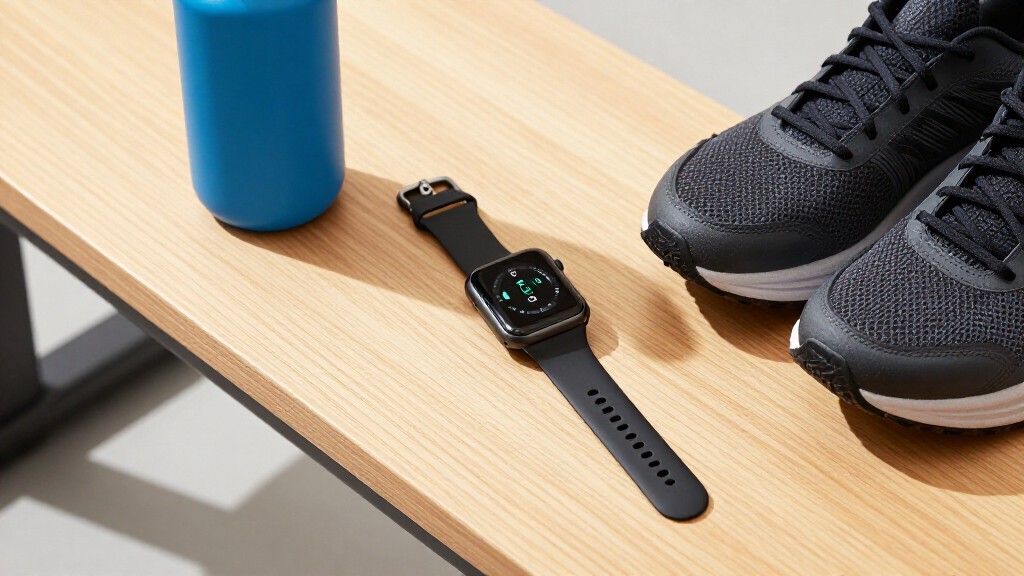
Shopping for smart fitness watches for workouts means balancing accuracy, battery life, and price — and no single watch wins on all three. The Samsung Galaxy Watch 7 earns my best overall pick for its precise heart rate tracking, GPS, and recovery insights like Energy Score, though you trade away serious battery endurance. For battery-first buyers, the Garmin vívoactive 5 and the Amazfit Bip 6 stretch a single charge across one to two weeks of training. Budget options like the Fitbit Inspire 3 and various sub-$50 trackers cover the basics, but expect compromises in GPS accuracy and app polish. Read on for the full breakdown, including who each watch suits and who should skip it.

Get workout gear delivered free with Prime
- Fast, free delivery on millions of items
- Prime Video, Amazon Music and more included
- Member-only deals all year
Complete the kit

Key Takeaways
- Only the Galaxy Watch 7, vívoactive 5, and Amazfit Bip 6 include built-in GPS — every other watch in this roundup estimates distance from phone GPS or step count, which matters a lot for runners and cyclists.
- The lineup splits sharply into two camps: name-brand watches (Samsung, Garmin, Fitbit) with polished apps and reliable sensors, and generic trackers that offer bigger screens and more claimed features for less, but with rougher software.
- Battery life and smart features trade off directly: the Galaxy Watch 7 needs charging roughly every one to two days with heavy use, while band-style trackers like the Galaxy Fit 3 run up to 14 days but lack onboard GPS and calling.
- Blood pressure readings on budget trackers like the MorePro and generic AMOLED models are estimates, not medical-grade measurements — buyers with health conditions should not rely on them.
- The two Galaxy Fit 3 listings are near-identical watches; the bundle version mainly differs by included accessories, so choose based on charger and color preference rather than features.


| smart fitness watches for workout | Display | Water Resistance | Compatibility | Battery Life |
|---|---|---|---|---|
| Garmin vívoactive 5 | Bright AMOLED | — | — | Up to 11 days (5 days always-on display) |
| Amazfit Bip 6 Smart Watch | 1.97" AMOLED | 50 meters | iOS and Android | Up to 14 days |
| Google Fitbit Inspire 3 Fitnes | — | — | Apple iOS 16.4+, Android OS 11.0+ | — |
| SAMSUNG Galaxy FIT 3 [2024] 1. | 1.6" AMOLED touchscreen | 5ATM and IP68, 50 meters | Android devices only | Up to 14 days (208mAh) |
| Smart Watches for Women Androi | 1.83" HD touchscreen | IP68, 1.5 meters | Android 8.0+, iOS 13.0+ | — |
| Fitness Tracker with 24/7 Hear | 1.10-inch AMOLED touchscreen | IP68 | Android 5.0+ and iOS 9.0+ | Up to 7 days; up to 15 days standby |
| TRAUSI TG08 Smart Watch for Me | 1.83-inch IPS, 240 × 284 resolution | IP67 | iOS 9.0+ and Android 5.0+ | — |
| Smart Watch for Men Women | 2.01-inch LCD touchscreen, 450 nit maximum brightness | IP67; listed depth 3 feet | Android and iOS | — |
| Smart Watch for Women Men | Up to 1.83-inch HD touchscreen | IP67 | Most iOS and Android smartphones | Up to 10 days regular use |
| MorePro Fitness Tracker for Wo | 1.57-inch touchscreen | IP68 | Android 7.0+ and iOS 13.0+ | Up to 7 days |
| SAMSUNG Galaxy Fit 3 [2025 | 1.6" AMOLED, 320 x 320 | 5ATM and IP68 | Android devices only | Up to 13–14 days |
| Torjalph Smart Watch for Men W | 1.69" LCD touch screen, 240 x 280 | IP68 | Android 5.0+, iOS 9.0+ | 5–7 days use, 14 days standby |
| AEAC Smart Watch for Women wit | 1.32" AMOLED touchscreen | 3ATM | — | Up to 10 days |
| Fitpolo 1.8" HD Smart Watch wi | 1.8" TFT-LCD color touchscreen | IP68 | iOS and Android | 7 days typical, 30 days standby |
| Samsung Galaxy Watch 7 40mm Bl | — | — | — | — |
More Details on Our Top Picks
Garmin vívoactive 5, Health & Fitness GPS Smartwatch, 42mm, Ivory
Among everything in this lineup, the Garmin vívoactive 5 is the pick I would point serious exercisers toward first, because it is the only model here that combines built-in GPS, structured training tools, and recovery science in one package. Where the Fitbit Inspire 3 leans on your phone for distance and the Amazfit Bip 6 offers GPS but weaker training analytics, Garmin adds workout benefit scoring and recovery time, which translates into knowing whether today is a hard-effort day or a rest day. The Body Battery metric and HRV status give it an edge over the Samsung Galaxy Fit 3 for anyone training with a plan. Music storage from Spotify or Deezer means phone-free runs are genuinely practical.
The tradeoff is complexity and size: it is bulkier than slim bands like the Inspire 3, and its app ecosystem takes a weekend to learn.
Pros:- Built-in GPS with 30+ sport apps for phone-free pace and distance
- Recovery and training insights like Body Battery, HRV status, and workout benefit
- Up to 11 days of battery in smartwatch mode
- Offline music storage supports phone-free listening via Spotify, Amazon Music, or Deezer
Cons:- Heavier and bulkier than band-style trackers like the Fitbit Inspire 3
- Garmin’s interface and app have a steeper learning curve than consumer-friendly rivals
Best for: Runners, cyclists, and gym-goers who follow structured training plans and want GPS plus recovery guidance on the wrist
Not ideal for: Buyers who want a slim, set-and-forget band for casual step counting — this is more watch than that job requires
- Display:Bright AMOLED
- Battery Life:Up to 11 days (5 days always-on display)
- GPS:Built-in
- Sport Apps:30+ indoor and GPS sports apps
- Case Size:42mm
- Health Features:Heart rate, sleep score and coaching, stress, HRV status, menstrual tracking
- Special Modes:Wheelchair mode tracking pushes, nap detection
Our verdict“If workouts are the reason you’re buying, this is the most complete training companion in the roundup.”
Amazfit Bip 6 Smart Watch, 1.97″ AMOLED Display, GPS, iOS/Android
The Amazfit Bip 6 earns its spot by doing the two things budget watches usually fail at: accurate onboard GPS with five satellite systems and up to 14 days of battery. Compared with the Garmin vívoactive 5, it gives up the depth of training analytics — no HRV status or recovery time — but it covers the basics of tracking with 140+ workout modes, including strength training and HYROX race prep, plus AI coaching that casual athletes will actually use. The 1.97-inch AMOLED is larger than the Garmin’s display and easy to read in direct sun, and free downloadable maps with turn-by-turn navigation are unusual at this tier. Unlike the Samsung Galaxy Fit 3, it works with both iOS and Android.
The compromise is polish: the Zepp app is less refined, and third-party integrations trail Garmin and Fitbit.
Pros:- Built-in GPS with 5 satellite systems and free downloadable maps
- Up to 14 days of battery life with no nightly charging
- Large 1.97″ AMOLED readable in bright sunlight
- 140+ workout modes including strength training and HYROX
Cons:- Zepp app experience is less polished than Garmin Connect or Fitbit
- AI coaching and analytics lack the depth of Garmin’s training tools
Best for: Budget-conscious runners and outdoor walkers who want real GPS mapping and long battery without paying premium-brand prices
Not ideal for: Data-driven athletes who need advanced recovery metrics and deep third-party app integrations — Garmin covers that better
- Display:1.97″ AMOLED
- Battery Life:Up to 14 days
- GPS:Built-in, 5 satellite systems
- Navigation:Free downloadable maps with turn-by-turn directions
- Workout Modes:140+
- Water Resistance:50 meters
- Compatibility:iOS and Android
Our verdict“The most GPS capability you can get here without stepping up to Garmin-level pricing.”
Google Fitbit Inspire 3 Fitness Tracker – Midnight Zen/Black (Small and Large Bands)
For a first fitness tracker, the Fitbit Inspire 3 is the easiest entry point in this roundup. Its strengths are simplicity and habit-building: the Daily Readiness Score tells you whether to push or rest, and 40+ exercise modes with automatic detection mean you never forget to log a walk or run. Unlike the Samsung Galaxy Fit 3, it works with both iOS and Android, and both small and large bands ship in the box for a better fit out of the gate. Its health coverage — sleep score, stress management, SpO2, irregular heart rhythm alerts — reads like a condensed version of what the Garmin vívoactive 5 offers.
The honest tradeoff: there is no built-in GPS, so pace and distance come from your phone, and several of the best insights sit behind a Fitbit Premium subscription. Serious runners should look at the Amazfit Bip 6 instead.
Pros:- Works with both iOS and Android, unlike the Samsung Galaxy Fit 3
- Automatic exercise recognition across 40+ modes
- Includes both small and large bands for immediate comfortable fit
- Broad health tracking: sleep score, stress score, SpO2, irregular rhythm notifications
Cons:- No built-in GPS — depends entirely on your phone for distance
- Key metrics and guidance are gated behind Fitbit Premium
Best for: Fitness newcomers who want gentle guidance, automatic tracking, and a slim band that disappears on the wrist
Not ideal for: Runners who want phone-free GPS tracking or users unwilling to pay a subscription for full health insights
- Exercise Modes:40+
- Heart Rate:24/7 monitoring
- Compatibility:Apple iOS 16.4+, Android OS 11.0+
- Bands Included:Small and Large
- Color:Midnight Zen/Black
- Health Features:Daily Readiness Score, Stress Management, Sleep Score, SpO2, irregular heart rhythm alerts, menstrual tracking
Our verdict“The friendliest first step into fitness tracking, as long as you keep your phone nearby for runs.”
SAMSUNG Galaxy FIT 3 [2024] 1.6″ AMOLED Display | 14 Days Battery Life | 100+ Exercise Modes – (Gray)
1.6" AMOLED Display | 14 Days Battery Life | 100+ Exercise Modes – (Gray)” image=”https://m.media-amazon.com/images/I/41KyLKvro-L._AC_SY300_SX300_QL70_ML2_.jpg” link=”0″]Best Battery in a Slim Band
View Latest PriceThe Samsung Galaxy Fit 3 splits the difference between a basic band and a full smartwatch better than almost anything here. Its 1.6-inch AMOLED is far more usable mid-workout than the small screens on generic trackers like the TRAUSI TG08, and up to 14 days of battery doubles what many full smartwatches manage. With 101+ workout modes and auto-detection, plus 5ATM swim resistance, it handles pool sessions that IP67-rated budget watches cannot. Against the Fitbit Inspire 3, it wins on display size and battery but loses badly on ecosystem — it is Android-only, with no iOS support.
Two caveats shape the buying decision: this is an international model without US warranty coverage, and there is no built-in GPS or Samsung Pay. Treat it as a polished tracker, not a mini smartwatch.
Pros:- Large 1.6″ AMOLED display that is easy to read during workouts
- Up to 14 days of battery life
- 5ATM and IP68 water resistance for swimming and dust
- 101+ workout modes with automatic detection for common exercises
Cons:- Android-only — no iPhone or iOS compatibility at all
- International model with no US warranty; no built-in GPS or Samsung Pay
Best for: Android users who want a slim, swim-proof band with a big bright display and two-week battery for everyday workouts
Not ideal for: iPhone owners (flat-out incompatible) and anyone who wants US warranty support or onboard GPS
- Display:1.6″ AMOLED touchscreen
- Battery Life:Up to 14 days (208mAh)
- Water Resistance:5ATM and IP68, 50 meters
- Workout Modes:101+ with auto detection
- GPS:No built-in GPS
- Compatibility:Android devices only
- Health Features:Sleep coaching, SpO2, heart rate, snore detection
- Case Material:Aluminum
Our verdict“A polished, long-lasting tracker for Android loyalists — just know the warranty and ecosystem limits before buying.”
Smart Watches for Women Android/iPhone, Fitness Trackers with Answer/Call
This unnamed-brand watch makes the list for one reason: it bundles Bluetooth calling with noise reduction and 100+ sport modes at a price where rivals usually offer one or the other. Compared with the AEAC smart watch or the TRAUSI TG08, its differentiator is the 1.83-inch HD touchscreen paired with two swappable bands — a stainless steel band for the office and silicone for training — which makes it usable as an all-day accessory, not just gym gear. Auto-detection for walking and running, 24/7 heart rate, SpO2, stress, and menstrual tracking round out a surprisingly complete spec sheet.
The tradeoffs are real: GPS only works through your phone, IP68 covers sweat and shallow swimming but not hot water or the sea, and sensor accuracy will not match Garmin or Fitbit. Think of it as a capable starter watch rather than a training tool.
Pros:- Bluetooth calling with noise reduction and 20 stored contacts
- Two bands included: stainless steel for daily wear, silicone for workouts
- 100+ sport modes with auto-detection for walking and running
- 100+ watch faces plus custom photo faces via the VeryFit app
Cons:- No built-in GPS — location tracking depends entirely on your phone
- Sensor accuracy trails name brands like Garmin and Fitbit
- IP68 rating excludes hot water and seawater exposure
Best for: Buyers who want calling, notifications, and broad fitness tracking in one affordable wristpiece for everyday wear
Not ideal for: Serious athletes who need accurate GPS and dependable heart rate data — Garmin and Amazfit are far better instruments
- Display:1.83″ HD touchscreen
- Sport Modes:100+ with auto-detection
- Calling:Bluetooth answer/make calls, 20-contact storage
- Water Resistance:IP68, 1.5 meters
- GPS:Via smartphone only
- Bands:Stainless steel and silicone
- Compatibility:Android 8.0+, iOS 13.0+
- App:VeryFit
Our verdict“A feature-packed lifestyle watch for casual fitness and calls, not a precision training device.”
Fitness Tracker with 24/7 Heart Rate, Activity Trackers with Blood Pressure Sleep Monitor, 1.10″ AMOLED Screen Step Tracker, Waterproof Step Counter, Health Smart Watch Pedometer for Women Men
The 1.10-inch AMOLED display gives this tracker a smaller wrist presence than the larger TRAUSI TG08 and the 2.01-inch watch in this group, which may suit workouts where a broad screen feels cumbersome. Its 25 sports modes cover common activity tracking, while connected GPS can record a route through a paired phone. The listed seven-day battery estimate also supports regular wear between charges. This is a basic activity companion rather than a training watch: the description does not specify standalone GPS, and its heart-rate and blood-pressure features are wellness estimates, not medical measurements. Choose it for a compact screen and daily movement tracking; skip it if you want a large, glanceable workout display or more detailed outdoor training tools.
Pros:- Compact 1.10-inch AMOLED touchscreen
- 25 sports modes with connected route tracking
- Continuous heart-rate and automatic sleep tracking
- Up to seven days of stated battery life
Cons:- Route recording depends on a connected phone for GPS
- The small display leaves less room to read workout data at a glance
- Blood-pressure readings are not a substitute for medical measurement
Best for: People who prefer a small-screen tracker for walking, gym sessions, and everyday activity reminders
Not ideal for: Runners who want standalone GPS or athletes who need detailed workout analysis and a large display
- Display:1.10-inch AMOLED touchscreen
- Sports modes:25
- GPS:Connected GPS
- Water resistance:IP68
- Battery life:Up to 7 days; up to 15 days standby
- Charging time:About 2 hours
- Compatibility:Android 5.0+ and iOS 9.0+
- App:Keep Health
Our verdict“Choose this compact tracker for everyday workouts and activity monitoring if you are comfortable carrying your phone for route tracking.”
TRAUSI TG08 Smart Watch for Men and Women, 1.83″ HD Display, 120 Sports Modes, Alexa Built-in, Heart Rate/Sleep Monitor, IP67 Waterproof, Bluetooth Calls, Black
The TRAUSI TG08 pairs a 1.83-inch display with 120 sports modes, giving workout stats and notifications more screen space than the compact B0H9DFXQZB. Built-in Alexa adds voice access to assistant functions, and Bluetooth calling makes it more connected during a session than a simple tracker. Its stated five-to-seven-day active battery estimate is serviceable, though the smaller MorePro AIR2 also claims up to seven days while offering two band options. The TG08’s main limitation for outdoor training is the lack of specified GPS, so route tracking may depend on a phone or may not be available. Its step count also reportedly starts after 20 steps, which can miss very short bursts of movement.
Pros:- Large 1.83-inch HD IPS display
- 120 sports modes plus heart-rate and sleep tracking
- Alexa built in and Bluetooth calling
- Up to 5–7 days of active use stated
Cons:- No GPS capability is specified for route tracking
- Step counting reportedly begins only after 20 steps
- IP67 rating is less suited to water exposure than the IP68 MorePro AIR2
Best for: Wearers who want a large workout screen, many activity modes, and Alexa or wrist calling for general fitness
Not ideal for: Outdoor runners who want confirmed GPS route recording or people who expect every short walk to register
- Display:1.83-inch IPS, 240 × 284 resolution
- Sports modes:120
- Battery:350 mAh; 5–7 days active use, up to 30 days standby
- Voice assistant:Alexa built in
- Calls:Bluetooth calling
- Water resistance:IP67
- Compatibility:iOS 9.0+ and Android 5.0+
- Color:Black
Our verdict“Pick the TG08 if a big screen and voice features matter more to your workouts than confirmed GPS tracking.”
Smart Watch for Men Women, 2.01″ HD Fitness Trackers with Heart Rate and Sleep Monitor, Bluetooth Calls & Notifications, 120+ Sport Modes, IP67 Waterproof, Compatible with Android & iOS, Black
The standout here is its 2.01-inch touchscreen, the largest specified display among these four picks. That extra room can make workout stats and phone alerts easier to scan than on the TRAUSI TG08’s 1.83-inch screen, though it also means a broader watch on the wrist. The feature set is broad: 120+ sports modes, heart-rate and sleep tracking, Bluetooth calls, and voice control. GPS geotagging appears in the product information, but the data does not clarify whether the watch has standalone GPS or relies on a phone, so I would not choose it on the assumption that it records routes independently. IP67 covers sweat and splashes, but the MorePro AIR2 lists IP68 protection.
Pros:- Large 2.01-inch touchscreen with stated 450-nit brightness
- More than 120 sport modes
- Bluetooth calls, notifications, and voice function
- Includes heart-rate, sleep, and automatic activity tracking
Cons:- GPS geotagging is listed, but standalone GPS support is unclear
- IP67 rating is intended for splashes and sweat rather than swimming
- The 50 g weight and large case may feel bulky on smaller wrists
Best for: People who want a large, readable screen for workout stats, calls, and notifications during general exercise
Not ideal for: Runners seeking clearly specified standalone GPS or swimmers who need a watch rated for regular swimming
- Display:2.01-inch LCD touchscreen, 450 nit maximum brightness
- Sports modes:120+
- Health tracking:Heart rate and sleep
- Calls:Bluetooth calling
- Water resistance:IP67; listed depth 3 feet
- Weight:50 g
- Band width:0.87 inches
- Compatibility:Android and iOS
Our verdict“Choose this model if screen size and wrist-based connectivity are your priorities and you do not need clearly documented standalone GPS.”
Smart Watch for Women Men, Fitness and Sleep Trackers with 1.83″ HD Touchscreen, Bluetooth Calling Smartwatch for Android/iOS, IP67 Waterproof Multi-Sport Modes Pedometer, Jet Black
The T7 combines workout tracking with a wider set of daily wellness readings, including heart rate, blood oxygen, and stress monitoring, plus sleep stages. That makes it a better fit for someone who wants context around daily routines than the TRAUSI TG08, whose description focuses on heart rate and sleep alongside its sports modes. The T7 also includes Bluetooth calls, an AI assistant, and a claimed up-to-10-day battery life. Its product description says it has multi-sport modes but gives no exact count, and it does not specify GPS, so it is harder to judge for structured outdoor training than the MorePro AIR2’s stated 112 modes. IP67 is described as suitable for sweat and rain, not swimming or hot showers.
Pros:- Tracks heart rate, blood oxygen, stress, and sleep stages
- 1.83-inch touchscreen with adjustable brightness
- Up to 10 days of regular use claimed
- Bluetooth calling and built-in AI assistant
Cons:- No GPS support is specified
- Exact number of sports modes is not provided
- IP67 rating is not intended for swimming or hot showers
Best for: People who want sleep and general wellness trends alongside casual gym, walking, or yoga tracking
Not ideal for: Swimmers, GPS-focused runners, or buyers who need a clearly stated sports-mode count
- Display:Up to 1.83-inch HD touchscreen
- Sports modes:Multi-sport modes; count not specified
- Health tracking:Heart rate, blood oxygen, stress, and sleep
- Battery life:Up to 10 days regular use
- Charging time:About 2 hours
- Water resistance:IP67
- Build:Aluminum body with 2.5D glass
- Compatibility:Most iOS and Android smartphones
Our verdict“Choose the T7 for a wellness-focused daily watch with casual workout tracking, rather than for GPS-led training or swimming.”
MorePro Fitness Tracker for Women Men, Heart Rate, Blood Pressure, 2 Bands
The MorePro AIR2 is the most workout-specific pick here on paper, with 112 sports modes and activity records for distance, speed, calories, and duration. It also comes with both silicone and breathable nylon bands, so the fit can be adjusted for sweaty sessions or all-day wear—an advantage over the single-band TRAUSI TG08. Its 1.57-inch display is more compact than the 2.01-inch option, though workout details will have less room. The listed seven-day battery estimate is solid for a tracker with continuous monitoring. Blood-pressure and blood-oxygen readings add wellness context, but the product says it is not a medical device; buyers focused on outdoor routes should also note that GPS is not specified.
Pros:- 112 sports modes with speed, distance, and workout-duration records
- Includes silicone and breathable nylon bands
- IP68 water resistance
- Up to seven days of stated battery life
Cons:- GPS route tracking is not specified
- The 1.57-inch display is smaller than the TRAUSI and 2.01-inch alternatives
- Blood-pressure and blood-oxygen readings are not medical measurements
Best for: Active users who want many workout modes, two band materials, and daily wellness tracking in one compact watch
Not ideal for: Runners who need documented GPS route tracking or buyers who expect medical-grade blood-pressure readings
- Display:1.57-inch touchscreen
- Sports modes:112
- Health tracking:Heart rate, blood pressure, blood oxygen, and sleep
- Bands:Silicone and breathable nylon included
- Watch faces:200+
- Water resistance:IP68
- Battery life:Up to 7 days
- Compatibility:Android 7.0+ and iOS 13.0+
- App:FitCloudPro
Our verdict“Pick the MorePro AIR2 if workout variety and switching between two band styles matter more than a large screen or confirmed GPS.”
SAMSUNG Galaxy Fit 3 [2025, 40MM] 1.6″ AMOLED Display | IP68 Water Resistant | 14 Days Battery Life | International Model (Black)
1.6" AMOLED Display | IP68 Water Resistant | 14 Days Battery Life | International Model (Black)” image=”https://m.media-amazon.com/images/I/61K2qby-3oL._AC_SY300_SX300_QL70_ML2_.jpg” link=”0″]Best Battery Life in a Slim Band
View Latest PriceThe Galaxy Fit 3 stands out for stretching two full weeks between charges while weighing under 19 grams, which makes it the pick here for people who hate nightly charging. Compared with the Fitbit Inspire 3, its 1.6″ AMOLED screen is dramatically easier to read mid-run, and its 5ATM + IP68 rating makes it genuinely swim-ready rather than just splash-resistant. The 101 workout modes with auto-detection mean you can start a jog and have it logged without fumbling through menus. The tradeoffs are real: this is an international model with no US warranty, no onboard GPS (it borrows your phone’s), Android-only compatibility, and no Samsung Pay. It’s a tracker, not a smartwatch — the Galaxy Watch 7 in this lineup covers that ground.
Pros:- Up to 14 days of battery life on a 208mAh cell
- 5ATM and IP68 rating makes it suitable for swimming
- 101+ workout modes with automatic workout detection
- Ultra-light 18.5g aluminum body that disappears on the wrist
Cons:- International model with no US manufacturer warranty
- No built-in GPS and no Samsung Pay support
- Android-only — completely incompatible with iPhone
Best for: Android users who want a featherweight, swim-proof tracker with two-week battery and set-and-forget workout auto-detection
Not ideal for: iPhone owners (it won’t pair at all) and runners who want route mapping without carrying a phone, since there’s no built-in GPS
- Display:1.6″ AMOLED, 320 x 320
- Battery Life:Up to 13–14 days
- Water Resistance:5ATM and IP68
- Workout Modes:101+ with auto detection
- Weight:18.5g aluminum body
- Compatibility:Android devices only
- GPS:Phone-connected only (no built-in)
Our verdict“Android users who prioritize battery endurance and swim tracking over smart features will find this the most hassle-free option in the roundup.”
Torjalph Smart Watch for Men Women, 1.69″ Full Touch Screen, IP68 Waterproof Fitness Tracker (Black)
Where the Galaxy Fit 3 demands an Android phone and a bigger budget, the Torjalph tracker plays nice with both Android and iOS and covers an unusually broad checklist: IP68 waterproofing, 12 sport modes, heart rate, sleep, blood pressure, and blood oxygen readings. Its 230mAh battery delivers 5–7 days of use, which beats the AEAC’s real-world numbers if you leave continuous monitoring on. The catches are typical at this tier — the display is a basic LCD rather than AMOLED, sensor accuracy is approximate rather than clinical-grade, and it leans on the third-party Da Fit app instead of a polished ecosystem like Samsung Health or Fitbit. Compared with pricier picks, it also skips built-in GPS entirely.
Pros:- Works with both Android 5.0+ and iOS 9.0+ phones
- IP68 waterproof for swimming and rain workouts
- 5–7 days of battery on a 3-hour magnetic charge
- 12 sport modes plus 200+ watch faces via the Da Fit app
Cons:- LCD screen is dimmer and less crisp than AMOLED rivals
- Blood pressure and SpO2 readings are indicative, not validated for accuracy
Best for: First-time buyers who want maximum features per dollar and don’t need GPS or medical-grade accuracy
Not ideal for: Serious athletes training with pace and distance data, since there’s no onboard GPS and step/distance estimates are rough
- Display:1.69″ LCD touch screen, 240 x 280
- Battery Life:5–7 days use, 14 days standby
- Water Resistance:IP68
- Sport Modes:12
- Weight:40g
- Compatibility:Android 5.0+, iOS 9.0+
- App:Da Fit
Our verdict“A sensible low-commitment entry point for casual exercisers who want everything on the spec sheet without paying premium prices.”
AEAC Smart Watch for Women with Calls, 1.32″ AMOLED Display
Most budget trackers in this roundup push 1.8-inch slabs onto every wrist; the AEAC goes the other direction with a 43mm case and a 1.32″ AMOLED display that suits smaller wrists without sacrificing clarity. Unlike the Torjalph’s LCD panel, AMOLED here means deep blacks and sharp text that stay readable in sunlight — a genuine quality gap at this tier. It also packs Bluetooth calling with an AI voice assistant and 110+ sport modes, which is nearly ten times what the Torjalph offers. The limitations: 3ATM water resistance handles sweat and showers but not prolonged swimming (the Galaxy Fit 3 wins there), and enabling always-on health monitoring cuts into the advertised 10-day battery.
Pros:- Crisp 1.32″ AMOLED display readable in bright light
- Bluetooth calling with HD speaker, mic, and AI voice assistant
- Up to 10 days battery on a 2-hour charge
- Full health suite: heart rate, SpO2, stress, and sleep tracking
Cons:- 3ATM water resistance rules out extended swimming or diving
- Always-on monitoring drains the battery much faster than advertised
Best for: Women or small-wristed buyers who want a genuinely compact watch with a premium-feeling AMOLED screen and call capability
Not ideal for: Regular swimmers — the 3ATM rating isn’t built for repeated pool sessions, unlike 5ATM-rated rivals here
- Display:1.32″ AMOLED touchscreen
- Case Size:43 mm
- Battery Life:Up to 10 days
- Charging Time:2 hours
- Sports Modes:110+
- Water Resistance:3ATM
- Watch Faces:200+ customizable, photo support
Our verdict“The best-fitting choice in this lineup for smaller wrists that still want calls, a sharp display, and broad health tracking.”
Fitpolo 1.8″ HD Smart Watch with Alexa Built-in, Bluetooth Calls, IP68 Waterproof (Black)
This Fitpolo earns its spot as the only budget option here with Amazon Alexa built in — you can set timers, check weather, and control smart home devices from your wrist, something the Torjalph and AEAC can’t match. Its 110+ sport modes and 24/7 heart rate, SpO2, stress, and sleep monitoring sync to the Veryfit app, with data export to Apple Health and Strava, which is a meaningful plus for runners already living in those platforms. A 7-day typical battery and 30-day standby also hold up well against the AEAC. Be realistic about the floor, though: the 1.8″ panel is TFT-LCD rather than AMOLED, it can’t send text replies, and IP68 covers sweat and handwashing, not diving. The TRAUSI TG08 in this guide covers similar ground, so the Alexa integration and Strava export are what tip the scales.
Pros:- Built-in Alexa for voice queries and smart home control
- Syncs health data to Apple Health and Strava
- 110+ sport modes with automatic step/distance/calorie tracking
- 7 days typical use, 30 days standby, 2-hour charge
Cons:- TFT-LCD screen lags behind AMOLED rivals in contrast and sunlight readability
- Cannot send messages or text replies from the watch
Best for: Alexa-household owners and casual athletes who want voice control, Strava sync, and long battery without a premium price
Not ideal for: Anyone who wants to reply to messages from the wrist — texting back isn’t supported — or AMOLED-level display quality
- Display:1.8″ TFT-LCD color touchscreen
- Voice Assistant:Amazon Alexa built-in
- Battery Life:7 days typical, 30 days standby
- Sports Modes:110+
- Water Resistance:IP68
- Connectivity:Bluetooth 5.3 with calls (8–10 m range)
- Compatibility:iOS and Android
- Wrist Fit:130–210 mm (5.1–8.3 inches)
Our verdict“The strongest value for buyers whose workouts start with a voice command and end with a Strava upload.”
Samsung Galaxy Watch 7 40mm Bluetooth AI Smartwatch (Cream, US Version)
If the rest of this roundup is about tracking workouts, the Galaxy Watch 7 is about interpreting them. Galaxy AI powers an Energy Score that tells you how recovered you are before you train, motion-filtered heart rate readings that stay accurate during intervals, and sleep coaching with sleep apnea detection — a feature set none of the budget picks here approach. Compared with the Garmin vívoactive 5, it trades some battery endurance and Garmin’s deeper running analytics for a full Wear OS smartwatch experience with apps, payments, and a polished ecosystem. The compromises are predictable: a day-to-two-day battery under heavy workout tracking versus two weeks on the Galaxy Fit 3, and deeper features work best when paired with a Samsung phone rather than an iPhone.
Pros:- Galaxy AI Energy Score and Wellness Tips translate raw data into training guidance
- Improved heart rate tracking filters out body motion for cleaner readings
- Sleep coaching with moderate-to-severe sleep apnea detection
- Full Wear OS smartwatch with 1-year US manufacturer warranty
Cons:- Battery often needs daily charging with continuous workout tracking
- Best experience requires a Samsung/Android phone; iPhone pairing is limited
Best for: Data-driven athletes with Samsung or Android phones who want recovery scoring, accurate heart rate, and sleep apnea detection alongside full smartwatch features
Not ideal for: Multi-day adventurers or anyone who refuses weekly-plus charging — battery life can’t compete with the Fit 3 or budget trackers here
- Case Size:40mm Bluetooth model
- Platform:Wear OS with Galaxy AI
- Health Tracking:Heart rate, Energy Score, sleep, sleep apnea detection
- Fitness Features:Workout comparison, Wellness Tips, fitness tracking
- Connectivity:Bluetooth (US version)
- Warranty:1-year manufacturer warranty (US version)
- Release Year:2024
Our verdict“The most capable training companion in this roundup for buyers who want AI-driven recovery and health insights and will accept short battery life to get them.”

How We Picked
My ranking puts workout relevance first: whether a watch has real GPS, how trustworthy its heart rate data is during intervals, how many sport modes are actually usable, and whether it survives sweat and swimming. Smart features like Bluetooth calling, notifications, and voice assistants came second, and general comfort, app quality, and battery life rounded out the evaluation. A watch could not rank highly on screen size alone — plenty of the generic trackers here have large displays but weaker sensor consistency.
The ordering also reflects ecosystem reliability. Products from Samsung, Garmin, Fitbit, and Amazfit sit higher because their companion apps sync cleanly, log workouts dependably, and receive software support. Generic-brand watches were judged more skeptically on claims like blood pressure monitoring and 100+ sport modes, since these features vary widely in real-world accuracy. Value was assessed relative to what each buyer gives up, not just the price tier.
Factors to Consider When Choosing Smart Fitness Watches For Workouts
Before picking a watch from this roundup, it helps to understand what actually separates a good workout watch from a generic one. These are the factors that shaped my ranking and the mistakes I see buyers make most often.Real GPS vs. Connected GPS
The single biggest differentiator in this category is whether the watch has built-in GPS or relies on your phone. Connected GPS means your phone must be within Bluetooth range during runs and rides, and route tracking stops the moment it disconnects. Some budget trackers have no GPS at all and instead estimate distance from stride length, which can drift badly at varying paces. If you train outdoors without your phone, this feature alone justifies paying more for something like the vívoactive 5 or Bip 6. A common mistake is assuming every watch with a “running mode” tracks distance accurately — many only count steps and extrapolate. Check the spec sheet for “built-in GPS” or “multi-band GPS” specifically, not just “GPS” in the marketing copy.
Sensor Accuracy and What the Data Is For
Heart rate accuracy determines whether your training zones, calorie burn, and recovery scores mean anything at all. Name-brand watches tend to hold optical heart rate readings steadier during high-intensity intervals, while cheap sensors often lag or spike during sweaty, high-motion workouts. Features like blood pressure and SpO2 monitoring on budget trackers should be treated as trend indicators, not clinical measurements — a mistake I see frequently among buyers managing health conditions. Ask yourself what you will actually do with the data: if it guides structured training, pay for better sensors. If it is casual curiosity, a budget tracker is fine. Garmin and Samsung also layer recovery metrics on top of raw readings, which generic brands rarely do well.
Battery Life and Training Frequency
Battery expectations should match how you train. Continuous heart rate monitoring, always-on displays, and GPS workouts drain batteries far faster than the headline numbers suggest. A watch rated for 14 days, like the Galaxy Fit 3, may deliver that only with light tracking and a dimmed display. Meanwhile the Galaxy Watch 7 can drop to a day or two with GPS sessions and sleep tracking enabled. Frequent chargers become a real friction point if you track sleep overnight and workouts by day. If you hate charging, prioritize watches with 10+ day endurance and accept fewer smart features. If you want a full smartwatch experience, build a daily charging habit into your routine.
Ecosystem and App Quality
The watch is only half the product — the companion app determines whether your workout history stays organized and syncs with other services. Samsung Health, Garmin Connect, and the Fitbit app are mature, with clear trends, goal tracking, and third-party integrations like Strava and Apple Health. Generic-brand apps often work but feel dated, with clunky interfaces and occasional sync failures. Buyers who switch phones frequently should also check OS compatibility: some watches fully support both Android and iOS, while others limit features like quick replies or calling on iPhone. This is the hidden cost of cheap trackers that the spec list never shows.
Water Resistance Ratings Explained
IP67, IP68, and “5 ATM” are not interchangeable, and misreading them is how watches die. IP67 and IP68 ratings handle sweat, rain, and hand-washing, but are not designed for sustained swimming — IP68 generally tolerates more prolonged submersion than IP67. For pool swimmers, look for 5 ATM or a stated swim rating, which the Galaxy Watch 7 carries. Shower steam and hot tubs are hostile to seals regardless of rating, so heat exposure matters more than buyers expect. If your workouts include swimming or open-water sports, treat this as a hard filter before comparing anything else on the spec sheet.
When to Pay More and When Not To
Paying more buys three things: better sensors, better software support, and durable build quality. It does not automatically buy more features — budget trackers often list more sport modes and health metrics than premium watches, just with less accuracy behind them. If you are a casual gym-goer who walks, lifts, and wants call notifications, a sub-$50 tracker with Bluetooth calling covers it. If you follow structured training plans, race, or rely on health data, the premium tier pays for itself through data you can trust. Beginners should resist buying capability they will not use within six months, since unused features are pure cost.
Frequently Asked Questions
Do I need built-in GPS if I always carry my phone during workouts?
Not necessarily — connected GPS works well if your phone is always within Bluetooth range, and it saves you money. The catch is that it stops tracking the instant the connection drops, and some phones throttle the companion app in the background, causing gaps in your route. Built-in GPS also lets you leave the phone at home for runs and still get accurate pace and distance. If you train in a gym exclusively, GPS matters very little and a tracker like the Fitbit Inspire 3 is fine. Outdoor runners, cyclists, and hikers should treat onboard GPS as non-negotiable, which narrows this list to the Galaxy Watch 7, vívoactive 5, and Amazfit Bip 6.
Are budget smartwatches with 110+ sport modes actually tracking those sports?
Usually not in any meaningful way. Most of those modes simply relabel the same step counter and heart rate sensor with a sport name — bowling mode and badminton mode often record identical data. What matters is whether the watch captures sport-specific metrics like stroke type, cadence, or lap timing, which only serious fitness watches do. That said, the mode count is not useless: it can auto-detect popular activities and label your history correctly. Just do not let a big sport-mode number justify a purchase on its own. Sensor quality and app reliability predict your experience far better than the modes list.
Is the Samsung Galaxy Watch 7 worth it over the Galaxy Fit 3 for workouts?
The gap is real if you train outdoors or care about recovery data. The Watch 7 adds built-in GPS, more accurate sensors, Energy Score recovery insights, and a full app ecosystem, while the Fit 3 is a slim band-style tracker with connected GPS only and roughly double the battery life. If your workouts are mostly indoors and you value two-week battery endurance, the Fit 3 is the smarter buy and far more comfortable for sleep tracking. The Watch 7 suits runners, cyclists, and anyone using heart rate data to guide training load. Also weigh your phone: the Watch 7 works best with Samsung phones, while the Fit 3 pairs more broadly.
Can I trust blood pressure readings from fitness trackers like the MorePro?
No — these readings are estimates from optical sensors, not cuff-based measurements, and their accuracy varies widely from reading to reading. They can occasionally be useful for spotting trends over weeks, but a single high reading should never prompt or replace a medical decision. If blood pressure is a health concern for you, a validated upper-arm cuff monitor is the right tool, and the tracker becomes a lifestyle device only. The same caution applies to SpO2 and sleep-stage data on budget trackers. Premium brands are more transparent about these limitations in their apps, which is itself a signal of trustworthiness.
Which of these watches can I swim with?
Only watches rated 5 ATM or explicitly rated for swimming should go in the pool — in this lineup, that primarily means the Samsung Galaxy Watch 7. IP68-rated watches like the Galaxy Fit 3 handle sweat, rain, and accidental submersion but are not built for repeated lap swimming. IP67 watches, common among the generic trackers, should stay out of water beyond splashes and quick rinses. Regardless of rating, avoid hot showers, saunas, and hot tubs with any of them, since heat degrades the seals over time. Salt water also requires a fresh-water rinse afterward to protect the sensors.
Conclusion
The right pick depends on how you train and what data you actually act on. For the best overall workout watch, I recommend the Samsung Galaxy Watch 7: GPS accuracy, reliable heart rate, and recovery insights in one package — as long as daily charging does not bother you. The Amazfit Bip 6 takes best value by pairing built-in GPS with an AMOLED display at a mid-tier price, while the Garmin vívoactive 5 earns best premium pick for serious athletes who want Garmin’s training analytics and long battery life.
For beginners, the Fitbit Inspire 3 is the gentlest entry point — simple, comfortable, and hard to outgrow quickly. The Galaxy Fit 3 is my pick for casual trackers and sleep-focused buyers who want two-week battery life in a slim band. If your needs are basic — steps, heart rate, call notifications on a budget — the TRAUSI TG08 and the generic 1.8-inch Alexa watches cover those bases, provided you accept rougher app quality and estimated health metrics. Whatever you choose, match the watch to your actual training habits, not the longest spec sheet.
Halloween Picks

10 ft Halloween Inflatable Archway with Built-in LEDs

Haunted Hill Farm 2-Ft. Zombie Raccoon Halloween Animatronic

12-Foot Inflatable Pumpkin Halloween Archway with LED Lights
As an affiliate, we earn on qualifying purchases.