
TL;DR

Get workout gear delivered free with Prime
- Fast, free delivery on millions of items
- Prime Video, Amazon Music and more included
- Member-only deals all year
A Fit&Well report cites Pilates instructor Marina Enright, who says a common beginner mistake is trying advanced variations before learning the basics. She recommends controlled movement, attention to breathing and using modifications; people with specific goals or recovering from injury may benefit from guidance by a certified instructor.
A Fit&Well report says beginners should avoid moving straight to advanced Pilates exercises before they have learned the fundamentals, citing certified instructor Marina Enright. Enright says attempting harder variations without a strong foundation can lead people to recruit the wrong muscles and build unnecessary tension, while controlled movement, breathing and appropriate modifications can help them learn the exercises more carefully.
Enright, founder of Amare Pilates, identifies choosing advanced exercise variations too early as the biggest mistake she sees among beginners. Social media can make challenging movements look inviting, but the report cautions that a person may not yet have the core strength and control needed to perform them with precision. The report does not claim that every beginner who tries a harder move will be injured; it describes a possible risk when technique and control are lacking.
Her first recommendation is to prioritize quality over quantity. Rather than rushing through repetitions or selecting the hardest version, beginners can move slowly, maintain alignment and focus on using the intended muscles. Enright says controlled practice is more beneficial than speeding through repetitions, and the report presents learning the movement as more important than making it look difficult.
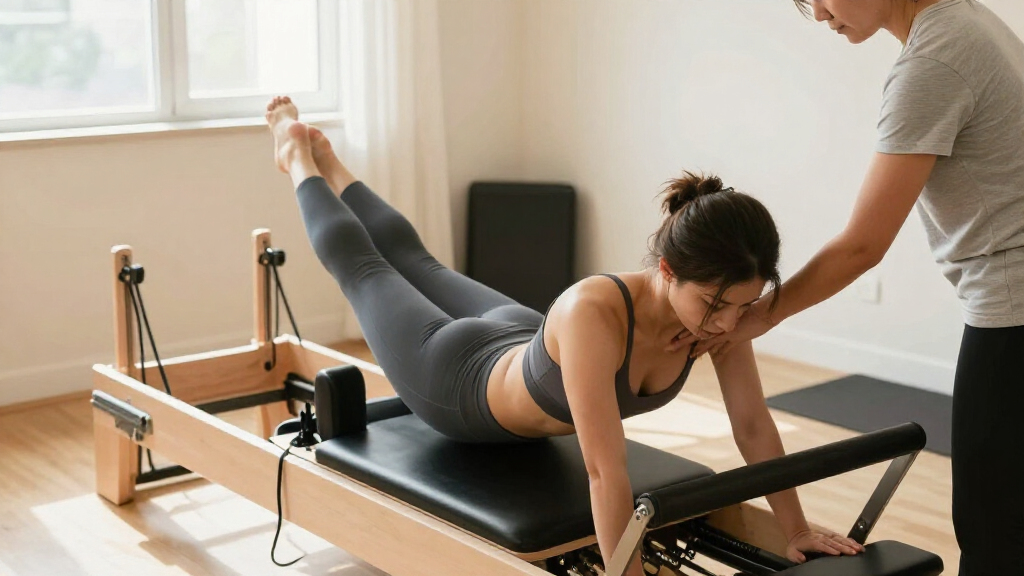
She also advises paying attention to breathing throughout the exercise. Enright says coordinating breath with movement can support core engagement, control and body awareness. Her third pointer is to use easier modifications when needed. These variations can help beginners practise the fundamentals before progressing. For people with a specific training goal or who are recovering from an injury, Enright recommends seeking help from a certified Pilates instructor who can offer alignment guidance and personalized modifications.
Why Technique Comes Before Difficulty
The advice addresses a practical problem for people starting Pilates: a move that looks achievable on a screen may demand more strength, coordination or control than they currently have. If they focus on copying the most advanced variation, they may lose the alignment and deliberate movement the exercise is meant to involve. Enright says that can shift effort to other muscle groups and create tension in the neck, shoulders or lower back.
The report describes discomfort or injury as a potential consequence, not an inevitable result. It also says repeated compensation may reinforce poor movement patterns over time. For beginners, the central takeaway is to treat simpler versions as a way to learn, not as a lesser achievement. That approach may help people build skill progressively and avoid making difficulty the measure of a successful session.
Breathing and modifications matter for the same reason: they give practitioners ways to manage control and adapt an exercise to their current ability. Enright’s guidance is not a clinical assessment or a guarantee against injury. People with pain, health concerns or a recovery plan should seek appropriate professional advice rather than relying on general tips alone.
Products Worth Considering

Garmin Forerunner 70 GPS Running Smartwatch, 43 mm, Black

Garmin Venu 3 Fitness Smartwatch, 45 mm, Black

Garmin Forerunner 570 GPS Running Smartwatch, 47mm, Aluminum, Black
As an affiliate, we earn on qualifying purchases.
The Fit&Well report begins with the contrast between polished Pilates content on social platforms and the level of practice needed to perform advanced movements with precision. Short videos can show the final exercise without explaining the strength-building, instruction or modifications that may come before it. The source does not assess particular posts or platforms, but it uses that online environment to explain why beginners may be tempted to skip ahead.
Enright’s recommendations follow a simple progression: work on alignment and control, coordinate breathing with movement, and choose an appropriate variation. Modifications can make a movement easier or harder, and the report encourages beginners to accept an easier option while learning. It does not prescribe a fixed timetable for progressing or identify a single set of exercises that every beginner should follow.
What the Report Does Not Establish
The source offers an instructor’s guidance, not a clinical study measuring how often beginners are injured or proving that advanced variations cause injury. It provides no data on the number of people affected, the likelihood of discomfort, or how long someone should practise foundational movements before progressing. Enright’s comments describe possible effects of compensating with other muscles, including tension and discomfort.
The report also does not assess an individual reader’s technique, fitness level or health history. It does not provide a comprehensive rehabilitation plan or say that Pilates is appropriate for every person or condition. Anyone who experiences pain, has an injury or is working toward a specific goal may need individualized advice from a qualified health professional or instructor.
How Beginners Can Put This Into Practice
For a first session, the report’s practical direction is to select a manageable version of each movement, proceed at a controlled pace and keep breathing in view. Beginners can focus on alignment and whether they can engage the intended muscles without adding tension elsewhere. If a variation feels difficult to control, using a simpler modification is consistent with Enright’s advice.
Those who want help with form can work with a certified Pilates instructor, particularly if they have a specific goal or are recovering from an injury. The source gives no formal progression schedule, so it remains up to the practitioner and, where appropriate, their instructor or health professional to decide when a harder variation is suitable.
Key Questions
What mistake does the report say Pilates beginners commonly make?
Instructor Marina Enright says beginners may choose advanced exercise variations too soon, before developing a strong foundation in the movement.
Should beginners avoid modifications?
No. Enright recommends using easier modifications to learn the fundamentals. She says modifications are part of building strength safely and effectively, not a sign of weakness.
Why does breathing matter during Pilates?
Enright says coordinating breath with movement can support core engagement, control and body awareness. She advises paying attention to breathing throughout practice.
What should someone do if they are recovering from an injury?
Enright recommends working with a certified Pilates instructor who can provide alignment guidance and personalized modifications. People recovering from injury should also follow advice from their relevant health professional.
Source: rss