
TL;DR

Get workout gear delivered free with Prime
- Fast, free delivery on millions of items
- Prime Video, Amazon Music and more included
- Member-only deals all year
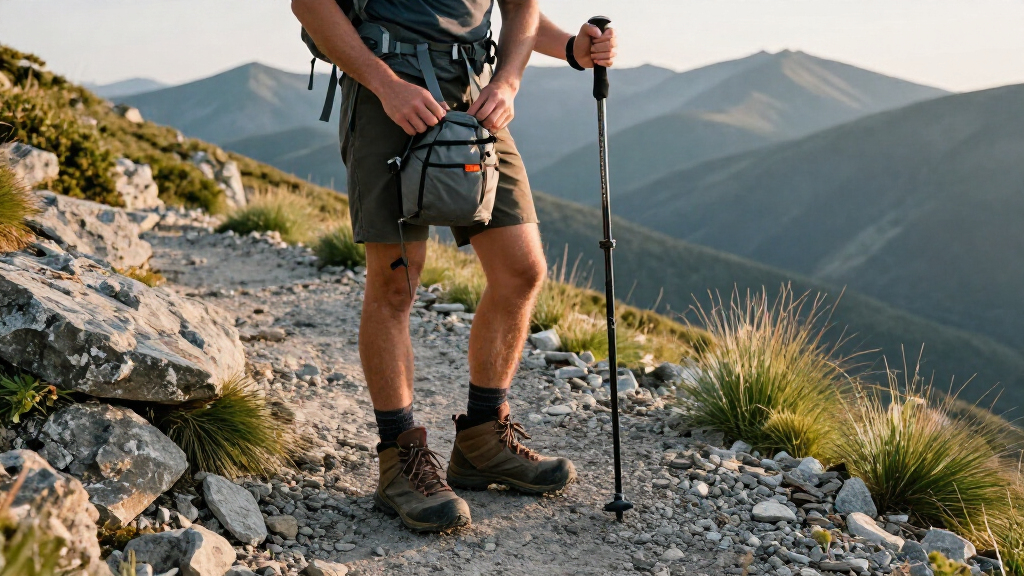
A Fit&Well writer says year-round step-ups and Bulgarian split squats helped them feel steadier while hiking to a 5,889-foot summit in Albania’s Albanian Alps. The exercises can be adapted at home or in a gym, but the report is a personal account, not evidence that the same routine will produce the same results for every walker.
A Fit&Well writer says regular step-ups and Bulgarian split squats helped them feel steady on a hike to a 5,889-foot (1,795-meter) summit in Albania’s Albanian Alps. The account offers walkers two ways to train single-leg strength, though it reports one person’s experience rather than proving the exercises will make uphill hiking easier for everyone.
The writer, who lives in London and says access to challenging terrain is limited, reported making trips farther afield several times a year. On the Albanian Alps trip, they said they were able to negotiate boulders and large rocks and had no “knee niggles” on the descent. They attributed their confidence and steadiness in part to doing single-leg exercises throughout the year.
The two movements are a step-up and a Bulgarian split squat, both included in the writer’s training plan by their coach. The writer also says they prescribe them for personal training clients. Each exercise works one leg at a time and can be performed with body weight before adding resistance, according to the report.
For a step-up, place one foot on a stable platform, press through that foot to rise, then lower the other foot with control. The report suggests eight to 12 repetitions per side. A Bulgarian split squat uses a raised platform behind the exerciser to support the top of one foot, while the other leg bends and straightens. The report also gives a target of eight to 12 repetitions per side for that movement.
Strength Work for Steeper Trails
The report’s practical point is that walkers can train some of the demands of uphill travel without living near a mountain. Step-ups reproduce the basic action of climbing onto a higher surface, while split squats challenge strength and balance with each leg working separately. The writer says these movements target the hips, hamstrings, quadriceps and glutes, and can also challenge core stability.
That makes the advice accessible to people who have a chair or suitable step at home, as well as gym users. Still, the account does not establish that these exercises alone prepare someone for a long or steep hike. Terrain, distance, pace, footwear, overall conditioning and individual health all affect how a walk feels. The report supports considering strength work as part of preparation, not treating it as a guarantee against discomfort or injury.
The exercises can be adjusted to change the challenge: use a lower platform for an easier step-up, or a higher one or a weight for a harder version. For the split squat, the report suggests adding dumbbells or holding a weight at the chest to increase difficulty. Progression should be gradual and based on ability rather than the summit height in someone else’s story.
Products Worth Considering

BowFlex Results Series SelectTech Adjustable Dumbbells (Pair)

Bowflex SelectTech 840 Adjustable Kettlebell

TheraGun Therabody PRO Plus 6-in-1 Deep Tissue Massage Gun, Black
As an affiliate, we earn on qualifying purchases.
How the Two Moves Work
The writer says their usual access to steep terrain is constrained by living in London, so they travel to walk more challenging routes a few times a year. The Albanian trip gave them an opportunity to reach a summit at 1,795 meters (5,889 feet). The article does not identify the peak by name or provide the hike’s distance, elevation gain, duration or route conditions.
In explaining the training, the report singles out controlled step-ups as a movement that resembles the action of going uphill. Both exercises are unilateral, meaning they emphasize one leg at a time. The report describes them as usable at home with a chair or at a gym, and notes that exercisers can move from body-weight versions to loaded ones. It does not provide a full hiking-training schedule or compare these exercises with other preparation methods.
What the Account Cannot Establish
The report does not show whether the two exercises caused the writer’s performance or whether other training, hiking experience, route choices or conditions contributed. It also does not name the summit, describe the route in detail or state exactly when the hike occurred. No comparison with hikers who did not do the exercises is provided, and the article does not claim the routine prevents knee pain or injuries.
Walkers’ strength, mobility and health vary, so the movements may not suit everyone in the same form. The source does not set out individualized coaching or a progression plan. Anyone with an existing injury, persistent pain or a health condition should seek appropriate professional guidance before changing their exercise routine; the movements should be performed on stable equipment and within a comfortable range.
Adapting Training Before a Hike
The report presents no scheduled follow-up, new study or formal training program. Its practical next step for readers is to try the movements at a manageable level: begin with body weight and a low, stable step for step-ups, and use a supported setup for split squats. The article’s suggested range is eight to 12 repetitions per side, but it does not prescribe how many sessions per week to do.
Those planning a demanding route will need to judge preparation against the hike itself, including its length, elevation gain and terrain. The writer’s experience can offer an idea for strength training, but it is not a substitute for building general walking fitness or choosing a route appropriate to one’s ability. Any future details about the hike or the writer’s program would be needed to assess how closely that preparation matched the conditions on the mountain.
Key Questions
Which two exercises did the writer use?
The report names step-ups and Bulgarian split squats. The writer says their coach includes both in their year-round training plan.
How high was the summit?
The writer reports reaching a summit at 5,889 feet (1,795 meters) in Albania’s Albanian Alps. The article does not identify the peak by name.
How many repetitions does the report suggest?
It suggests eight to 12 repetitions on each side for both exercises. This is the report’s guidance, not a personalized prescription for every walker.
Can the exercises be done at home?
According to the report, both can be done at home using a chair or a suitable stable platform. It recommends a lower surface to make a step-up easier and adding a weight or using a higher surface to make it harder.
Do the exercises guarantee easier hiking or prevent knee pain?
No. The writer describes a personal experience and says they had no knee niggles on the descent, but the report does not establish that the exercises caused that outcome or that they prevent pain or injury.
Source: fitandwell.com