TL;DR

Get workout gear delivered free with Prime
- Fast, free delivery on millions of items
- Prime Video, Amazon Music and more included
- Member-only deals all year
Researchers reported at the American Society for Reproductive Medicine meeting that the AI-powered STAR system detected at least one sperm in 26% of samples from 175 men previously classified as sperm-negative by manual examination. The team also reported at least three live births after sperm found with STAR was used for fertility treatment or preserved; the findings do not establish how well the system will perform in broader clinical use.
Researchers at Columbia University Fertility Center reported that an AI-powered system called STAR detected at least one sperm in 26% of samples from 175 men previously classified as sperm-negative by manual examination. The team said sperm found with the system has been used in cases resulting in at least three live births, offering a possible additional route for some couples seeking biological parenthood, though the findings do not establish how the tool will perform in routine clinical practice.
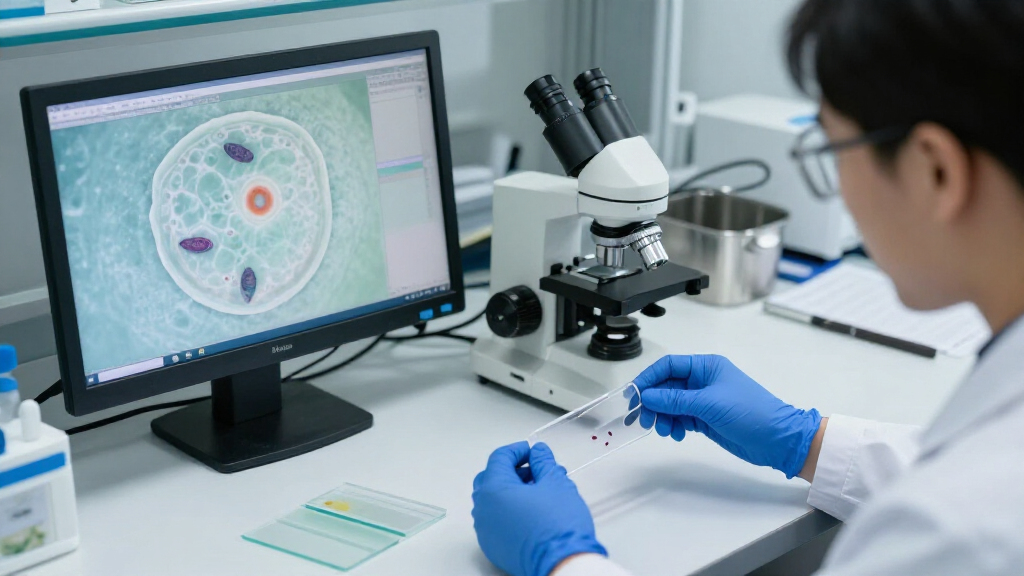
STAR, short for Sperm Tracking and Recovery, combines high-speed imaging, real-time artificial intelligence and microfluidic technology. According to the researchers, it captures and analyzes about two million images before isolating sperm identified by the system into a small volume. The approach is designed to find extremely scarce sperm that may be missed during a manual search.
In a test using samples spiked with 40 sperm, the researchers divided each sample between STAR and an expert clinician, giving each 60 minutes to search. Across 10 tests, STAR detected sperm in all 10 samples, while the clinician detected sperm in three. The system identified 167 sperm in total, compared with four found manually. These were controlled, prepared samples, rather than a direct measure of performance across all patients.
The team also assessed samples from 175 consecutive patients, with a median age of 36. All had been deemed sperm-negative through manual examination. STAR detected at least one sperm in 26% of samples; the researchers reported at least five sperm in 22% and at least 10 in 19%. Among patients who had already undergone testicular sperm extraction but were still classified as sperm-negative, STAR detected sperm in 29% of cases.
Hemant Suryawanshi, PhD, and colleagues said sperm recovered with STAR had been used for intracytoplasmic sperm injection (ICSI) or cryopreserved in cases involving at least three live births. One reported case involved a man who had undergone testicular sperm extraction twice. STAR found sperm in his ejaculate, and his partner gave birth in December 2025 after a 19-year history of infertility. The researchers said the case was reported as correspondence in The Lancet. Two other live births occurred in July and October 2026, according to Suryawanshi.
A Possible Alternative to Surgery
For men diagnosed with azoospermia, finding usable sperm can affect whether a couple can pursue fertility treatment using the male partner’s sperm. When no sperm is found in an ejaculate, the usual next step may be testicular sperm extraction (TESE) or microsurgical TESE, procedures that retrieve sperm from testicular tissue. The researchers said these operations can be painful and fail about half the time.
STAR’s reported detection rates suggest that some patients labeled sperm-negative after manual examination may have rare sperm in their samples. If the system can reliably identify and recover them, it could provide a less invasive option for some people or help identify candidates for treatment. But the reported live births show that sperm recovered with the technology has been used in successful pregnancies; they do not show that STAR itself improves overall birth rates or that it can replace surgery for every patient.
The findings matter to patients weighing emotionally and physically demanding fertility procedures, but they remain early evidence from a research team’s report. Decisions about treatment still depend on individual medical assessment and the availability of suitable sperm for use in procedures such as ICSI.
Products Worth Considering

Levoit Eleva 300X HEPA Air Purifier for Home and Bedroom

Levoit Vital 100S-P Air Purifier

BowFlex Results Series SelectTech Adjustable Dumbbells (Pair)
As an affiliate, we earn on qualifying purchases.
Why Manual Searches Can Miss Sperm
Azoospermia means that sperm are not detected in a semen sample. The researchers noted that in some cases, sperm may be present in such small numbers that they evade conventional manual examination. They cited estimates that azoospermia affects about 10% to 15% of infertile men and said male factors contribute to about half of infertility cases.
STAR was developed to address this detection problem by automating the search through a sample and concentrating detected sperm. Its performance in the spiked-sample comparison and its findings among 175 patients are distinct types of evidence: the first tested detection against a known number of sperm under prepared conditions, while the second reported what the system found in patients previously judged sperm-negative.
The team’s report was presented at the American Society for Reproductive Medicine annual meeting in Baltimore on October 27, 2026. The report describes results from the researchers and does not provide, in the supplied material, details of an independent clinical trial comparing patient outcomes with and without STAR.
“A substantial number of these patients have rare sperm, and the limitation is not the biological absence of sperm for these cases, it’s actually our lack of ability to detect the sperm.”
— Hemant Suryawanshi, PhD, of Columbia University Fertility Center, speaking to MedPage Today
Questions Before Wider Clinical Use
The report does not establish STAR’s accuracy across a broad range of clinics and patient groups, nor does it show whether the detection rates will be reproduced by independent teams. The comparison involving spiked samples used a limited set of controlled tests; results from that exercise should not be treated as a direct estimate of performance in routine patient care.
It is also unclear how often sperm detected by STAR can be recovered in numbers or condition suitable for fertility treatment, or how the system compares with existing approaches in patient outcomes, cost and access. The researchers reported at least three live births involving sperm found with STAR, but the supplied account does not give a total number of treatment attempts or a success rate. Those births therefore cannot establish the likelihood of success for other patients.
The researchers said STAR currently requires a highly trained technician. The timing for a simplified version, broader clinical validation or routine availability was not specified in the report.
Validation and Easier Operation
Suryawanshi’s team is working on a simpler version of STAR, according to the report, while other groups are developing similar tools. The next questions for patients and clinicians are whether STAR’s results can be reproduced independently, how it performs in everyday laboratory settings and whether its use leads to measurable improvements in treatment outcomes.
The researchers have not provided a timetable for those steps or for wider availability. Until further results are reported, STAR should be understood as a promising detection approach under development, rather than an established substitute for existing fertility procedures.
Key Questions
What is STAR?
STAR stands for Sperm Tracking and Recovery. It uses high-speed imaging, real-time AI and microfluidic technology to search for and isolate rare sperm in a sample.
How often did STAR detect sperm in the patient samples?
Researchers reported that STAR found at least one sperm in 26% of samples from 175 men previously classified as sperm-negative by manual examination. This is a finding from the reported patient group, not a guaranteed detection rate for all patients.
Does the report show that STAR leads to live births?
The research team reported at least three live births in which sperm found with STAR was used for ICSI or cryopreserved. The report does not provide enough information to calculate a treatment success rate or predict an individual couple’s chances.
Can STAR replace testicular sperm extraction?
The findings do not establish that STAR can replace TESE or microsurgical TESE. Researchers described it as a way to detect rare sperm, but its clinical role, performance and availability still need further assessment.
Is STAR widely available?
The report says STAR currently requires a highly trained technician. The research team is working on a simpler version, but no timetable for broader availability was given.
Source: medpagetoday.com