TL;DR

Get workout gear delivered free with Prime
- Fast, free delivery on millions of items
- Prime Video, Amazon Music and more included
- Member-only deals all year
A 16-week study of adults described as prefrail or frail found that 69.6% of participants assigned to high-intensity walking improved by one category on a frailty measure, compared with 46.4% in a casual-speed group. Both groups showed improvement, but the findings do not establish that brisk walking is suitable for everyone or that the results apply beyond the study population.
A 16-week study of prefrail and frail adults found that participants assigned to higher-intensity walking were more likely to improve by one category on a frailty measure than those walking at a self-selected, easier pace. The finding suggests that walking intensity may matter for this group, though both programs were associated with improvement and the results do not establish that the harder pace is appropriate for every older adult.
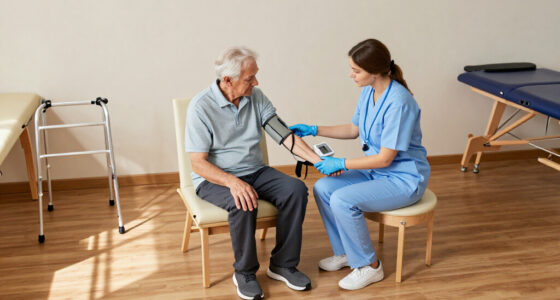
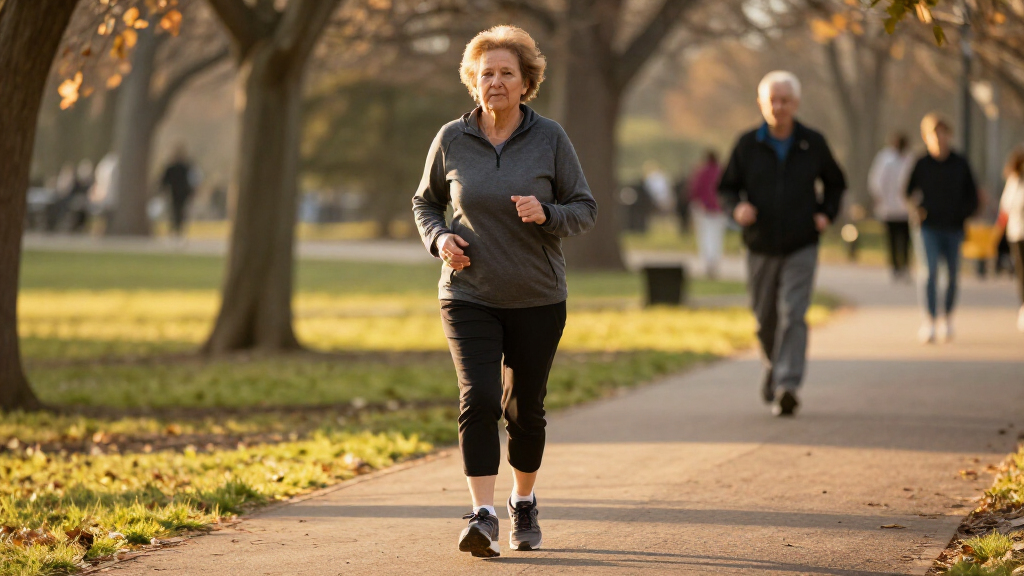
Participants completed three supervised walking sessions a week for 16 weeks. The high-intensity group aimed to reach about 70% of maximum heart rate, while the casual-speed group walked at self-selected speeds below 60% of maximum heart rate, according to the Fit&Well report describing the study.
At the end of the program, 69.6% of the high-intensity group had improved by one category on the Survey of Health Among Retired Europeans Frailty Index, known as SHARE-FI. The corresponding share in the casual-speed group was 46.4%. The supplied report does not provide the number of participants, confidence intervals, or other details needed to judge how precise the difference was.
SHARE-FI evaluates several features associated with frailty: self-reported fatigue and appetite loss, weakness measured through grip strength, functional ability such as walking 100 meters or climbing stairs without resting, and how often a person completes lower- or moderate-energy daily activities. The reported result concerns a change in one index category; it does not by itself show that participants became free of frailty or experienced improvements in every measure.
Why Walking Pace May Matter
The results offer a practical point for people and clinicians discussing activity and healthy aging: among the adults studied, a more demanding walking program was linked to a larger share improving on the frailty index than an easier-paced program. That may help inform future research and exercise planning for people with early or established frailty.
But the figures should not be read as proof that everyone should aim for 70% of maximum heart rate. The workouts were supervised and structured, and people differ in their health, mobility, medications, and ability to exercise safely. The study compared two walking programs; it did not establish the best approach for all older adults, nor did the reported results show whether benefits lasted after the 16-week program ended.
The comparison also leaves room for a less demanding option: 46.4% of the casual-speed group improved by one category. That result supports the importance of distinguishing the study’s measured outcome from a claim that casual walking has no value. A gradual, suitable activity plan may be more realistic for some people, but individual choices should take account of health and mobility.
Products Worth Considering

Bowflex SelectTech 840 Adjustable Kettlebell

BowFlex Results Series SelectTech Adjustable Dumbbells, Pair

Oral-B iO Series 9 Limited Rechargeable Electric Toothbrush with 7 Cleaning Modes
As an affiliate, we earn on qualifying purchases.
How the Study Measured Frailty
The study’s stated aim was to investigate whether there is an optimal walking intensity for prefrail and frail adults to support healthy aging. Its comparison focused on heart-rate targets: about 70% of maximum heart rate for the high-intensity group and below 60% for the self-selected-pace group.
The report attributes to the study authors the view that the higher-intensity approach may have a stronger effect because of the greater physiological stimulus produced by more intensive activity. That is the authors’ explanation of the results, not a separate outcome established by the percentages alone. The available source describes the program and headline findings but does not include enough methodological detail to assess the full study design or how participants were assigned to groups.
Maximum-heart-rate percentages are a way of describing exercise intensity, and some fitness watches display heart rate during activity. However, the study’s supervised target should not be treated as a universal training prescription. Device readings and individual tolerance can vary, and the report does not say that participants relied on consumer trackers to guide their sessions.
“High-intensity walking can reverse frailty more effectively than casual-speed walking due to increased physiologic stimuli during more intensive activity.”
— The study authors, as quoted in Fit&Well
Limits of the Reported Findings
The supplied report does not state the study’s sample size, publication date, participant characteristics, or follow-up period. It also does not give details such as the allocation method, statistical uncertainty around the percentages, or whether gains persisted after the 16-week intervention. Those omissions limit how confidently readers can generalize the result.
It is also unclear how many participants moved out of a frailty category entirely, whether the groups differed on individual SHARE-FI components, or whether there were adverse events. The figures are for the share improving by one category; they should not be interpreted as a measured reduction in falls, illness, disability, or mortality.
The report’s practical suggestions about interval walking are not themselves findings from this comparison. Anyone considering a more strenuous routine, particularly someone with a chronic condition, mobility limitations, or concerns about exertion, should seek individual guidance from a qualified health professional rather than treating the study’s target as personal advice.
Questions for Further Research
The next useful step is fuller reporting of the study’s methods and results, including participant numbers, statistical estimates, safety information, and longer-term follow-up. Those details would help show how reliable the group difference is and whether changes in the SHARE-FI score are sustained.
Further research could also clarify which participants benefit most from higher-intensity walking and how a supervised program compares with a gradual, independently followed routine. Until then, the study supports a measured conclusion: higher-intensity walking was associated with more one-category improvements in this group over 16 weeks, while the best and safest pace for an individual remains a personal question.
Key Questions
What did the study find?
After 16 weeks, 69.6% of the high-intensity group improved by one category on the SHARE-FI frailty measure, compared with 46.4% of the casual-speed group.
How intense was the walking program?
The high-intensity group aimed for about 70% of maximum heart rate. The casual-speed group walked at self-selected speeds below 60% of maximum heart rate. Sessions were supervised and held three times weekly.
Does the study show that brisk walking is best for every older adult?
No. The study compared two programs in prefrail and frail adults. Its findings do not establish a suitable pace for everyone, and individual health and mobility needs differ.
What does SHARE-FI measure?
It includes fatigue, appetite loss, grip strength, functional ability and participation in lower- or moderate-energy daily activities. The reported percentages refer to improving by one category on the index.
Should someone start walking at 70% of maximum heart rate?
The study does not provide a personal exercise prescription. Because its sessions were supervised, people considering harder exercise—especially those with health conditions or mobility concerns—should discuss an appropriate plan with a qualified health professional.
Source: fitandwell.com