
TL;DR

Get workout gear delivered free with Prime
- Fast, free delivery on millions of items
- Prime Video, Amazon Music and more included
- Member-only deals all year
A UCLA study found that adults whose brains appeared older than their chronological age tended to perform worse on some memory and thinking tests and report more depressive symptoms. In one of three study groups, a higher brain-age measure was also associated with particular gut bacteria and metabolic compounds; the findings show associations, not that gut microbes cause brain aging.
A UCLA Health study of nearly 1,500 adults found that people whose brains appeared older than their actual age tended to score lower on working-memory and executive-function tests and report more depressive symptoms. In one of the three participant groups, older-appearing brains were also associated with specific gut bacteria and compounds measured in stool, a finding that may help researchers investigate links between the gut and brain aging but does not show that bacteria cause cognitive changes.
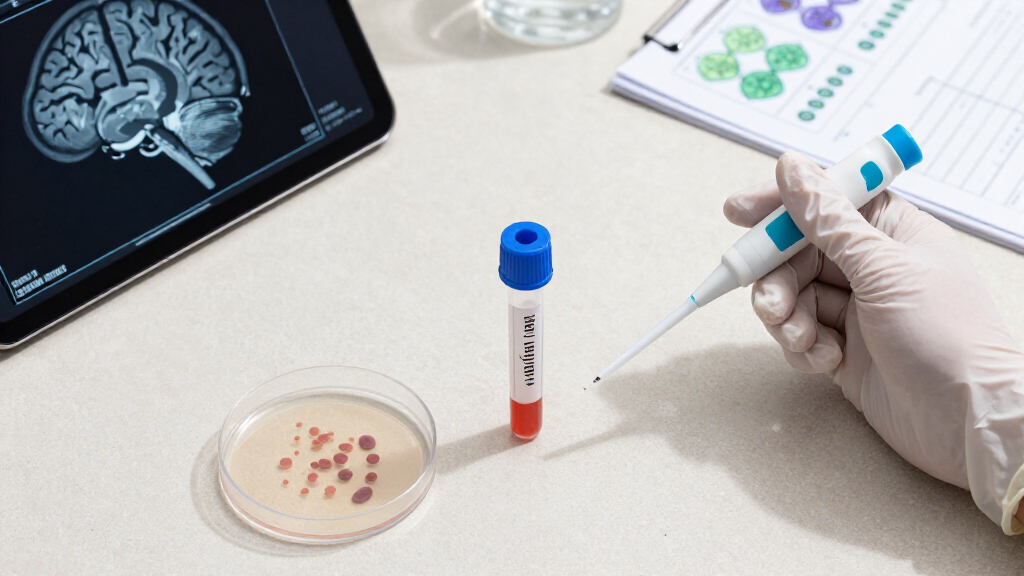
The study, published in eBioMedicine, divided participants among three groups and used brain scans to assess how different regions communicated while participants were at rest. Researchers trained a computer model to estimate each person’s age from these patterns, then compared that estimate with the person’s chronological age. The difference was called the Brain Aging Index.
Across all three groups, a higher index—indicating a brain that appeared older relative to chronological age—was generally associated with weaker performance on measures of working memory and executive function. These skills include holding information in mind, focusing, planning and organizing. Participants with higher scores also reported more symptoms of depression. The researchers said the recurring patterns involved brain areas associated with memory and self-referential thought.
Stool samples were analyzed for one group, not all three. In that group, the brain-aging measure was associated with particular gut bacteria and several metabolic byproducts, including certain fat molecules, a cholesterol-related compound and lower levels of the hormone estetrol. The researchers connected these signals to pathways involving immunity, blood-vessel function, communication between brain cells and cellular energy production. The report does not establish whether these gut-related differences precede, contribute to or result from differences in brain aging.
Why Early Brain-Age Signals Matter
The results extend research on brain age beyond studies focused mainly on older adults or people with existing neurological conditions. They suggest that measurable differences in brain connectivity, and associations with memory, thinking and mood, may also be present among adults who are not necessarily being studied because of a diagnosed condition. That makes the work relevant to research into how brain health varies earlier in life.
The gut findings add a potential line of inquiry: stool-based measures could help scientists study biological processes related to brain aging alongside scans and cognitive tests. But these results do not provide a screening test, predict an individual’s future health, or show that changing gut bacteria would preserve cognition. Any future use would require further studies to establish how reliable the associations are and whether they can guide useful interventions.
Products Worth Considering

Blueair Blue Pure 511i Max Smart Air Purifier

Oura Ring 5 Smart Ring, Gold, Size 8

Philips Sonicare DiamondClean Smart 9300 Electric Toothbrush, Black
As an affiliate, we earn on qualifying purchases.
How Researchers Estimated Brain Age
“Brain age” is an estimate derived from features of the brain, not a person’s birth date and not, by itself, a diagnosis. In this study, the estimate came from resting-state brain scans that captured communication patterns among brain regions. Comparing the model’s estimate with chronological age produced the Brain Aging Index, which the researchers used to examine differences between participants.
Earlier research has associated an older-appearing brain with poorer memory, weaker thinking skills and mood changes, but much of that work involved older people or those with neurological conditions. The UCLA study asked whether similar patterns were apparent across three groups of adults and examined gut samples in one group. Its design can identify associations, but it cannot establish the direction or cause of those relationships.
What the Gut Association Cannot Show
The findings are associations, not proof of cause and effect. The study does not show that particular bacteria or metabolites make the brain age faster, or that brain changes alter the gut. It also does not establish that the observed relationships predict later cognitive decline or mood disorders in individual participants.
The gut analysis covered only one of the three groups, and the supplied report does not specify which bacteria were associated with the index, the size of the effects, or how long participants were followed. It is also unclear whether the associations would hold in other populations. Those details matter before the findings can support risk prediction or practical advice about changing diet or gut microbes.
Further Studies Must Test the Links
The next research step is to test whether the reported relationships can be reproduced in other groups and to clarify how brain connectivity, gut bacteria and metabolites relate to one another over time. Studies that follow participants could help determine whether changes in gut signals come before changes in brain-age estimates, while intervention research would be needed to test whether altering gut health affects brain outcomes.
For now, the findings are a research lead rather than a basis for personal diagnosis or treatment. The supplied report does not identify a planned follow-up study or a timetable for additional results. Researchers would need stronger evidence before gut measurements could be used to identify people at risk or before gut-directed strategies could be recommended to support brain aging.
Key Questions
What does it mean for a brain to appear older than a person’s age?
In this study, a computer model estimated age from communication patterns among brain regions seen in resting-state scans. Researchers compared that estimate with chronological age and called the difference the Brain Aging Index. It is a research measure, not a diagnosis.
Did the study prove that gut bacteria cause faster brain aging?
No. In one participant group, the researchers found associations between the brain-aging measure and particular gut bacteria and metabolites. The study does not show that those gut signals cause brain changes or determine which came first.
What other outcomes were linked to a higher Brain Aging Index?
Across the three groups, participants with higher index scores generally performed worse on tests of working memory and executive function and reported more depressive symptoms. These are group-level associations, not a prediction for every participant.
Could a stool test now show how quickly someone’s brain is aging?
The report does not establish a clinical stool test or a method for predicting an individual’s brain aging from gut samples. The gut analysis was conducted in one of the three groups, and further research is needed to confirm the associations and assess their usefulness.
Source: rss