
TL;DR

Get workout gear delivered free with Prime
- Fast, free delivery on millions of items
- Prime Video, Amazon Music and more included
- Member-only deals all year
Adjustable dumbbell sets offer a space-saving, cost-effective way to get a full range of weights at home. The best choice depends on your workout style, space, and long-term goals, with focus on locking mechanisms, weight range, and adjustment speed.
Ever try lifting a pair of fixed dumbbells only to realize you need more or less weight? Or struggle with cluttered spaces filled with bulky equipment? Adjustable dumbbell sets solve both problems — offering a sleek, space-efficient way to load up for a variety of exercises. They turn a corner of your room into a mini gym, giving you versatile options without breaking the bank or overwhelming your space.
If you’re serious about staying consistent, knowing how to pick the right set can make all the difference. Not all adjustable dumbbells are created equal. Some change weights fast, others last longer, and some are better suited for beginners or heavy lifters. This guide breaks down what you need to know to find your perfect match, so you can lift smarter, not harder.
Choose a set with a weight range that matches your current fitness level and future goals.
Prioritize quick, secure adjustment mechanisms for seamless workouts and safety.
Durability depends on quality materials—metal handles and locking systems are worth investing in.
Proper storage keeps your space organized and prolongs equipment life.
Adjustable dumbbells support a full-body workout, making them ideal for versatile home routines.
What’s the real range of weights you get—and why it matters
Adjustable dumbbell sets vary widely in weight range, from as low as 2.5 kg (about 5.5 lbs) to over 32 kg (70 lbs) per dumbbell. Why does this matter? Because your current fitness level and goals determine what’s enough. A beginner doing light toning and mobility work might prefer a set starting at 2.5 kg, while a seasoned lifter aiming for strength might need 30 kg or more.
Understanding the weight range helps you tailor your workouts effectively. A set with too narrow a range might limit your progress, forcing you to buy additional equipment or upgrade prematurely. Conversely, a very heavy set might be unnecessary for beginners, adding cost and complexity without immediate benefit. The right range ensures your equipment grows with you, supporting gradual overload essential for muscle development and strength gains.
Choosing a suitable weight range also influences your workout variety. Lighter weights are crucial for mobility, rehab, or high-rep endurance training, while heavier weights facilitate maximum strength building. The tradeoff involves balancing initial cost and space with future needs—investing in a broader range can be more economical long-term, but might be overkill if your goals are modest or specific.
For most home users, a range of 2.5–24 kg per dumbbell covers the essentials—enough for curls, presses, and even some squats. But if you’re eyeing serious strength training, look for sets offering 32 kg or more per side. This flexibility supports a wider array of exercises and accommodates progression as your strength improves.
Products Worth Considering

BowFlex Results Series SelectTech Adjustable Dumbbells (Pair)

Levoit Core 400S-P Smart Air Purifier for Large Rooms

Oral-B iO Series 7 Rechargeable Electric Toothbrush with 2 Brush Heads and Charging Travel Case
As an affiliate, we earn on qualifying purchases.
How the adjustment mechanisms work—and which one fits your style
Adjustable dumbbells use different systems to change weights quickly and securely. The main types include:
- Dial-based systems: Turn a selector dial, and the weight changes instantly. This mechanism allows for rapid adjustments, making it ideal for workout routines that require frequent weight changes, such as circuit training or supersets. The tradeoff is that some dial systems may wear out faster with frequent use, or might not support very heavy weights.
- Pin-based systems: Insert a pin into a hole to select your weight. These are often very durable and simple to operate, providing reliable performance over time. They are well-suited for users who prioritize longevity and straightforward mechanics, though adjusting weights may take slightly longer than dial systems, which could disrupt workout flow.
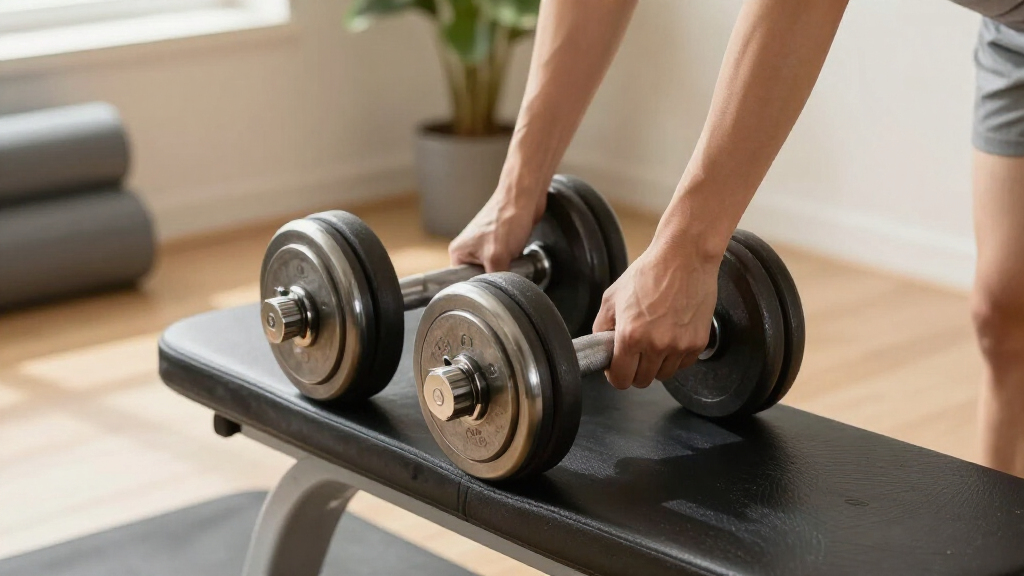
- Plate-loaded systems: Manually add or remove weight plates, similar to traditional barbells. This method offers precise control over incremental weight increases, which is critical for advanced lifters aiming for small, consistent gains. However, it requires more setup time and can be cumbersome during quick transitions between exercises.
- Slide or lever systems: Use a built-in lever or sliding mechanism to load weights. These are often compact and quick to adjust, providing a good balance between speed and control. They tend to be durable but may have limitations on maximum weight capacity or finer adjustments.
Choosing the right system depends on your workout style. If you value speed and convenience, dial or slide systems are preferable. For focused strength progression and durability, pin or plate-loaded models may serve you better. Consider also the frequency of adjustments during your routine, as some mechanisms are better suited for rapid changes while others excel in precision and longevity. The tradeoff often involves balancing convenience, complexity, and long-term durability.
Fast vs. slow: why adjustment speed can make or break your workout
Imagine doing supersets—your workout hinges on quick weight changes. Adjustable dumbbells with a quick turn of a dial or a simple pin slide can change weights in as little as 2-5 seconds. This rapid adjustment capability reduces downtime between sets, allowing you to maintain intensity and momentum, which is essential for hypertrophy and endurance training. The ability to seamlessly transition between exercises can significantly enhance workout efficiency and motivation.
In contrast, plate-loaded systems might take 30 seconds or more, as you manually add or remove plates. While slower, this method provides tiny, incremental weight adjustments—beneficial for precise overload and small progression steps, especially for advanced lifters. The tradeoff is that slower adjustments can interrupt workout flow, potentially reducing training density and increasing the risk of fatigue or loss of focus.
Choosing between fast and slow adjustment speeds depends on your workout priorities. Athletes doing high-intensity circuits or interval training benefit from quick changes to keep their pace. On the other hand, those focusing on strength and gradual progression might prefer the control and accuracy of slower, more deliberate adjustments. Balancing speed with control ensures your workout remains effective and safe, preventing rushed or unsafe lifting attempts during quick transitions.
Conclusion
Adjustable dumbbell sets turn your home into a flexible gym, saving space and money while expanding your workout options. Focus on quality, safety, and your specific needs when choosing. The right set keeps you moving, progressing, and feeling strong—no matter your space or goals.
They’re not just weights—they’re a smart investment in your health. So, pick wisely, lift confidently, and enjoy the journey.