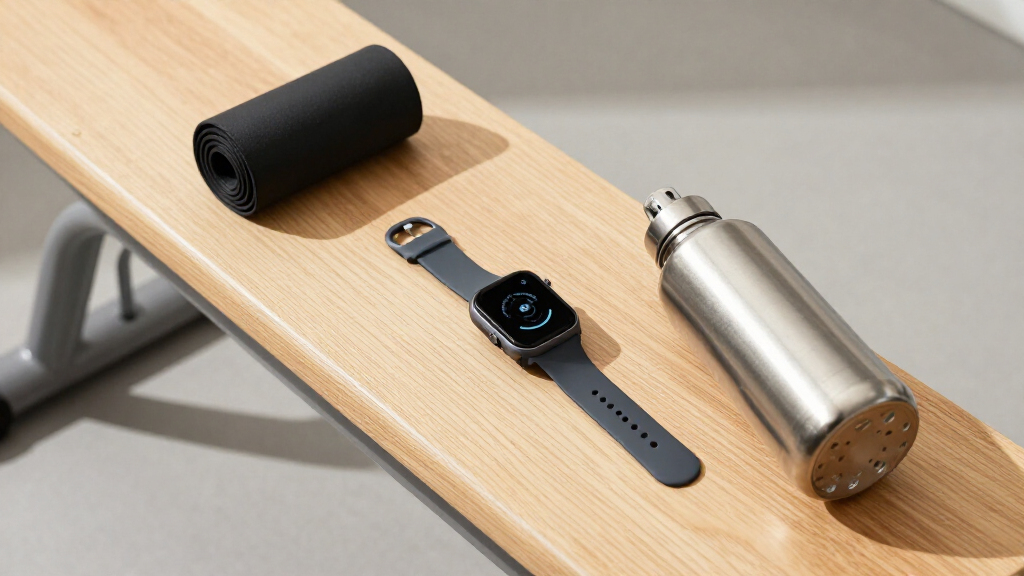
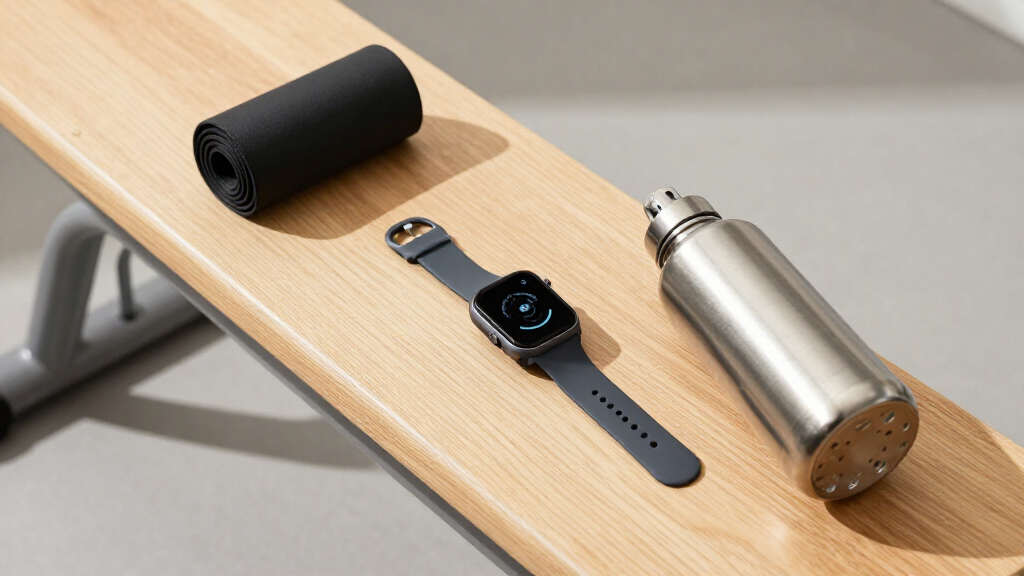
For workout tracking across exercise types, the Garmin vívoactive 5 is my best overall pick because built-in GPS and a full smartwatch display suit structured training better than simpler bands. The Fitbit Inspire 3 is a more streamlined option for everyday activity and health tracking, while WHOOP 5.0 suits people who want screenless recovery insights and accept a membership. The main tradeoffs are workout data depth versus simplicity, on-device feedback versus a screenless design, and a richer feature set versus fewer setup demands. I compare all 15 trackers by workout usefulness, fit, usability, and limitations below.

Get workout gear delivered free with Prime
- Fast, free delivery on millions of items
- Prime Video, Amazon Music and more included
- Member-only deals all year
Complete the kit



Key Takeaways
- Workout tools create the clearest ranking gap: the Garmin vívoactive 5 has built-in GPS and a display for in-session feedback, while most of the budget trackers listed rely on simpler tracking and phone-connected features.
- Screenless does not mean interchangeable: WHOOP 5.0, the Amazfit Helio Strap, Fitbit Air, and the unnamed screenless tracker differ in brand ecosystem and product detail, so buyers should check app access, subscription terms, and workout features before choosing.
- The Fitbit Inspire 3 is the clearest simpler alternative: it offers a named, established fitness-tracker format without the size and complexity of a full smartwatch.
- Several low-cost watches promise broad health metrics: MorePro, Zeacool, and similar models list measurements such as blood pressure or blood oxygen, but those claims should not replace medical devices or clinician guidance.
- Form factor changes workout convenience: the BIEMHA ring avoids a wrist display, while the HOMOGO and FITVII watches add call support; each format trades some workout-focused clarity for discretion or everyday communication.
| HOMOGO Smartwatch for Women with Bluetooth Calling, Health Tracking, and Two Bands |  | Best for Workout Variety | Display: 1.83-inch HD touchscreen | Sports modes: 100+ | Health metrics: Heart rate, blood oxygen (SpO2), stress, sleep, and menstrual cycle | VIEW LATEST PRICE | See Our Full Breakdown |
| Fitness Tracker Watch with Heart Rate Monitor and Pedometer |  | Best for Simple Workout Tracking | Sport modes: 9 | Tracked data: Heart rate, sleep, steps, calories, distance, and activity | Battery life: 5–7 days | VIEW LATEST PRICE | See Our Full Breakdown |
| Google Fitbit Inspire 3 Fitness and Health Tracker with Small and Large Bands |  | Best for Guided Activity and Recovery | Exercise modes: More than 40, with automatic exercise tracking | Tracked metrics: Heart rate, sleep duration, stress, and blood oxygen | Water resistance: Up to 50 meters; IP68 | VIEW LATEST PRICE | See Our Full Breakdown |
| BIEMHA Smart Ring Health and Fitness Tracker, Rose Gold, Size 8 |  | Best Compact, Screen-Free Pick | Model: VR11 | Size and color: Size 8; rose gold | Tracked data: Sleep, daily activity, and heart rate | VIEW LATEST PRICE | See Our Full Breakdown |
| FITVII Health and Fitness Tracker Smartwatch with Call Support |  | Best for GPS and Feature Breadth | Display: 1.85-inch LCD; 240 × 240 resolution | Sports modes: 120+ | Health tracking: Heart rate, blood pressure, sleep, and blood oxygen | VIEW LATEST PRICE | See Our Full Breakdown |
| WHOOP 5.0 Screenless Fitness and Health Wearable with 12-Month Membership |  | Best for Recovery-Focused Training | Display: Screenless | Battery life: 14+ days stated | Membership: 12-month WHOOP One membership included | VIEW LATEST PRICE | See Our Full Breakdown |
| Amazfit Helio Strap Screenless Activity Tracker |  | Best Screenless Pick for Strength Training | Operating system: Zepp OS | Battery life: Up to 10 days | Sports modes: 27 | VIEW LATEST PRICE | See Our Full Breakdown |
| Garmin vívoactive 5 GPS Smartwatch, 42 mm, Black |  | Best Overall for On-Wrist Workout Guidance | Display: AMOLED touchscreen | Case size: 42 mm | Battery life: Up to 11 days in smartwatch mode | VIEW LATEST PRICE | See Our Full Breakdown |
| MorePro Fitness Tracker with Heart Rate, Blood Pressure, Blood Oxygen and Sleep Tracking |  | Best for Broad Workout Mode Selection | Sport modes: 120+ | Water resistance: IP68; listed depth of 1.5 meters | Battery life: Up to 7 days normal use; up to 15 days standby | VIEW LATEST PRICE | See Our Full Breakdown |
| Bakoor C60 Fitness Tracker with 1.1-Inch AMOLED Display |  | Best Budget-Style Pick with a Display | Display: 1.1-inch AMOLED touchscreen | Sports modes: 25 | GPS: Connected GPS | VIEW LATEST PRICE | See Our Full Breakdown |
| ENGERWALL S5 Fitness Tracker with Heart Rate and Sleep Monitoring |  | Best for Simple Workout Tracking | Model: S5-Black | Water resistance: IP68 | Sports modes: 16 | VIEW LATEST PRICE | See Our Full Breakdown |
| Zeacool Fitness Tracker with Heart Rate, Blood Oxygen, and Sleep Monitoring |  | Best for a Wide Range of Workout Modes | Display: 1.47-inch AMOLED touchscreen | Sports modes: 123 | Battery life: Up to 10–14 days regular use; up to 30 days standby | VIEW LATEST PRICE | See Our Full Breakdown |
| Google Fitbit Air Screenless Activity Tracker, Obsidian |  | Best for Distraction-Free Wear | Display: Screenless | Battery life: Up to 7 days | Quick charging: 5 minutes for up to 1 day of battery life | VIEW LATEST PRICE | See Our Full Breakdown |
| D26E Fitness Tracker Smartwatch with Health and Sleep Monitoring |  | Best for On-Wrist Notifications | Model: D26E | Display: 1.47-inch TFT touchscreen | Water resistance: IP68 | VIEW LATEST PRICE | See Our Full Breakdown |
| Screenless Fitness Tracker with Sleep, Heart Rate, HRV, and SpO2 Monitoring |  | Best for Long Battery Life and Wellness Trends | Display: Screenless | Battery capacity: 180 mAh | Battery life: 20–30 days | VIEW LATEST PRICE | See Our Full Breakdown |
| smart fitness trackers for workout | Water resistance | Battery life | Compatibility | Display |
|---|---|---|---|---|
| HOMOGO Smartwatch for Women wi | IP68; stated depth of 1.5 meters | — | Android 8.0+ and iOS 13.0+ | 1.83-inch HD touchscreen |
| Fitness Tracker Watch with Hea | IP68 | 5–7 days | iOS 8.0+ or Android 4.0+; Bluetooth 4.0+ | — |
| Google Fitbit Inspire 3 Fitnes | Up to 50 meters; IP68 | — | iOS 16.4+ and Android 11.0+ | — |
| BIEMHA Smart Ring Health and F | Up to 80 meters | 2–3 days; over 5 days with smart charging case | — | — |
| FITVII Health and Fitness Trac | IP67; not suitable for diving or surfing | Up to 7 days; varies with use | Android 7+ and iOS 13.0+ | 1.85-inch LCD; 240 × 240 resolution |
| WHOOP 5.0 Screenless Fitness a | Not specified for the included device | 14+ days stated | — | Screenless |
| Amazfit Helio Strap Screenless | 50 meters | Up to 10 days | Android 7.0 and above; iOS 15.0 and above | — |
| Garmin vívoactive 5 GPS Smartw | — | Up to 11 days in smartwatch mode | — | AMOLED touchscreen |
| MorePro Fitness Tracker with H | IP68; listed depth of 1.5 meters | Up to 7 days normal use; up to 15 days standby | Android 7.0+ and iOS 13.0+ | — |
| Bakoor C60 Fitness Tracker wit | IP68 | Up to 7 days | Android 5.0 or later; iOS 9.0 or later | 1.1-inch AMOLED touchscreen |
| ENGERWALL S5 Fitness Tracker w | IP68 | Up to 5–7 days | — | — |
| Zeacool Fitness Tracker with H | — | Up to 10–14 days regular use; up to 30 days standby | iPhone and Android smartphones | 1.47-inch AMOLED touchscreen |
| Google Fitbit Air Screenless A | Up to 50 meters | Up to 7 days | Android 11.0 or higher; iOS 16.4 or higher | Screenless |
| D26E Fitness Tracker Smartwatc | IP68 | — | iOS 9.0+ and Android 4.4+ | 1.47-inch TFT touchscreen |
| Screenless Fitness Tracker wit | IP68 | 20–30 days | Android 4.4+ / iOS 9.0+ | Screenless |
More Details on Our Top Picks
HOMOGO Smartwatch for Women with Bluetooth Calling, Health Tracking, and Two Bands
The HOMOGO suits someone who wants a broad menu of activities and a smartwatch that can handle everyday communication, too. Its 100+ sports modes and walking and running auto-detection offer more activity options than the nine modes on the basic Fitness Tracker Watch. Heart rate, blood oxygen, stress, and sleep tracking add context around workouts, while Bluetooth calling means fewer reasons to reach for a phone between sessions. The two interchangeable bands make it easier to shift from a silicone workout fit to a dressier stainless steel look. The tradeoff is that GPS relies on a connected smartphone, so it is less suited to phone-free route tracking than the GPS-enabled FITVII. Its IP68 rating is intended for shallow swimming, but guidance excludes hot water and seawater.
Pros:- More than 100 sports modes, plus walking and running auto-detection
- Tracks heart rate, blood oxygen, stress, sleep, and menstrual cycle
- Bluetooth calling and notifications support everyday convenience
- Includes stainless steel and silicone bands
Cons:- GPS requires a connected smartphone
- Water-resistance guidance excludes hot water and seawater
Best for: People who want many workout modes, walking and running detection, and call features in a watch they can wear beyond exercise.
Not ideal for: Runners who want phone-free GPS, or swimmers who need a tracker intended for hot water or seawater.
- Display:1.83-inch HD touchscreen
- Sports modes:100+
- Health metrics:Heart rate, blood oxygen (SpO2), stress, sleep, and menstrual cycle
- Water resistance:IP68; stated depth of 1.5 meters
- Bands:Stainless steel and silicone
- GPS:Via smartphone
- Compatibility:Android 8.0+ and iOS 13.0+
- App:VeryFit
Our verdict“Choose the HOMOGO if workout variety and smartwatch communication matter more than independent GPS.”
Fitness Tracker Watch with Heart Rate Monitor and Pedometer
This watch keeps workout tracking straightforward: it logs heart rate, steps, calories, distance, and sleep without the extensive activity menu or calling features of the HOMOGO. Its nine sport modes are a better fit for people who stick to familiar activities than for anyone who wants to log a wide range of training; the FITVII, for example, lists more than 120 modes. A stated 5–7 days of battery life can help reduce charging interruptions, and the stopwatch, alarms, and sedentary reminders add practical support around a routine. The tradeoff is a deliberately limited smartwatch role: it cannot make calls or send texts, and GPS depends on a smartphone. Choose it for basic tracking and reminders, not for phone-free workout data or a large feature set.
Pros:- Tracks heart rate, sleep, steps, calories, distance, and activity
- Includes nine sport modes, a stopwatch, alarms, and sedentary reminders
- Stated battery life of 5–7 days
- IP68 water resistance
Cons:- Cannot make calls or send texts
- GPS and some app-based features require a compatible smartphone
Best for: New exercisers who want step, heart-rate, and sleep tracking with a few familiar sport modes and practical reminders.
Not ideal for: Athletes who need many activity profiles, phone-free GPS, or calls and texts from the wrist.
- Sport modes:9
- Tracked data:Heart rate, sleep, steps, calories, distance, and activity
- Battery life:5–7 days
- Charging time:2 hours
- Water resistance:IP68
- GPS:Via smartphone
- Compatibility:iOS 8.0+ or Android 4.0+; Bluetooth 4.0+
- Display shape and color:Rectangular; black
Our verdict“Pick this watch for routine tracking and reminders if you do not need calls, broad sport coverage, or standalone GPS.”
Google Fitbit Inspire 3 Fitness and Health Tracker with Small and Large Bands
The Inspire 3 is the most balanced choice here for people who want workout tracking alongside sleep and stress tools, rather than a call-focused smartwatch. It offers 40+ exercise modes, automatic exercise tracking, and heart-rate monitoring, while mindfulness and breathing sessions can help structure recovery days. Compared with the simpler nine-mode Fitness Tracker Watch, it gives more exercise options and adds a daily Sleep Score; the HOMOGO offers more listed sports modes and Bluetooth calling, but has a larger watch-style display. The Inspire 3’s 50-meter water resistance suits water-based activity better than FITVII’s IP67 rating, though GPS still requires a nearby phone. Some features require Fitbit Premium, and its operating-system requirements are newer than those of several alternatives.
Pros:- More than 40 exercise modes with automatic exercise tracking
- Tracks heart rate, activity, sleep, stress, and blood oxygen
- Includes mindfulness and breathing sessions and a vibrating alarm
- Water resistant up to 50 meters
Cons:- Some features require a Fitbit Premium membership
- GPS requires a nearby smartphone
- Requires iOS 16.4+ or Android 11.0+, limiting compatibility with older phones
Best for: People seeking a compact tracker for varied workouts, sleep and stress insights, and guided breathing or mindfulness sessions.
Not ideal for: Buyers who want independent GPS, wrist-based calls, or access to every app feature without a Premium membership.
- Exercise modes:More than 40, with automatic exercise tracking
- Tracked metrics:Heart rate, sleep duration, stress, and blood oxygen
- Water resistance:Up to 50 meters; IP68
- Bands:Small and large sizes; silicone
- Display input:Touchscreen
- GPS:Via smartphone
- Compatibility:iOS 16.4+ and Android 11.0+
- Storage:32 MB
Our verdict“Choose the Inspire 3 for exercise variety and recovery-focused tracking, provided you are comfortable using a phone for GPS.”
BIEMHA Smart Ring Health and Fitness Tracker, Rose Gold, Size 8
The BIEMHA takes the least watch-like approach in this lineup: it tracks sleep, daily activity, and heart rate in a screen-free ring, keeping your wrist free during workouts. That compact format may appeal to people who dislike wearing a watch to train, but its workout data is more limited than the Fitbit Inspire 3’s 40+ exercise modes or the HOMOGO’s extensive sports list. Heart-rate readings arrive every 30 minutes, so this is better suited to broad activity and recovery tracking than continuous workout monitoring. Its stated 80-meter water resistance is a strong specification, and no app subscription is required. The main compromises are a 2–3-day ring battery life without the charging case, no GPS, and the need to get the size right before buying.
Pros:- Compact ring format leaves the wrist free
- Tracks sleep, daily activity, and heart rate
- No app subscription required
- Stated water resistance up to 80 meters
Cons:- Heart-rate readings are taken every 30 minutes, limiting workout-specific monitoring
- Ring battery lasts 2–3 days without the smart charging case
- Sizing needs to be checked carefully before purchase
Best for: People who want unobtrusive sleep and daily-activity tracking and prefer not to wear a watch during workouts.
Not ideal for: Workout-focused buyers who need live exercise metrics, GPS, multiple sport modes, or a screen for at-a-glance feedback.
- Model:VR11
- Size and color:Size 8; rose gold
- Tracked data:Sleep, daily activity, and heart rate
- Heart-rate interval:Every 30 minutes
- Battery life:2–3 days; over 5 days with smart charging case
- Water resistance:Up to 80 meters
- Connectivity:Bluetooth
- GPS and subscription:No GPS; no app subscription required
Our verdict“Choose the BIEMHA for discreet, subscription-free daily tracking, not for detailed workout monitoring.”
FITVII Health and Fitness Tracker Smartwatch with Call Support
FITVII stands out for buyers who want GPS-enabled workout tracking and a large collection of activity modes in a full smartwatch format. Its 120+ sports modes exceed the HOMOGO’s already broad list, and the listed GPS capability gives it an advantage over options such as the Fitbit Inspire 3, whose GPS relies on a nearby phone. Bluetooth calls, notifications, music controls, and remote camera control also make it the most feature-packed wrist companion among these five. The tradeoff is that its IP67 rating is less suited to water-based training than the Inspire 3’s 50-meter rating or the HOMOGO’s shallow-swimming guidance. Health readings are for lifestyle use, not medical decisions, and battery life varies with use. Its broad feature set makes the most sense if you will use those extras.
Pros:- More than 120 sports modes
- GPS-enabled workout tracking
- Supports Bluetooth calls, notifications, music controls, and remote camera control
- Stated battery life of up to seven days
Cons:- IP67 water resistance is not suitable for diving or surfing
- Health measurements are for lifestyle use, not medical use
- Battery life varies with use
Best for: Runners and multi-sport users who want a smartwatch with GPS, many activity modes, and calls and controls on the wrist.
Not ideal for: Swimmers, divers, or surfers, and buyers who want medical-grade readings or a simpler tracker with fewer extras.
- Display:1.85-inch LCD; 240 × 240 resolution
- Sports modes:120+
- Health tracking:Heart rate, blood pressure, sleep, and blood oxygen
- GPS:GPS enabled
- Water resistance:IP67; not suitable for diving or surfing
- Battery life:Up to 7 days; varies with use
- Compatibility:Android 7+ and iOS 13.0+
- Bluetooth:Bluetooth 5.0
Our verdict“Choose FITVII if GPS and a broad smartwatch feature set matter more than stronger water protection or medical-grade measurements.”
WHOOP 5.0 Screenless Fitness and Health Wearable with 12-Month Membership
WHOOP 5.0 is built around training load and recovery, rather than a screen full of workout stats. It continuously tracks heart rate, HRV, sleep, strain, and other health metrics, then uses the WHOOP app for personalized insights and coaching. That makes it a stronger fit for people adjusting workout intensity around sleep and recovery than the Garmin vívoactive 5, which provides a display, built-in GPS, and a broad set of sports apps for in-session use.
The screenless design keeps attention off the wrist, and its 14+ day stated battery life means fewer charging interruptions than the MorePro and Bakoor trackers, each listed for up to seven days. The tradeoff is that you cannot check workout information directly on the band, and many insights depend on the app and membership. Water resistance for this included device is not specified, so I would not choose it based on an assumption of swim suitability.
Pros:- Continuously tracks activity, sleep, heart rate, and recovery metrics
- Personalized app insights and AI coaching help inform training decisions
- Stated battery life of 14 days or more
- Includes a CoreKnit performance band, Basic Charger, and 12-month WHOOP One membership
Cons:- Screenless design does not show workout information on the device
- Some features and insights depend on the app and membership
- Water resistance is not specified for the included device
Best for: Workout-focused users who want ongoing sleep and recovery guidance and are comfortable checking their data in an app.
Not ideal for: People who want on-wrist workout stats, built-in GPS, or clear water-resistance information before using a tracker for swimming.
- Display:Screenless
- Battery life:14+ days stated
- Membership:12-month WHOOP One membership included
- Tracked metrics:Heart rate, HRV, respiratory rate, VO2 Max, resting heart rate, steps, calories, sleep, strain, and recovery
- Included accessories:CoreKnit performance band and Basic Charger
- Water resistance:Not specified for the included device
Our verdict“Choose WHOOP 5.0 if recovery and training guidance matter more than a display or built-in GPS.”
Amazfit Helio Strap Screenless Activity Tracker
The Amazfit Helio Strap suits people who want workout and recovery tracking without a watch face to distract them. Its 27 sports modes include strength training, and it tracks sleep, heart rate, blood oxygen, stress, and recovery. Compared with WHOOP 5.0, it offers 50-meter water resistance and a specified set of sports modes, while WHOOP emphasizes personalized coaching and lists a longer battery life.
The Helio’s up to 10-day battery life is practical for regular training, and nylon construction gives it a different feel from the more watch-like Garmin vívoactive 5. But there is no built-in GPS, so route recording depends on a connected device or another source; it is less suited to runners who want location data from the tracker itself. App features also require a compatible Android or iOS phone, and its screenless format means workout information is not visible on your wrist.
Pros:- Supports 27 sports modes, including strength training
- Tracks heart rate, sleep, blood oxygen, stress, and recovery
- Water resistant to 50 meters
- Offers up to 10 days of battery life
Cons:- No built-in GPS for recording routes independently
- App features require a compatible Android or iOS device
- Screenless design does not provide on-wrist workout data
Best for: Strength-training and multisport users who want a screenless tracker with water resistance and recovery metrics.
Not ideal for: Runners and cyclists who want built-in GPS, or anyone who needs workout stats displayed on the wrist.
- Operating system:Zepp OS
- Battery life:Up to 10 days
- Sports modes:27
- Water resistance:50 meters
- GPS:No GPS
- Band material:Nylon
- Connectivity:Bluetooth
- Compatibility:Android 7.0 and above; iOS 15.0 and above
Our verdict“Pick the Helio Strap for screen-free strength and multisport tracking, but choose the Garmin vívoactive 5 if you need built-in GPS and a display.”
Garmin vívoactive 5 GPS Smartwatch, 42 mm, Black
The Garmin vívoactive 5 is the most complete workout companion in this group for buyers who want to see and manage activity from the wrist. Its AMOLED touchscreen, built-in GPS, and more than 30 sports apps cover a wider mix of guided workouts and outdoor tracking than the screenless WHOOP 5.0 or Amazfit Helio Strap. Sleep and nap tracking add context between sessions, while music storage and Garmin Pay make it more useful beyond exercise.
Its up to 11-day smartwatch-mode battery life is longer than the listed seven-day runtimes of MorePro and Bakoor, though frequent GPS use may change everyday charging needs. The extra smartwatch functions also mean more to manage than with a simple band, and health metrics are estimates rather than medical measurements. Smartphone notifications require pairing, so this is not a standalone communications device. I’d pick it over the screenless options when visible stats and GPS matter more than a minimal form.
Pros:- Built-in GPS supports outdoor workout tracking without relying on a phone for location
- AMOLED touchscreen makes workout information easy to view on the wrist
- More than 30 sports apps plus workout guidance and sleep and nap tracking
- Includes music storage and Garmin Pay
Cons:- Health metrics are estimates, not medical measurements
- Smart notifications require a paired smartphone
- More smartwatch functions may be unnecessary for buyers seeking a simple tracker band
Best for: Active users who want a visible workout interface, built-in GPS, and fitness and smartwatch features in one device.
Not ideal for: Buyers who prefer a screenless, low-distraction band or want health readings treated as medical measurements.
- Display:AMOLED touchscreen
- Case size:42 mm
- Battery life:Up to 11 days in smartwatch mode
- GPS:Built-in
- Sports apps:More than 30
- Connectivity:Bluetooth, USB, and Wi-Fi
- Weight:1.31 ounces
- Model number:010-02862-10
Our verdict“Choose the vívoactive 5 if built-in GPS and visible workout tools matter more than a screenless design.”
MorePro Fitness Tracker with Heart Rate, Blood Pressure, Blood Oxygen and Sleep Tracking
The MorePro stands out for more than 120 sport modes, giving workout hoppers a wider menu than the 25 modes on the Bakoor C60 or 27 on the Amazfit Helio Strap. It also tracks heart rate, sleep, steps, distance, calories, and several other health measures, with cycle tracking and phone notifications for everyday use. That breadth makes it appealing if one device needs to cover varied activities as well as basic daily tracking.
Its main limitation is that there is no GPS, so it cannot independently record an outdoor route; the Garmin vívoactive 5 is a better fit for runners who want built-in location tracking. MorePro’s health measurements, including blood pressure, are explicitly not intended for medical use, so I would treat them as reference data rather than clinical readings. The listed up to seven-day normal-use battery life is shorter than WHOOP 5.0’s stated runtime, and app use requires a compatible phone.
Pros:- More than 120 sport modes cover a broad range of activities
- Tracks heart rate, blood oxygen, sleep, steps, and other daily metrics
- Includes menstrual cycle tracking, notifications, and reminders
- Up to seven days of normal-use battery life
Cons:- No GPS functionality for independent route recording
- Health measurements are not intended for medical use
- Requires a compatible Android or iOS device and is not compatible with PCs or tablets
Best for: People who switch among many workout types and want a broad activity menu plus cycle tracking and daily notifications.
Not ideal for: Outdoor athletes who need GPS route recording, or buyers seeking medical-grade blood pressure or other health readings.
- Sport modes:120+
- Water resistance:IP68; listed depth of 1.5 meters
- Battery life:Up to 7 days normal use; up to 15 days standby
- Charging time:About 2 hours
- Compatibility:Android 7.0+ and iOS 13.0+
- GPS:No GPS functionality
- Band material and width:Silicone; 20 millimeters
- Metrics:Blood oxygen, blood pressure, heart rate, sleep duration, and step count
Our verdict“Choose MorePro for its unusually broad workout-mode selection, but choose the Garmin vívoactive 5 if built-in GPS is a priority.”
Bakoor C60 Fitness Tracker with 1.1-Inch AMOLED Display
The Bakoor C60 offers a straightforward middle ground: unlike the screenless WHOOP 5.0 and Helio Strap, it puts workout information on a 1.1-inch AMOLED touchscreen. Its 25 sports modes, activity and sleep tracking, and connected GPS cover the basics for users who want a visible tracker and route recording through a connected phone. The Garmin vívoactive 5 is the stronger choice for built-in GPS and a broader sports app selection, but the C60 keeps its feature set simpler.
That simplicity comes with limits. Connected GPS is not built-in GPS, so route tracking depends on a phone connection, and its 25 modes are fewer than MorePro’s 120-plus. The listed battery life is up to seven days, shorter than the Garmin’s smartwatch-mode figure and WHOOP’s stated 14-plus days. Health readings are for reference only, and the product data lists no warranty, which may matter to buyers who want clearer support coverage.
Pros:- 1.1-inch AMOLED touchscreen displays information on the wrist
- Offers 25 sports modes and connected GPS
- IP68 water-resistant design
- Up to seven days of battery life
Cons:- GPS is connected rather than built in, so route recording depends on a phone
- Health measurements are for reference only
- Product data lists no warranty
Best for: Phone-carrying exercisers who want an AMOLED display, basic workout tracking, and connected route recording.
Not ideal for: Athletes who need built-in GPS, a large range of workout modes, or a stated warranty.
- Display:1.1-inch AMOLED touchscreen
- Sports modes:25
- GPS:Connected GPS
- Water resistance:IP68
- Battery life:Up to 7 days
- Standby time:Up to 15 days
- Charging time:2 hours
- Compatibility:Android 5.0 or later; iOS 9.0 or later
Our verdict“Choose the Bakoor C60 for a basic displayed tracker with connected GPS, but step up to the Garmin vívoactive 5 for built-in GPS and more sports apps.”
ENGERWALL S5 Fitness Tracker with Heart Rate and Sleep Monitoring
The ENGERWALL S5 suits buyers who want workout basics in a slim band without a large screen or a crowded feature set. Its 16 sports modes, connected GPS, and tracking for activity, sleep, and health metrics cover everyday exercise, while up to 5–7 days of battery life limits charging interruptions. Compared with the D26E, the S5 gives a clearer battery-life estimate, but its listing doesn’t specify a touchscreen or customizable watch faces. Its built-in USB-A connector also means one less cable to carry, though the lack of an included cable can be inconvenient if a USB port isn’t accessible. IP68 resistance supports swimming and daily wear, not prolonged soaking, hot baths, or saunas. Blood pressure tracking requires activation in the app, so I’d treat this as a straightforward activity companion rather than a medical monitor.
Pros:- Tracks activity, sleep, and multiple health metrics in one slim band
- Includes 16 sports modes and smartphone-connected GPS
- Built-in USB-A charging avoids a separate charging cable
- Displays call and message notifications
Cons:- Blood pressure tracking must be enabled in the app
- IP68 rating does not make it suitable for hot baths, saunas, or long periods of soaking
- No charging cable is included, and the listed battery life is shorter than the Zeacool’s
Best for: Walkers and casual exercisers who want a lightweight band with several workout modes, connected GPS, and a stated battery-life range.
Not ideal for: Swimmers who need a device for prolonged water exposure, or buyers who want a detailed on-device display and an included charging cable.
- Model:S5-Black
- Water resistance:IP68
- Sports modes:16
- Battery life:Up to 5–7 days
- Charging:Built-in USB-A connector; no charging cable included
- App:Runmefit
- Warranty:1 year
Our verdict“Choose the S5 for a simple, slim workout band with connected GPS, but pick the Zeacool if you want a larger AMOLED screen and more listed sports modes.”
Zeacool Fitness Tracker with Heart Rate, Blood Oxygen, and Sleep Monitoring
The Zeacool is the strongest fit here for buyers who want to select from many activity profiles on the band: its 123 sports modes outnumber the ENGERWALL S5’s 16 and the D26E’s unspecified set. The 1.47-inch AMOLED touchscreen also gives workout summaries and notifications more room than a screenless tracker like the Google Fitbit Air. Its listed tracking includes heart rate, blood oxygen, sleep, steps, distance, and calories, and the claimed 10–14 days of regular-use battery makes frequent charging less of a concern. The tradeoff is that recorded activity data is reviewed through the Da Fit app, rather than being fully useful without a phone. Blood pressure and temperature features are listed without accuracy details, so I wouldn’t choose it for health decisions based on those readings.
Pros:- Offers 123 sports modes for a wide range of workout selections
- 1.47-inch AMOLED touchscreen makes data and notifications easy to view
- Tracks heart rate, blood oxygen, sleep, steps, distance, and calories
- Lists up to 10–14 days of regular-use battery life
Cons:- Da Fit is required to review recorded activity data
- Accuracy details are not provided for listed blood pressure and temperature measurements
- App-dependent data access may not suit buyers seeking a more self-contained tracker
Best for: Phone-connected exercisers who want an AMOLED display, a broad selection of activity modes, and longer stated battery life between charges.
Not ideal for: Buyers who want to review workout data without an app, or who need validated accuracy information for blood pressure or temperature readings.
- Display:1.47-inch AMOLED touchscreen
- Sports modes:123
- Battery life:Up to 10–14 days regular use; up to 30 days standby
- Water and dust resistance:IP68
- Compatibility:iPhone and Android smartphones
- Material:ABS
- App:Da Fit
Our verdict“Choose the Zeacool if workout-mode variety and a vivid screen matter more than app-independent data access.”
Google Fitbit Air Screenless Activity Tracker, Obsidian
The Google Fitbit Air takes a different approach from the Zeacool and D26E: it has no screen, keeping workout and sleep wear visually unobtrusive instead of putting stats on your wrist. Its micro-adjustable performance loop and water resistance up to 50 meters suit all-day wear and varied training, while heart rate, activity, and blood oxygen tracking cover core fitness signals. When charging time is tight, five minutes is listed as enough for up to a day of use—a practical advantage over the ENGERWALL S5, which has no quick-charge claim. The tradeoff is reliance on a compatible phone for use and on the Fitbit ecosystem for viewing data. Google Health Premium coaching requires a separate subscription, so buyers who want guided coaching should factor that into their choice.
Pros:- Screenless design avoids visual distractions during workouts
- Micro-adjustable band is designed for all-day, exercise, and sleep wear
- Five-minute charge is listed to provide up to one day of battery life
- Water resistance up to 50 meters
Cons:- No on-band screen for viewing workout stats or notifications
- Requires a compatible Android or iOS smartphone
- Google Health Premium coaching requires a separately sold subscription
Best for: People who want a low-distraction tracker for workouts and sleep, and are comfortable checking their data on a compatible phone.
Not ideal for: Buyers who want live workout stats on their wrist, prefer not to rely on a smartphone, or want coaching without a separate subscription.
- Display:Screenless
- Battery life:Up to 7 days
- Quick charging:5 minutes for up to 1 day of battery life
- Water resistance:Up to 50 meters
- Band:Google Performance Loop Band; 130–210 mm
- Compatibility:Android 11.0 or higher; iOS 16.4 or higher
- Sensors:Optical heart rate monitor, 3-axis accelerometer, gyroscope, device temperature sensor, and red and infrared SpO2 sensors
Our verdict“Choose the Fitbit Air if you value unobtrusive wear and quick charging over checking workout information directly on the tracker.”
D26E Fitness Tracker Smartwatch with Health and Sleep Monitoring
The D26E is the display-first pick for buyers who want workout tracking alongside a more conventional smartwatch experience. Its 1.47-inch TFT touchscreen, customizable watch faces, and phone notifications make everyday checks easier than on screenless options such as the Google Fitbit Air. It tracks steps, calories, distance, sleep, heart rate, and blood oxygen, with multiple sports modes and GPS through a connected smartphone. That GPS setup can record routes without putting GPS hardware in the band, but outdoor tracking depends on carrying a compatible phone. Compared with the ENGERWALL S5, the D26E adds a specified touchscreen and menstrual cycle tracking, yet its battery life is not stated, making it harder to plan charging. I’d choose it for wrist-visible basics, not for buyers who prioritize standalone route tracking or predictable endurance.
Pros:- 1.47-inch touchscreen with customizable watch faces
- Tracks health, sleep, steps, calories, and distance
- Includes multiple sports modes and smartphone-connected GPS
- Works with iPhone and Android devices
Cons:- GPS requires a connected smartphone
- Battery life is not specified
- TFT display is less vivid by specification than the Zeacool’s AMOLED screen
Best for: Android or iPhone users who want an affordable-feeling smartwatch format for everyday workouts, wrist-visible notifications, and basic activity tracking.
Not ideal for: Runners who want GPS without carrying a phone, or buyers who need a stated battery-life estimate before choosing a tracker.
- Model:D26E
- Display:1.47-inch TFT touchscreen
- Water resistance:IP68
- GPS:Via smartphone
- Connectivity:Bluetooth
- Compatibility:iOS 9.0+ and Android 4.4+
- Band:16 mm silicone band
- Health features:Heart rate, blood oxygen, sleep, and menstrual cycle tracking
Our verdict“Choose the D26E if wrist-visible notifications and a touchscreen matter more than phone-free GPS or a clearly stated battery life.”
Screenless Fitness Tracker with Sleep, Heart Rate, HRV, and SpO2 Monitoring
This screenless tracker stands out for combining a broad set of wellness metrics with a 20–30 day stated battery life, the longest listed here. Heart rate, SpO2, HRV, stress, activity, and sleep tracking feed into the free QwatchPro app, where trend reports can help buyers review patterns instead of checking a display mid-workout. Its 170+ sports modes also exceed the Zeacool’s 123, although both rely on a phone for connected GPS. At 25 g, it is designed to stay lightweight during exercise and sleep. The tradeoff is the screenless format: unlike the D26E, it cannot show workout data on the wrist. Its readings are for reference only, not medical measurements, so I’d treat the metrics as general wellness context rather than clinical results.
Pros:- Lists 20–30 days of battery life in a lightweight 25 g design
- Tracks heart rate, SpO2, HRV, stress, activity, and sleep
- Offers over 170 sports modes and smartphone-connected GPS
- Free QwatchPro app includes wellness insights and trend reports
Cons:- No screen for checking workout data on the band
- GPS requires a connected smartphone
- Readings are for reference only and are not medical measurements
Best for: Phone-connected exercisers who prefer screenless wear, want broad wellness tracking and workout modes, and value fewer charging stops.
Not ideal for: People who want live stats on their wrist, phone-free GPS, or medical-grade readings for health decisions.
- Display:Screenless
- Battery capacity:180 mAh
- Battery life:20–30 days
- Charging time:About 2 hours
- Weight:25 g
- Water resistance:IP68
- Sports modes:170+
- GPS and app:Smartphone-connected GPS; QwatchPro
- Compatibility:Android 4.4+ / iOS 9.0+
Our verdict“Choose this tracker if long battery life and app-based wellness trends matter more than on-wrist stats or phone-free GPS.”
How We Picked
I ranked these smart fitness trackers for workouts by how clearly their described features support training, not by the length of their health-metric lists. My main criteria were workout feedback, GPS or activity-tracking capability where specified, display and control usability during exercise, fit and wearability, and how much setup or ongoing commitment a product may require. I also considered whether the product description gives enough detail for a buyer to judge its workout role.
The Garmin vívoactive 5 ranks first because its built-in GPS and smartwatch format give it the strongest stated foundation for workouts among these options. The Fitbit Inspire 3 follows as a simpler named fitness tracker, while the screenless WHOOP and Amazfit options appeal to buyers who value unobtrusive wear over at-a-glance workout feedback. Models with sparse descriptions or broad health claims rank lower because they offer less verifiable workout differentiation from the information supplied. Where exact workout modes, accuracy, compatibility, or membership terms are not stated, I avoid treating them as confirmed advantages.
| smart fitness trackers for workout | GPS |
|---|---|
| HOMOGO Smartwatch for Women wi | Via smartphone |
| Fitness Tracker Watch with Hea | Via smartphone |
| Google Fitbit Inspire 3 Fitnes | Via smartphone |
| BIEMHA Smart Ring Health and F | — |
| FITVII Health and Fitness Trac | GPS enabled |
| WHOOP 5.0 Screenless Fitness a | — |
| Amazfit Helio Strap Screenless | No GPS |
| Garmin vívoactive 5 GPS Smartw | Built-in |
| MorePro Fitness Tracker with H | No GPS functionality |
| Bakoor C60 Fitness Tracker wit | Connected GPS |
| ENGERWALL S5 Fitness Tracker w | — |
| Zeacool Fitness Tracker with H | — |
| Google Fitbit Air Screenless A | — |
| D26E Fitness Tracker Smartwatc | Via smartphone |
| Screenless Fitness Tracker wit | — |
Factors to Consider When Choosing Smart Fitness Trackers For Workouts
Choosing a tracker for exercise is less about collecting the most metrics and more about getting the right information at the right moment. These buying factors can help separate a capable training companion from a device that mainly records general activity.
Choose Between Wrist Feedback and Screenless Tracking
A display lets you check elapsed time, heart rate, or other available workout data without reaching for your phone, which can be useful during intervals or outdoor sessions. A screenless band may be more comfortable and less distracting, but you usually depend on a phone app to review details. Rings create another tradeoff: they minimize wrist bulk but may not suit every activity or grip-heavy exercise. Think about when you actually check data during a session rather than assuming more screen features are always better. If you follow timed workouts, prioritize controls and readable feedback; if you mostly review trends afterward, a screenless design may be enough.
Decide Whether Built-In GPS Matters
Runners, cyclists, and hikers who want route and distance records should check whether GPS is built into the tracker or requires a connected phone. Phone-connected GPS can work well if you already carry your phone, but it adds a dependency and may be less convenient for phone-free sessions. For indoor strength training, GPS may have little value compared with comfortable wear and easy workout controls. Do not infer GPS support from a product being called a smartwatch or fitness tracker; verify the exact model specification. Paying for location features makes most sense when outdoor distance or route history is part of your regular training.
Match Tracking Claims to Your Actual Workout Goals
Heart-rate tracking may help you follow effort across cardio sessions, but a listed sensor does not guarantee the same usefulness during every movement. Fast intervals, weight training, loose fit, and wrist motion can all affect readings. Buyers focused on strength work may care more about workout logging and comfort than additional health metrics. Treat blood pressure and oxygen measurements on consumer wearables as wellness estimates unless the maker and relevant authorities state otherwise; do not use them to diagnose or manage a condition. Choose the measurements you will act on, and avoid paying attention to a long feature list that does not support your training decisions.
Check Fit, Comfort, and Exercise Compatibility
A tracker that irritates your skin or shifts during movement is unlikely to become a dependable workout tool. Consider band adjustment, case size, material, and whether the design stays comfortable during both exercise and sleep if you plan to wear it around the clock. A ring avoids a wrist strap but can feel restrictive during lifting or gripping, so the right fit depends on your activities. If a package includes alternate bands, check whether their sizes and materials suit your routine rather than treating extras as automatic value. When possible, review the maker’s sizing and care guidance before choosing a less adjustable form factor.
Account for Apps, Memberships, and Data Access
A tracker is only useful if its app presents workout records in a way you can understand and continue using. Some products may depend on a paid membership for particular insights or services, so read current membership terms before buying rather than assuming every feature is included with the device. Check phone compatibility, data export options, and whether the app supports the training habits you already have. Switching brands can also split your history across multiple accounts, which matters if you track progress over years. A simpler tracker with accessible records may be a better fit than a feature-rich device whose ongoing costs or app limits do not suit you.
Pay for Training Tools, Not Just More Metrics
A higher-end tracker is easiest to justify when its features change how you train, such as built-in GPS, clearer session feedback, or recovery tools you will use consistently. Extra health measurements do not automatically improve workout decisions, and a low-cost watch can still cover basic step and activity tracking if that is all you need. Before paying more, name the specific limitation you want to solve: carrying a phone, reviewing intervals, monitoring training load, or wearing a bulky watch. Then confirm the exact model supports that use case. This avoids spending on features that sound advanced but do not address your day-to-day routine.
Frequently Asked Questions
Which tracker in this roundup is the strongest choice for outdoor runs without a phone?
The Garmin vívoactive 5 is the clearest option here for that use because its listing specifies built-in GPS. The other product descriptions do not establish the same phone-free GPS capability, so do not assume they can record routes independently. Before buying, check that the exact model supports the metrics and mapping features you want, since GPS alone does not guarantee every running function. If you usually carry a phone, a tracker that uses connected GPS may still meet your needs.
Should I choose a screenless tracker or a watch for interval workouts?
For intervals where you need to check time or effort mid-session, a watch with an accessible display is usually easier to use. Screenless options such as WHOOP 5.0 and the Amazfit Helio Strap are better suited to people who prefer to review information after training and want less wrist distraction. The right pick depends on whether live feedback changes your pacing or exercise choices. Check how each app records workouts and whether the device offers controls you can use without stopping.
Are the blood pressure and blood oxygen features on budget trackers suitable for medical decisions?
No. Features listed on models such as MorePro or Zeacool should be treated as consumer wellness measurements unless the specific device has appropriate medical authorization for the intended use. Wearable readings can vary with fit, movement, and measurement conditions. Do not use them to diagnose a condition, change medication, or delay care. If you need reliable measurements for a health concern, ask a clinician which validated device is suitable.
Is WHOOP 5.0 a good choice if I do not want an ongoing membership?
It may not be the right fit if you want to avoid recurring commitments, since its listed package includes a 12-month membership and buyers should verify current terms for features after that period. Compare its screenless, recovery-oriented approach with the Garmin vívoactive 5 or Fitbit Inspire 3 if you prefer a display-centered tracker. Decide whether the insights and app experience are worth any continuing membership cost before purchasing. Check the current plan details rather than relying only on the included-term wording.
Can a fitness ring replace a wrist tracker for every kind of workout?
Not for every buyer or activity. The BIEMHA ring offers a less visible form factor, but a ring can be uncomfortable or impractical during lifting, gripping, or exercises where hand contact is frequent. A wrist tracker is often easier to check during a session and may suit a wider range of training routines. If you mainly want discreet everyday tracking, a ring could fit; if workout controls and live feedback matter, compare it with a watch before choosing.
Conclusion
For a single versatile workout pick, I recommend the Garmin vívoactive 5 as best overall, especially for buyers who want a display and built-in GPS. My best value direction is the Fitbit Inspire 3 for people who want a simpler, recognizable fitness-tracker format without stepping up to a full smartwatch. For a premium, screenless training approach, consider WHOOP 5.0 only if its membership terms suit you; beginners may prefer the Fitbit Inspire 3’s more straightforward role. For specific needs, choose the BIEMHA ring for a discreet alternative, or the Garmin for outdoor sessions where phone-free GPS matters. Skip models whose health claims or sparse specifications do not clearly match the workouts you plan to track.