TL;DR

Get workout gear delivered free with Prime
- Fast, free delivery on millions of items
- Prime Video, Amazon Music and more included
- Member-only deals all year
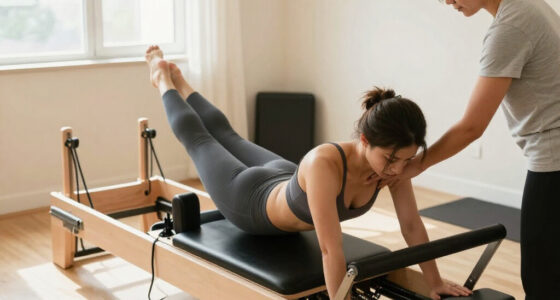
A Fit&Well report presents five Pilates exercises recommended by instructor Sammy Taylor for people new to exercise: a glute bridge, dead bug, side-lying leg lift, bird dog and roll down. Taylor suggests beginning with one round, resting 15 to 20 seconds between moves, and using modifications as needed; the report does not provide clinical evidence that the routine prevents or treats injuries.
Fit&Well has outlined a five-move Pilates routine for people new to exercise, featuring instructions and easier variations from instructor Sammy Taylor, much like these beginner-friendly strength exercises. The suggested session takes about 10 minutes and targets core and glute strength, mobility and body awareness, though those outcomes are the routine’s stated aims rather than results established by evidence in the report.
The exercises are a glute bridge, dead bug, side-lying leg lift, bird dog and Pilates roll down. The report recommends completing one round, resting 15 to 20 seconds between movements, and building to two rounds only if comfortable. Taylor advises practicing two to three times a week and moving at an individual pace.
For the bridge, the routine calls for 8 to 10 repetitions: lie on your back with knees bent, gently tilt the pelvis and lift the hips without arching the lower back, then lower with control. A smaller lift—or practicing the pelvic tilt without lifting—is offered as an easier option.
The dead bug is listed for 6 to 8 repetitions per side. From a position on your back with arms raised and knees bent, extend the opposite arm and leg while keeping the lower back pressed toward the mat. Beginners can keep their feet down and slide one heel at a time, or move only their legs. The side-lying leg lift calls for 8 to 10 repetitions per side; the report suggests bending the lower leg for stability and lifting the top leg a shorter distance if needed.
For the bird dog, Taylor’s routine suggests 6 to 8 repetitions per side, extending one arm and the opposite leg from hands and knees while keeping the torso steady. Alternatives include sliding a leg back without lifting it, moving one arm at a time, or practicing an arm reach while seated in a sturdy chair if kneeling is uncomfortable. The final move, the roll down, is listed for four to five repetitions. Stand with feet hip-width apart and knees slightly bent, then gently curl forward through the spine and return to standing. A chair or wall can provide support; the easier version uses the hands to slide down the thighs, or a small seated curl.
A Scaled Starting Point for Pilates
The routine gives beginners a defined place to start rather than asking them to follow an unmodified class. Each movement has a lower-demand option, and several can be adjusted to reduce range of motion or avoid a challenging position. That may make the instructions easier to adapt to different comfort and ability levels, but it does not establish that every exercise is suitable for every person.
The sequence also spans more than one type of movement: exercises are performed on the back, side, hands and knees, standing, and—through an option for the bird dog and roll down—seated. Readers can use the listed repetitions, rest periods and one-round starting point to understand what the proposed session involves before trying it. The article does not report measured strength or mobility changes, nor does it compare the routine with other beginner programs.
Products Worth Considering

Garmin Venu 3S GPS Smartwatch with AMOLED Display, Soft Gold and French Gray Silicone Band

Therabody Theragun Mini 3rd Generation Massage Gun, Black

Withings Sleep Under-Mattress Sleep Tracking Pad
As an affiliate, we earn on qualifying purchases.
How the Five-Move Routine Is Framed
Fit&Well describes Pilates as low-impact and adaptable, and says it can be done using body weight. The report identifies Taylor as an instructor who works with people with neurological conditions and limited mobility. Her professional background is presented as context for the modifications; it is not a claim that the routine has been tested in a clinical study or is appropriate for a particular diagnosis.
The source’s recommendations are practical workout instructions, not a medical assessment. It gives movement cues, suggested repetitions and modifications, but does not identify a research study, name a medical reviewer, or provide evidence measuring the routine’s effects. Its advice to practice two to three times weekly and potentially progress to two rounds is attributed to Taylor.
“Practice it two to three times a week, moving at your own pace and using the easier options whenever needed.”
— Sammy Taylor, Pilates instructor, as quoted by Fit&Well
Limits of the Available Guidance
The report does not give a publication date in the supplied source material, and it does not say whether the routine was independently tested or reviewed by a clinician. It also provides no outcome data showing how much strength, mobility or body awareness participants might gain, or over what period.
Although the source describes Pilates as adaptable for injuries, it does not specify which injuries or conditions make any particular move suitable. Individual ability, symptoms and medical history can affect what is comfortable. Readers should stop if a movement causes pain and seek advice from a qualified health professional if they have an injury, significant mobility limitation or other health concern. The report’s modifications are options, not a guarantee of safety for everyone.
How Beginners Can Approach the Session
The source recommends starting with one round of all five moves, taking 15 to 20 seconds of rest between them, and using the easier variations where needed. Taylor suggests practicing two to three times per week; a second round is an option only when the first feels comfortable. The report does not set a timetable for increasing repetitions or define a formal progression plan.
Anyone trying the sequence can begin with the smaller ranges and supported positions described in the instructions, rather than treating the listed repetitions as a requirement. Whether to continue, change a movement or seek professional guidance depends on personal comfort and health circumstances; no additional follow-up or evaluation is announced in the source.
Key Questions
Which five Pilates moves are included?
The routine includes a glute bridge, dead bug, side-lying leg lift, bird dog and Pilates roll down.
How often does the instructor recommend practicing?
Sammy Taylor advises practicing two to three times a week, moving at your own pace and using easier options when needed.
How long does the routine take?
Fit&Well says one round of all five exercises, with 15 to 20 seconds of rest between movements, should take about 10 minutes.
Can a beginner make the exercises easier?
Yes. The report suggests options such as smaller movements, sliding a heel instead of extending a leg, and practicing selected moves while seated. These are modifications, not a guarantee that an exercise is appropriate for every person.
Does the report prove the routine improves mobility or strength?
No. It describes those as aims of the routine but provides no measured results or study data showing the effects. People with injuries or health concerns may wish to consult a qualified professional before starting.
Source: fitandwell.com