TL;DR

Get workout gear delivered free with Prime
- Fast, free delivery on millions of items
- Prime Video, Amazon Music and more included
- Member-only deals all year
Adjustable dumbbell sets combine several weight options into one pair, which can save space and cover many home workouts. Compare the weight per dumbbell, smallest increment, adjustment method, grip, locking system, and instructions before buying; a quick selector is convenient, while a plate-loaded set may cost less and take longer to change.
A single pair of dumbbells can take up less room than a whole rack, but the number printed on the box can hide a big difference: it may describe the weight of one dumbbell or the combined pair. That small detail can change whether a set fits your plans.
Adjustable dumbbell sets combine several weight options into one pair, so you can move from lighter raises to heavier rows without lining your hallway with iron. In this article, you’ll learn how to compare weight ranges, choose between quick selectors and removable plates, check the fit and safety details, and work out whether the set suits your routine. Imagine setting up beside a living-room sofa: space matters, but so does being able to re-rack each weight without a fumble.
Check whether a listed maximum describes one dumbbell or the combined pair.
Compare increments as well as the maximum load; smaller steps can support gradual progression.
Choose selector dials for faster changes or plate-loaded designs if lower cost matters more than speed.
Measure the storage footprint and check head shape, handle comfort, and required re-racking.
Secure plates or selectors before lifting, follow the model instructions, and avoid dropping a set unless its maker permits it.
How One Pair Can Replace a Crowded Dumbbell Rack
Adjustable dumbbell sets are pairs that let you change the resistance by selecting or adding weight plates, so one set can cover several loads. They can be useful when you want a home workout without storing a long row of fixed dumbbells. The tradeoff is that one adjustable pair may take longer to change or feel bulkier than a simple fixed weight.
For example, if you do shoulder raises with a light load, then move to heavier rows, you can switch weights instead of carrying two pairs across the room. A compact base keeps the plates or selector organized, but it still needs a stable, level spot and room to lift the dumbbell out and return it safely. Measure the intended storage area before ordering; a neat product photo does not show how much clearance your hands need.
Think of the set as a small tool cabinet: it saves space because the pieces share one home, but only if you put each piece back correctly. Some exercises may also feel awkward if the head is wide or the selector base bumps your leg. Try to imagine your own movements—presses, curls, lunges—and check the dumbbell shape and dimensions against them.
For a beginner in a small apartment, avoiding a rack of fixed weights can be a clear advantage. If several people share the set and change loads often, speed and easy re-racking may matter more than the smallest footprint. The space savings are real, but your daily experience depends on the adjustment method.
Products Worth Considering

BowFlex Results Series SelectTech Adjustable Dumbbells, Pair

BowFlex Results Series 552 SelectTech Adjustable Dumbbell

Bowflex SelectTech 840 Adjustable Kettlebell
As an affiliate, we earn on qualifying purchases.
Choose a Weight Range That Leaves Room to Progress
Choose a weight range by checking the maximum weight per dumbbell, the smallest available increment, and the exercises you expect to do. A high maximum is useful only if you can control it safely, and large jumps between settings can make gradual progress difficult. Listings may describe one dumbbell or the full pair, so check the unit before you compare prices or capacities.
Suppose you’re comparing two sets labeled 50 pounds. One may reach 50 pounds in each hand, while the other may total 50 pounds across the pair. That distinction changes the top load for a two-handed exercise. Write down the heaviest load you use now and the kind of progression you expect, then check whether the set can accommodate it.
Smaller increments let you increase resistance in manageable steps. For instance, someone practicing controlled shoulder presses might prefer a modest change rather than a jump that makes the next set feel rushed. Larger increments may suit a simpler routine or a lower-cost plate-loaded set, but they can leave you stuck between a load that feels easy and one you can’t control.
Do not buy solely for a future strength goal that you have not planned. Start with the movements you actually do, such as rows, presses, and curls, and compare those needs with the set’s range. If you have a health condition or are returning to exercise after an injury, ask a qualified professional for guidance on suitable loads and movements.
Pick the Adjustment Style That Fits Your Workout Pace
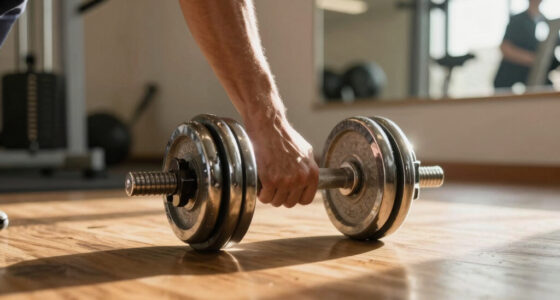
Selector dials, pins, or levers usually change weight faster than removing plates by hand, while spin-lock and plate-loaded designs can be simpler and less costly. The right style depends on how often you switch weights and how much you value speed. Check the maker’s instructions and confirm the plates lock securely before every set.
If you alternate curls and presses in a circuit, a dial can save time between movements. You return the dumbbell to its tray, turn the selector, and lift the new load. A traditional spin-lock set may ask you to remove a collar, add plates, and tighten it again; that pause can be a reasonable tradeoff when you do longer sets with fewer changes.
Use this short checklist while comparing options:
- Read the weight label. Confirm whether it means per dumbbell or per pair.
- Check the increments. See whether the steps suit your current movements and planned progression.
- Inspect the lock. Learn how the plates or selector stay in place and how to confirm they are secured.
- Check the return process. Find out whether you must place the dumbbell in its base before changing the setting.
- Read the instructions and warranty. Check what the maker says about impacts, maintenance, and replacement parts.
A quick adjustment is convenient, but it does not automatically mean better construction. A selector mechanism has moving parts and may need careful handling; simple plates also need proper tightening. Follow the instructions for your specific model.
Check Grip, Shape, and Durability Before You Commit
A set that feels secure in your hand is easier to use well: check the handle diameter, knurling, plate fit, and the shape of the dumbbell heads. A comfortable grip helps you hold the weight steadily, while bulky ends can interfere when you rest a dumbbell against your thigh or shoulder. Product dimensions and hands-on reviews can help you spot those fit issues before buying.
Picture doing a floor press in a corner of a small room. If the dumbbell head is unusually wide, you may need to adjust where you position your elbows; if the handle is slick or too thick for your hand, it may feel less comfortable during a longer set. Think through the movements in your routine instead of judging by appearance alone.
Build quality and the locking mechanism deserve the same attention. Look for clear instructions, a warranty, and details about how plates or selectors stay in place. Loose or poorly seated parts can shift during movement. Before lifting, confirm that each part is secured according to the maker’s directions.
Many selector-based models are not designed to be dropped. An impact can damage a selector, locking parts, or plates, even if the outside still looks fine. Keep the set in its tray, return it carefully, and clean it as the maker directs. These habits may help preserve the mechanism, but product lifespan varies with construction, use, and handling.
Decide Whether the Price and Footprint Make Sense
Adjustable dumbbells can be worth the price when one compact set gives you the range you need and fits your home. Compare the full cost, including any expansion kits, with the weights you will use. Faster selectors and heavier capacities may cost more, while a plate-loaded design can be a lower-cost option that asks for more time between changes.
For example, if your workout space is one corner beside a desk, a pair and its bases may be easier to store than several fixed dumbbells. But the bases still need dedicated floor space, and you need enough room to lift and return the weights without bumping furniture. Measure both the storage spot and your exercise area, then mark them with painter’s tape to test the footprint.
Compatibility is not guaranteed just because two products look alike. Expansion components, handles, and plates may work only with particular models. If you plan to add capacity later, check the manufacturer’s compatibility details and total expansion cost before buying the base set.
A fixed set may suit a shared training space where people change weights constantly or use loads that would be dropped. Adjustable sets cover many standard dumbbell exercises, but they do not replace every barbell, kettlebell, or machine movement. Match your purchase to the routine you have, not a promise that one tool will cover every training goal.
Use Adjustable Dumbbells Safely From the First Set
Adjustable dumbbells can be used safely when you follow the model’s assembly, adjustment, lifting, and storage instructions. Check that plates or selectors are fully secured before you start, and do not drop the weight unless the manufacturer specifically says the model is built for that. The locking process varies, so learn your set rather than relying on how another model works.
Before your first workout, put the dumbbells on their bases and practice changing the setting without rushing. Then lift one at a manageable load and confirm it feels secure through a slow repetition. For example, if you hear a plate rattle during a curl, stop, set the dumbbell down, and check the lock before continuing.
Beginners can use adjustable sets, especially when the increments allow gradual changes. Choose a load you can control throughout the movement, and take time to learn the technique. If you have a pre-existing condition, ask a qualified professional for guidance before starting or changing your routine.
A little care also makes storage easier: return each dumbbell to its tray, keep the floor around it clear, and avoid forcing a selector that does not turn smoothly. Treat the mechanism like a tool with moving parts, not a fixed iron block. The safest routine is the one that fits both the equipment’s directions and your ability to control each repetition.
Frequently Asked Questions
Are adjustable dumbbell sets worth it?
They can be worth it when you need several weights but have limited storage space. A fixed set may suit a shared gym or frequent heavy lifting better. Compare the range and total price with the exercises you plan to do.
What weight range should I buy?
Start with the loads you use for your current movements, then check the maximum per dumbbell and smallest increment. Choose a range that leaves room for reasonable progression while staying manageable. If a health condition affects exercise, ask a qualified professional for guidance.
Can you drop adjustable dumbbells?
Many models are not designed for drops, which can damage selectors, locks, or plates. Follow the model’s instructions and set the dumbbell down under control. Do not assume a set can take impact because it looks sturdy.
Can adjustable dumbbells replace every weight-training tool?
They cover many standard dumbbell exercises, including curls, rows, and presses. Bulky heads can interfere with some positions, and a pair does not replace every barbell, kettlebell, or machine exercise. Check that the shape works for your routine.
What should I check before buying a set?
Confirm whether the listed weight is per dumbbell or per pair, and compare increments, dimensions, adjustment time, and locking design. Check the warranty, instructions, and compatibility of any expansion parts. If possible, look for details about grip and how the dumbbell sits against your leg or shoulder.
Conclusion
Choose a set by matching its per-dumbbell range, increments, adjustment style, and shape to the workouts you’ll actually do. Check the lock and instructions, measure your space, and be honest about whether you need fast changes or a lower-cost plate-loaded design.
Then give the set a stable home and return it carefully after each session. A tidy corner, a secure grip, and the right weight can make your next workout feel ready before you even pick up the handles.