
Difficulty: Beginner | Time: 10-15 minutes

2026 FDB2 Adjustable Dumbbell Set of 2, 25 lbs Each, with Storage Box
- ✔ Weight per dumbbell: 25 lbs
- ✔ Total weight: 50 lbs
- ✔ Weight options: 4 lbs, 10 lbs, 15 lbs, 20 lbs, 25 lbs
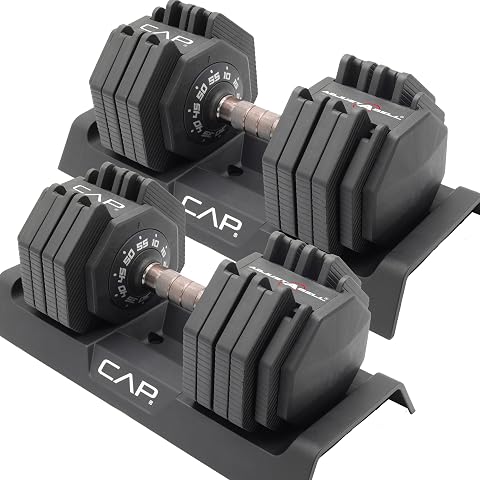
Adjustabell Adjustable Dumbbell Set, 25 lb & 55 lb, Quick-Select, Hex Dumbbells with Multiple Handle Options
- ✔ Weight Range: 10–55 lbs
- ✔ Handle Type: Straight non-slip steel handles
- ✔ Plate Coating: Nylon-coated

Adjustable Dumbbells Set of 2
- ✔ Weight Range: 5 to 52.5 lbs
- ✔ Number of Dumbbells: 2
- ✔ Adjustment Levels: 15
What You’ll Need
Tools & Materials:
- Adjustable dumbbell set
- Weight plates
- Locking collars or clamps
Knowledge:
- Basic understanding of weight plates and dumbbell components
2026 FDB2 Adjustable Dumbbell Set of 2, 25 lbs Each, with Storage Box
<p>This set stands out for its <strong>rapid 1-second weight change</strong> mechanism, making it ideal for high-intensity interval training or quick strength routines. The <strong>space-saving design</strong> replaces multiple dumbbell sets, perfect for limited home gym space. Constructed with a durable cast iron core and a textured silicone grip, it prioritizes safety and longevity. However, it’s limited to 25 lbs per dumbbell, which could be restrictive for heavier lifting or advanced users. The dual-lock system enhances safety by preventing accidental plate releases, but the weight limit makes it less suited for those seeking heavier loads.</p>
Pros:
- Quick 1-second weight adjustment
- Space-efficient design
- Durable construction with safety locks
- Anti-slip silicone grip
Cons:
- Limited to 25 lbs per dumbbell
- Heavier to handle for some users
Best for: Beginners and intermediate users who value quick, safe adjustments and space efficiency.
Not ideal for: Powerlifters or users needing over 25 lbs per dumbbell for heavy training.
Bottom line: A top pick for those who want rapid, safe, and space-saving workouts, but not suitable for heavy lifting beyond 25 lbs.
“A top pick for those who want rapid, safe, and space-saving workouts, but not suitable for heavy lifting beyond 25 lbs.”
Adjustabell Adjustable Dumbbell Set, 25 lb & 55 lb, Quick-Select, Hex Dumbbells with Multiple Handle Options
<p>This set is distinguished by its <strong>patented quick-select system</strong> that allows seamless adjustments from 10 to 55 lbs without fiddly knobs or pins. The nylon-coated plates offer excellent durability and a sleek look, while the multiple handle options provide ergonomic comfort. The set includes a storage tray, making it ideal for organized home workouts. The main tradeoff is its higher price point, which may deter budget-conscious buyers, and the maximum weight of 55 lbs might be insufficient for advanced strength training. Still, the ease of adjustment makes it perfect for those who want a versatile, long-term solution.</p>
Pros:
- Quick, knob-free weight adjustments
- Durable nylon-coated plates
- Wide weight range up to 55 lbs
- Multiple handle options for comfort
Cons:
- Higher cost compared to traditional dumbbells
- Limited maximum weight for heavy lifters
Best for: Intermediate to advanced users seeking a broad weight range with easy adjustment.
Not ideal for: Beginners or those on a tight budget who don’t need more than 25-30 lbs.
Bottom line: A versatile, durable set perfect for users who want quick adjustments and a broad weight range, but at a higher price.
“A versatile, durable set perfect for users who want quick adjustments and a broad weight range, but at a higher price.”
Adjustable Dumbbells Set of 2
<p>This set offers a maximum weight of 52.5 lbs per dumbbell, with 15 adjustable levels, making it a flexible choice for a wide range of exercises. Its ergonomic design allows for <strong>quick one-handed adjustments</strong> by simply rotating the handle, and the <strong>double lock safety system</strong> prevents accidental weight release. The use of durable, rust-proof materials ensures longevity, but the maximum weight limit might be insufficient for very heavy strength training, and the handle size could be uncomfortable for larger hands. It’s ideal for users who want a versatile set that adapts to their progressing strength levels, but those needing heavier weights will need to look elsewhere.</p>
Pros:
- Easy one-second rotation adjustment
- High weight capacity of 52.5 lbs
- Double lock safety design
- Rust-proof, durable materials
Cons:
- Limited to 52.5 lbs maximum weight
- Handle may be uncomfortable for large hands
Best for: Intermediate users who want a high maximum weight and quick, one-handed adjustments.
Not ideal for: Heavy lifters or users with very large hands who find the handle uncomfortable.
Bottom line: A solid choice for users needing a high weight range with quick, ergonomic adjustments, but not for those exceeding 52.5 lbs or with larger hands.
“A solid choice for users needing a high weight range with quick, ergonomic adjustments, but not for those exceeding 52.5 lbs or with larger hands.”
As an Amazon Associate we earn from qualifying purchases.
Before You Start
Check that you have all parts and tools ready. Make sure the dumbbell handles are clean and free from grease or dirt. Read the manufacturer’s instructions if available, as some models may have specific adjustment procedures. Avoid adjusting weights near wet or slippery surfaces to prevent accidents during handling.Step-by-Step Instructions
Step 1: Identify the weight plates and locking mechanism
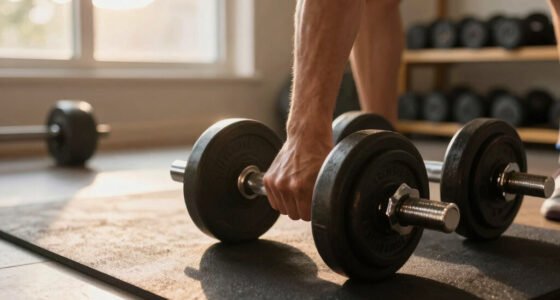
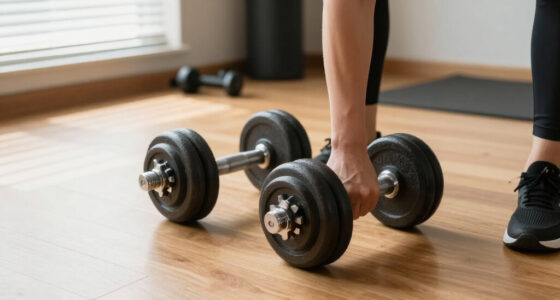
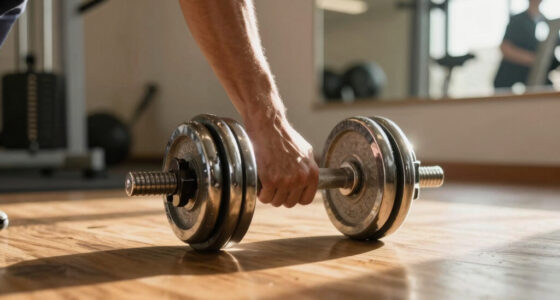
Examine your adjustable dumbbell to locate the weight plates, handle, and locking mechanism such as collars or clamps. Understand how they fit together and which parts secure the plates in place.Tip: Consult your dumbbell’s manual if available, to familiarize yourself with the specific parts and their placement.
Check: You can clearly identify each component and understand how the plates are secured on the handle.
Step 2: Remove existing weight plates if necessary
Loosen or remove the locking collars or clamps by turning them counterclockwise or following the specific mechanism for your model. Carefully slide the weight plates off the handle or bar.Tip: Use both hands to support the plates during removal to prevent dropping or damaging parts.
Check: All weight plates are removed, and the handle or bar is clear for new adjustments.
Step 3: Select the desired weight plates
Choose the appropriate plates for your workout. Count and verify the number of plates to match your target weight, considering the weight of the handle or bar itself.Tip: Use a scale if precise weight is critical, especially for symmetrical loading.
Check: You have the correct number and weight of plates for your intended load.
Step 4: Add the weight plates onto the handle or bar
Slide the selected plates onto the handle or bar in an even manner, ensuring they are seated flush against each other and the end of the handle. Distribute the plates evenly on both sides if using a symmetric load.Tip: Align the holes of the plates with the handle’s grooves or fittings for a secure fit.
Check: All plates are properly positioned, with no gaps or misalignment.
Step 5: Secure the plates with locking collars or clamps
Place the locking collars or clamps onto the ends of the handle or bar. Turn or tighten them clockwise until they are firmly secured, preventing plates from shifting during exercise.Tip: Ensure the collars are evenly tightened and feel snug to prevent loosening during use.
Check: Collars are tight and stable, with no movement of the plates when you gently shake the dumbbell.
Step 6: Test the stability of the adjustment
Lift the dumbbell slightly and shake it gently to check if the plates are secure. Confirm that no plates move or rattle.Tip: If you notice any movement, re-tighten the collars or clamps firmly.
Check: The weights stay firmly in place with no rattling or shifting when shaken gently.
Common Mistakes to Avoid
- Not tightening the collars fully, leading to loose weights. — Always tighten collars or clamps securely and verify by shaking the dumbbell after adjustment.
- Adding uneven plates, causing imbalance. — Distribute plates evenly on both sides to maintain balance and safety during lifts.
- Using incompatible or damaged collars, risking weight shifting. — Use only the collars or clamps designed for your specific dumbbell model and inspect for damage regularly.
Troubleshooting
Problem: Weights feel loose or rattle after tightening.
Solution: Re-tighten the collars, ensuring they are fully engaged and snug against the plates. Check for damaged collars and replace if necessary.
Problem: Cannot fit the plates onto the handle or bar.
Solution: Verify the size and compatibility of the plates with your dumbbell. Confirm the plates are correctly oriented and free of debris or corrosion.
Problem: Collars won’t tighten fully or keep slipping.
Solution: Inspect for wear or damage to the collars, replace if necessary, or try a different tightening method as per the manufacturer’s instructions.