TL;DR

Get workout gear delivered free with Prime
- Fast, free delivery on millions of items
- Prime Video, Amazon Music and more included
- Member-only deals all year
A preliminary study of 758 adults older than 78 found that those with masked high blood pressure had a 70% higher rate of falls than peers whose blood pressure was high both at home and in the office. The findings, presented at an American Heart Association meeting, show an association and do not explain why the fall rate differed or establish that masked hypertension causes falls.
A preliminary study of 758 adults older than 78 found that participants with masked high blood pressure—normal readings in a medical office but high readings at home—had a 70% higher rate of falls than peers whose blood pressure was high in both settings. The research, presented at the American Heart Association’s Hypertension Scientific Sessions 2026, identifies an association, not proof that masked hypertension causes falls.
Researchers grouped participants by blood pressure readings taken in medical and home settings. 15.4% had masked high blood pressure, while 34.5% had high readings in both settings, a pattern described as sustained high blood pressure. Another 17.0% had high office readings but not high home readings, known as white coat high blood pressure; 33.2% had normal readings in both settings.
Over a median follow-up of 350 days, 23.4% of participants reported having fallen at least once during the previous 12 months. The study report also says that, when differences between office and home readings were analyzed continuously, lower office blood pressure relative to home blood pressure was associated with a higher incidence of falls.
The comparison behind the 70% figure matters: it was between people with masked hypertension and people whose readings were high both at home and in the office. It does not mean masked hypertension raises fall risk by 70% compared with people with normal blood pressure. The findings were preliminary research presented at a scientific meeting, and the report does not provide evidence that changing blood pressure treatment would prevent falls.
Why Home Readings May Matter
Blood pressure measured in a clinic may not reflect readings at home. In this study, home measurements helped distinguish older adults whose office readings appeared normal despite high readings outside the clinic. That difference could be relevant to clinical assessment, particularly when considering fall risk alongside other health information.
Falls are a major health concern in later life. The U.S. Centers for Disease Control and Prevention identifies falls as the leading cause of disability and functional decline among adults aged 65 and older. A fall can threaten mobility and independence, but this study did not show that masked high blood pressure was the cause of participants’ falls or establish a way to prevent them.
The practical implication raised by the researchers is to discuss home readings with a health care team, rather than relying on an office measurement alone. Home monitoring can add information to care, but readings need to be interpreted in context; the findings do not support changing medication or treatment without clinical advice.
Products Worth Considering

BowFlex Results Series SelectTech Adjustable Dumbbells, Pair

Garmin Forerunner 55 GPS Running Smartwatch, Black

Therabody JetBoots Prime Wireless Compression Boots – Short (under 29 inseam)
As an affiliate, we earn on qualifying purchases.
Office and Home Readings
Masked hypertension describes a pattern in which blood pressure is not high in the office but is high outside it, such as at home. The opposite pattern—high readings in a clinic but not at home—is called white coat hypertension. Measuring blood pressure in more than one setting can reveal differences that a clinic reading alone may not show.
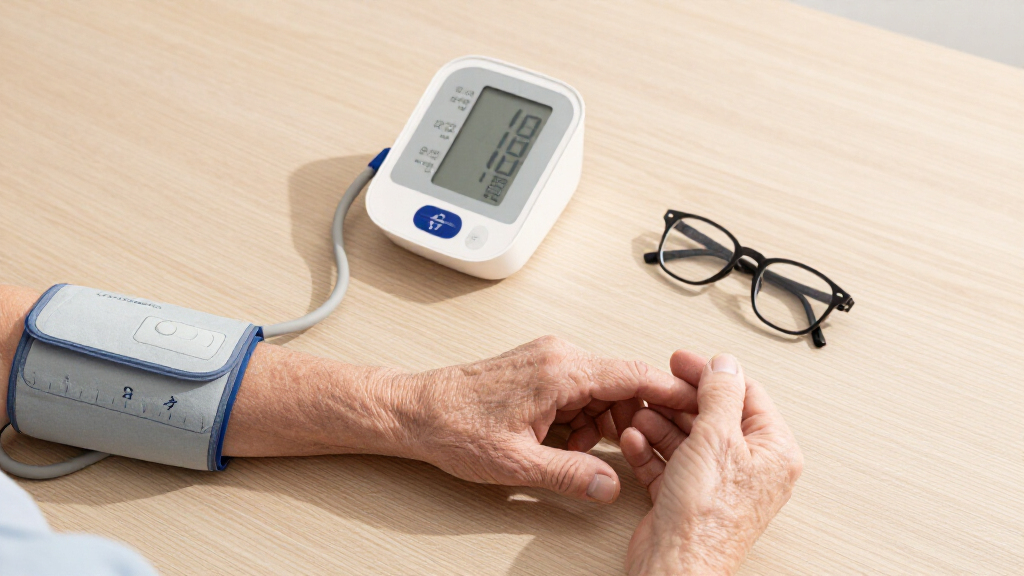
The American Heart Association’s 2025 joint guideline recommends annual blood pressure monitoring for adults. It also recommends home monitoring to help confirm an office diagnosis and to follow blood pressure as part of an integrated care plan. The study’s presenting author, Frances Wang, a researcher at Beth Israel Deaconess Medical Center in Boston, said home measurements can help identify hidden high blood pressure and inform care.
Wang’s remarks and the guideline support home monitoring as a source of information; they are not evidence that monitoring itself lowers fall risk. The research was presented at the American Heart Association’s meeting in Arlington, Virginia, held Oct. 7–11, 2026.
“These findings highlight that, in addition to office blood pressure measurement, home blood pressure readings can be an important way to identify hidden high blood pressure at home and risk of falls in older adults.”
— Frances Wang, Ph.D., M.S., study presenting author and researcher at Beth Israel Deaconess Medical Center
Cause and Risk Comparisons
The study does not explain why participants with masked hypertension had a higher fall rate. Watson said the result may relate to variation in blood pressure or the body’s ability to regulate it, but the research did not establish either explanation. It also does not show that high home readings caused falls.
The report describes falls as self-reported and says nearly one in four participants reported at least one fall during the previous 12 months, while the median follow-up was 350 days. It does not provide enough detail to determine from the reported figures when each fall occurred in relation to blood pressure measurement, or whether other characteristics accounted for some of the difference. The 70% comparison is specifically with participants who had high readings in both settings.
The findings are preliminary and were presented at a scientific meeting. The report does not state whether the results have been published in a peer-reviewed journal, nor does it provide a treatment trial showing that acting on masked hypertension reduces falls.
Clinical Follow-Up and Research
For now, the researchers’ stated message is that older adults and caregivers can measure blood pressure at home and share the readings with a health care team. Wang said those measurements may help inform a person’s blood pressure and overall care plan. Decisions about diagnosis or treatment should be made with clinicians, who can consider readings alongside a person’s health and medications.
Further research would need to clarify why masked high blood pressure was associated with falls, test whether the relationship holds in other groups, and determine whether any clinical response changes fall outcomes. The meeting report does not announce a specific next study or date for additional results, so those developments remain unconfirmed.
Key Questions
What does masked high blood pressure mean?
It means blood pressure readings are normal in a medical office but high at home. The study compared this pattern with readings that were high in both settings.
How much higher was the reported fall rate?
Among adults older than 78, the masked-hypertension group had a 70% higher rate of falls than participants whose readings were high both at home and in the office. That figure is not a comparison with people whose blood pressure was normal.
Does the study prove masked hypertension causes falls?
No. The research found an association and did not establish why the fall rate was higher or prove that high home blood pressure caused falls.
What did the study report about falls overall?
During a median follow-up of 350 days, 23.4% of participants reported at least one fall during the previous 12 months. The report describes these falls as self-reported.
Should older adults change medication based on home readings?
The study does not recommend changing medication. It says home readings can be shared with a health care team to inform assessment and care; treatment decisions should be discussed with a clinician.
Source: rss