
TL;DR

Get workout gear delivered free with Prime
- Fast, free delivery on millions of items
- Prime Video, Amazon Music and more included
- Member-only deals all year
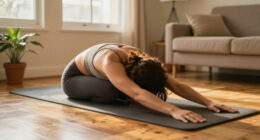
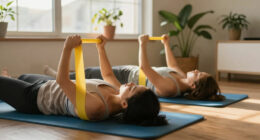
An Arizona State University study using data from more than 55,000 U.S. adults found that yoga and Pilates were associated with lower risk of death among 21 alternative health practices examined. The findings do not prove either activity extends life, and researchers say other health and social factors may help explain the link.
An analysis by Arizona State University researchers found that yoga and Pilates were associated with lower risk of death among 21 alternative health practices examined, using nationally representative data from more than 55,000 U.S. adults. The results are an association, not evidence that either practice directly extends lifespan.
Researchers linked participant data to mortality records spanning about a decade. In the analysis, yoga practice was associated with a 27% lower risk of death, while Pilates was associated with a 36% lower risk. The source report does not specify the reference group or give further details about how often participants practiced either activity.
Of the 21 alternative health practices considered, yoga and Pilates were the only ones reported as having a statistically significant association with lower mortality. That finding does not establish that the other practices have no health effects; it describes the results of this particular analysis.
The researchers accounted for factors including income, education, exercise, smoking, body mass index and self-rated health, according to the report. Study co-author Connor Sheehan said unmeasured differences could still influence the results, including healthcare access, genetics and broader economic circumstances.
Movement Practices Stand Out
The findings offer a population-level signal about two familiar forms of exercise amid a crowded market of wellness practices. Yoga and Pilates combine movement with strength and balance work; classes may also add social contact. Sheehan said those features could be relevant to health, but the study did not test which parts of the practices might explain the observed association.
The result may interest people choosing activities for general fitness, but it is not a basis for promising longer life or replacing medical care. The reported percentages describe relative associations, not an individual’s expected change in lifespan, and the source material does not provide absolute death rates for practitioners and non-practitioners.
The analysis also points to a research gap as Americans use a wide range of complementary and alternative health practices. Whether popular wellness interventions affect longevity remains uncertain, and observational findings can help identify questions for further study without settling them.
Products Worth Considering

BowFlex Results Series SelectTech Adjustable Dumbbells, Pair

Garmin Forerunner 55 GPS Running Smartwatch, Black

Therabody JetBoots Prime Wireless Compression Boots – Short (under 29 inseam)
As an affiliate, we earn on qualifying purchases.
A Decade of Mortality Records
The study examined alternative health practices against mortality using a large U.S. adult dataset linked to death records. The report says more than 40% of U.S. adults use at least one complementary or alternative practice, though it does not provide the survey year or a breakdown by practice.
Sheehan described the field as understudied as wellness habits evolve, including interest in saunas, cold plunges, red-light therapy and supplements. The study’s scope was limited to 21 practices; its results should not be read as an evaluation of every intervention now marketed for health or longevity.
“Maybe the sickest people are too unhealthy to do yoga or Pilates to begin with, so the practice looks protective when really it’s just excluding the least healthy.”
— Connor Sheehan
Association Does Not Prove Cause
The study cannot show that practicing yoga or Pilates caused participants to live longer. People who take part may differ from those who do not in ways the analysis did not capture, including healthcare access, genetics or economic circumstances. The report also notes that people in poorer health may be less able to participate, which could make the practices appear protective.
The available source material does not give the full study citation, participant follow-up details, practice frequency, absolute mortality rates or confidence intervals. It also does not establish whether specific styles, class attendance or duration of practice were linked to the reported results. Those details limit how precisely readers can interpret the percentages.
Further Research Needed
The next step is further research that can test whether the associations hold across different groups and clarify how practice patterns relate to outcomes. Studies that measure participation over time and account for differences in baseline health could help address questions raised by the analysis, though the source report does not announce a planned follow-up study.
Sheehan called for more study of rapidly changing wellness habits, including cold plunging, red-light therapy and supplements. For now, the reported findings support a research question—not a guarantee that yoga or Pilates will extend an individual’s life.
Key Questions
Did the study prove yoga or Pilates makes people live longer?
No. It found an association between practicing yoga or Pilates and lower risk of death. The analysis cannot establish that either practice caused the difference.
How large were the reported associations?
Yoga was associated with a 27% lower risk of death, and Pilates with a 36% lower risk in the analysis. The source report does not provide absolute mortality rates or enough detail to translate those figures into an individual’s expected benefit.
How many practices did researchers examine?
The researchers assessed 21 alternative health practices. Yoga and Pilates were the only two reported as significantly associated with lower mortality in this analysis.
What could explain the findings besides the practices themselves?
Researchers said unmeasured factors may have contributed, including healthcare access, genetics, economic circumstances and differences in participants’ underlying health. People too unwell to exercise may also be less likely to practice yoga or Pilates.
Source: rss