TL;DR

Get workout gear delivered free with Prime
- Fast, free delivery on millions of items
- Prime Video, Amazon Music and more included
- Member-only deals all year
ACE-certified personal trainer Margarita Severnaia has shared a five-move beginner strength routine for people starting lifting in their 50s, published by Fit&Well. The plan favors learning movement patterns over intensity, starting with chair squats, Romanian deadlifts, rows, incline push-ups and farmer carries.
An ACE-certified personal trainer has published a five-move beginner strength routine for people starting weight training in their 50s, arguing that resistance exercise at midlife is an investment in long-term health and independence rather than a pursuit of appearance. The program, shared with Fit&Well by Margarita Severnaia of San Diego Health and Fitness, consists of the chair squat, dumbbell Romanian deadlift, supported one-arm dumbbell row, incline push-up and farmer carry.
Severnaia’s rationale is grounded in age-related physical change. “From midlife onwards, we gradually lose muscle mass and strength, while changes associated with menopause can also accelerate bone density loss,” she told Fit&Well. This, she said, raises the long-term risk of sarcopenia, osteoporosis, falls and fractures. Her answer is resistance training, which she says helps preserve and rebuild muscle, supports bone strength, improves balance and physical function, and makes everyday activities easier.
The structure of the plan is deliberately conservative. The first weeks “should focus on learning the exercises, improving coordination, and developing confidence rather than training to exhaustion,” Severnaia said. She recommends two or three full-body strength sessions per week with adequate recovery between them, beginning with one set of eight reps per exercise and gradually building to two or three sets of eight to 12 repetitions. Rest periods of 30 to 90 seconds between sets are specified; the farmer carry is performed for 30 seconds rather than a rep count.
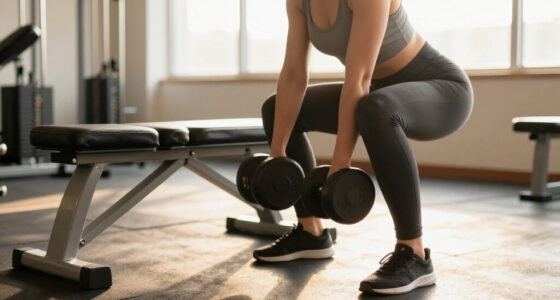
Each of the five movements targets a fundamental pattern. The chair squat teaches squatting mechanics with the safety of a seat behind the lifter. The Romanian deadlift develops the hip hinge, which Severnaia calls “one of the most useful skills a beginner can develop” because it loads the posterior chain without bending through the lower back. The supported row builds pulling mechanics and shoulder-blade control while a hand on a bench reduces the balance demand. The incline push-up introduces pressing with an adjustable difficulty level, and the farmer carry combines grip strength, trunk control, posture and walking in a single practical drill.
Why Midlife Beginners Are a Different Audience
The guidance speaks to a generation that, in Severnaia’s framing, grew up equating exercise with cardio and is “unprepared” for the weights room. For readers in their 50s who have never lifted, the barrier is often not motivation but a lack of a safe entry point — a gap this program addresses by selecting exercises that can be performed with minimal equipment, a chair, a bench and a pair of dumbbells, and that scale down for limited mobility or strength.
The health stakes are the reason trainers and public-health bodies have pushed strength training for older adults: muscle and bone loss accelerate with age, and falls and fractures are a major cause of lost independence in later life. A routine built around squatting, hinging, pulling, pushing and carrying also mirrors the demands of daily life, from standing up from a chair to carrying groceries, which is why Severnaia describes carries as “extremely practical.”
Products Worth Considering

Fitbit Versa 4 Fitness Smartwatch – Black/Graphite

Therabody Theragun Mini 3rd Generation Massage Gun, Black

Oral-B iO Series 9 Limited Rechargeable Electric Toothbrush with 7 Cleaning Modes
As an affiliate, we earn on qualifying purchases.
How the Five Exercises Are Performed
Chair squat: Stand in front of a chair with feet hip- or shoulder-width apart, lower until the buttocks lightly tap the seat, then push through the feet to stand. Avoid dropping onto the chair, letting the knees collapse inward, lifting the heels, or forcing depth beyond comfortable control. Once the movement is controlled, Severnaia suggests progressing to a goblet squat with a light dumbbell held vertically at the chest.
Dumbbell Romanian deadlift: With a slight knee bend and dumbbells in front of the thighs, push the hips back to lower the weights close to the legs, stopping when the hamstrings feel tension, then drive the hips forward to stand. Common mistakes include turning the move into a squat, rounding the back, letting the dumbbells drift away from the body, and overextending at the top.
Supported one-arm dumbbell row: Hinge forward with a flat back, place the free hand on a stable support, and pull the dumbbell toward the hip with the elbow close to the body, pausing to squeeze the shoulder blade. Avoid shrugging, rotating the torso, using momentum or choosing a weight too heavy to control.
Incline push-up: Hands slightly wider than shoulder-width on a bench, chair or couch, body in a straight line from head to heels; bend the elbows to lower the chest, then press back up. Difficulty is adjusted by changing the height of the support. Avoid sagging hips, shrugged shoulders or progressing to a lower surface before the current variation is controlled.
Farmer carry: Hold dumbbells at the sides with shoulders retracted and core engaged, walk forward for 30 seconds, then lower the weights by bending the hips and knees.
Limits of a One-Size Starter Plan
The routine reflects the professional opinion of a single trainer rather than a peer-reviewed trial, and the claims about menopause-related bone loss and the benefits of resistance training, while consistent with broad physiotherapy consensus, are presented here as Severnaia’s assessment to Fit&Well. The article does not specify dumbbell starting weights, how quickly to progress loads, or modifications for people with existing joint problems, osteoporosis diagnoses or prior injuries. It is aimed at women in their 50s; whether the same sequencing suits other ages or populations is not addressed. Anyone with a pre-existing condition should consult a qualified health professional before beginning a new resistance program.
Progressing Beyond the First Weeks
According to Severnaia’s progression scheme, beginners move from one set of eight reps toward two or three sets of eight to 12 reps, and from the chair squat toward a goblet squat once control is established. Incline push-ups progress by lowering the support surface over time. The stated long-term goal is not a fixed performance target but a sustainable routine maintained for years, with resistance introduced gradually after the movement patterns are learned. Readers wanting structured guidance can follow Fit&Well’s weekly training and wellbeing newsletter, which the outlet promotes alongside the program.
Key Questions
What are the five exercises in the beginner routine?
The chair squat, dumbbell Romanian deadlift, supported one-arm dumbbell row, incline push-up and farmer carry, performed as two or three full-body sessions per week.
How many sets and reps should a beginner start with?
Severnaia recommends starting with one set of eight repetitions per exercise (or 30 seconds for the farmer carry) with 30 to 90 seconds of rest, building gradually to two or three sets of eight to 12 reps.
Why is strength training emphasized for people in their 50s?
According to Severnaia, muscle mass, strength and bone density decline from midlife onward, and menopause-related changes can accelerate bone loss, raising the risk of sarcopenia, osteoporosis, falls and fractures. Resistance training is presented as a way to help preserve muscle, support bone strength and improve balance and daily function.
What equipment is needed?
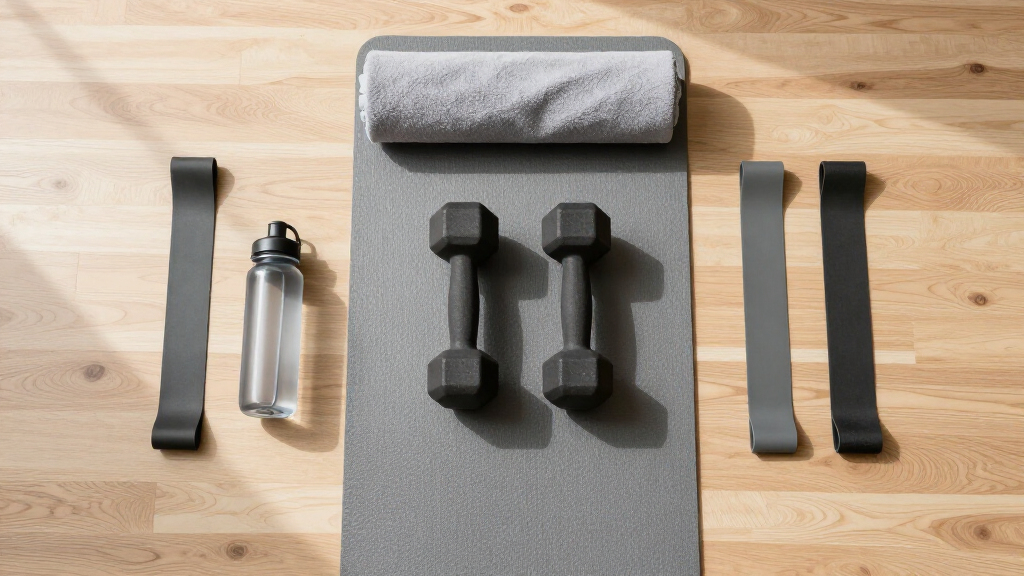
A sturdy chair or bench and a pair of dumbbells. The incline push-up can be done against a bench, chair or couch, and difficulty is adjusted by changing the height of the support.
How heavy should the weights be?
The article does not specify starting loads. Severnaia advises against choosing a dumbbell too heavy to control and recommends learning movement patterns first, introducing resistance gradually. People with pre-existing conditions should seek professional guidance before starting.
Source: rss