
Choosing the right adjustable weight vest can transform your bodyweight exercises, adding necessary resistance to pushups, runs, and pullups. The CAP Adjustable Weighted Vest (4–50 lb) stands out as the best overall pick for its wide weight range and durable construction, making it suitable for both beginners and advanced athletes. For those prioritizing comfort during high-intensity cardio, the ZELUS Adjustable Weighted Vest offers superior breathability and a secure fit. The main tradeoff you will face is between maximum weight capacity and low-profile comfort; heavier vests often bulk up, while lighter ones may lack progressive overload potential. Continue reading to see which of these 15 models aligns best with your specific training regimen and body type.

Get workout gear delivered free with Prime
- Fast, free delivery on millions of items
- Prime Video, Amazon Music and more included
- Member-only deals all year
Complete the kit


Key Takeaways
- Vests with removable sand or iron blocks offer smoother weight adjustments than fixed-plate designs, allowing for micro-loading.
- Reflective stripes are not just for safety; they significantly improve visibility during outdoor evening runs, a feature found on the ZELUS and Poudee models.
- The fit mechanism matters more than total weight; vests with adjustable side straps prevent bouncing better than those relying solely on front buckles.
- Iron sand weights provide a lower center of gravity compared to steel plates, reducing strain on the lower back during running.
- Most vests under 20 lbs sacrifice durability for portability, making them ideal for travel but less suited for heavy strength training.
| CAP Adjustable Weighted Vest, 4–50 lb |  | Best for Heavy Resistance Training | Weight Range: 4–50 lb | Material: Polyester and Nylon | Closure System: Hook and Loop with Buckle | VIEW LATEST PRICE | See Our Full Breakdown |
| VBSD Adjustable Weighted Vest for Men and Women, 11–20 lb |  | Best Overall for Versatile Training | Weight Range: 11–20 lb | Included Weights: Six 1.5 lb iron sand bags | Material: Neoprene | VIEW LATEST PRICE | See Our Full Breakdown |
| BAGAIL Adjustable Weighted Vest with Removable Weights |  | Best for Beginners and Gradual Progression | Base Weight: 4 lb | Removable Weights: Six 1 lb iron sand bags | Material: Neoprene | VIEW LATEST PRICE | See Our Full Breakdown |
| Zeerun Weighted Vest for Men and Women, Adjustable Weights |  | Best for Customized Fit and Comfort | Available Weights: 6, 8, 10, 12, 15, 18, 20, 24, 30 lb | Material: Neoprene with iron particles | Construction: Reinforced double-stitched seams | VIEW LATEST PRICE | See Our Full Breakdown |
| Henkelion Weighted Vest for Running and Training | 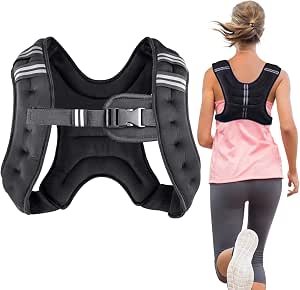 | Best for Running-Specific Stability | Weight: 12 lbs (Fixed) | Material: Neoprene | Filler: Iron pellets and metal rock | VIEW LATEST PRICE | See Our Full Breakdown |
| BeatBoost Adjustable Weighted Vest for Men and Women, 5–30 lb |  | Best for Light to Moderate Resistance | Brand: BeatBoost | Adjustable Weight Range: 5–30 lb | Weight Type: Removable Sandbags | VIEW LATEST PRICE | See Our Full Breakdown |
| APEXUP Adjustable Weighted Vest with Iron Sand Weights |  | Best for Versatile Training | Brand: APEXUP | Available Weight Ranges: 4–10 lb, 12–18 lb, 20–32 lb | Included Weights: 6 iron sand weight bags | VIEW LATEST PRICE | See Our Full Breakdown |
| ZELUS Adjustable Weighted Vest for Men and Women, 4–32 lb |  | Best for Comfort and Fit | Brand: ZELUS | Weight Options: 4–10 lb, 11–20 lb, and 20–32 lb | Included Weights: Six removable iron sand weight bags | VIEW LATEST PRICE | See Our Full Breakdown |
| CAP Adjustable Weighted Vest, 2.5–100 lb |  | Best for Heavy Strength Training | Brand: CAP | Adjustable Weight Range: 2.5–100 lb | Weight Packet Size: 2.5 lb | VIEW LATEST PRICE | See Our Full Breakdown |
| Sportneer Adjustable Weighted Vest for Men and Women, 2–18 lb |  | Best for Beginners and Light Workouts | Brand: Sportneer | Weight Range: 2–18 lb | Included Weight Packs: Eight 2 lb packs and one 1 lb pack | VIEW LATEST PRICE | See Our Full Breakdown |
| CAP Adjustable Weighted Vest, 1–20 lb | 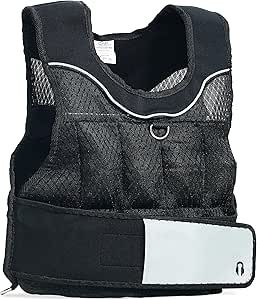 | Best for Fine-Tuning Load | Weight Range: 1–20 lbs | Packet Size: 1 lb each | Material: Reinforced nylon, polyester | VIEW LATEST PRICE | See Our Full Breakdown |
| ZELUS Weighted Vest with Reflective Stripes |  | Best for Comfort and Fit | Available Weights: 6–30 lb options | Material: Neoprene, iron sand | Chest Fit: 31.5–45 inches | VIEW LATEST PRICE | See Our Full Breakdown |
| Poudee Adjustable Weighted Vest with Reflective Stripe |  | Best Budget-Friendly Sand Fill | Available Weights: 6–30 lb options | Material: Polyester | Closure: Hook and loop | VIEW LATEST PRICE | See Our Full Breakdown |
| CAP Adjustable Weighted Vest, 2.5–40 lb |  | Best for Heavy Resistance | Weight Range: 2.5–40 lbs | Packet Size: 2.5 lb each | Material: Nylon and polyester | VIEW LATEST PRICE | See Our Full Breakdown |
| CAP Barbell Adjustable Weighted Vest, 20 lb |  | Best for Fixed-Weight Entry | Weight: 20 lb | Packet Size: 1 lb each | Material: Nylon and polyester | VIEW LATEST PRICE | See Our Full Breakdown |
| adjustable weight vests for workout training | Material |
|---|---|
| CAP Adjustable Weighted Vest | Polyester and Nylon |
| VBSD Adjustable Weighted Vest | Neoprene |
| BAGAIL Adjustable Weighted Ves | Neoprene |
| Zeerun Weighted Vest for Men a | Neoprene with iron particles |
| Henkelion Weighted Vest for Ru | Neoprene |
| BeatBoost Adjustable Weighted | — |
| APEXUP Adjustable Weighted Ves | Neoprene, iron sand |
| ZELUS Adjustable Weighted Vest | Neoprene and iron sand |
| CAP Adjustable Weighted Vest | Polyester |
| Sportneer Adjustable Weighted | Neoprene |
| CAP Adjustable Weighted Vest | Reinforced nylon, polyester |
| ZELUS Weighted Vest with Refle | Neoprene, iron sand |
| Poudee Adjustable Weighted Ves | Polyester |
| CAP Adjustable Weighted Vest | Nylon and polyester |
| CAP Barbell Adjustable Weighte | Nylon and polyester |
More Details on Our Top Picks
CAP Adjustable Weighted Vest, 4–50 lb
This model stands out for its massive 50 lb upper limit, making it the only option here suitable for advanced strength athletes who have outgrown lighter vests. While the VBSD Adjustable Weighted Vest caps at 20 lb, the CAP allows for progressive overload up to elite levels, which is critical for serious powerlifters or calisthenics enthusiasts. However, this capacity comes with a tradeoff: the 22.68 kg item weight (including packets) is cumbersome and may feel restrictive for high-intensity cardio. The reinforced nylon construction is built for durability rather than sleek aesthetics, meaning it might lack the streamlined fit of neoprene competitors. It is a tool for raw load, not necessarily for comfort or style.
Pros:- Unmatched 50 lb maximum capacity for heavy resistance training
- Durable reinforced nylon and polyester construction withstands rough handling
- Adjustable waist belt provides critical stability during dynamic lifts
- Reflective stripes enhance visibility during outdoor training sessions
Cons:- Extremely bulky and heavy even at lower weight settings
- Item weight listing suggests significant overhead weight from the vest body itself
Best for: Advanced athletes and powerlifters who need resistance beyond 30 lb for squat or pull-up progressions.
Not ideal for: Runners and HIIT enthusiasts, as the bulk and heavy base weight can hinder natural movement patterns.
- Weight Range:4–50 lb
- Material:Polyester and Nylon
- Closure System:Hook and Loop with Buckle
- Item Weight:22.68 kg
- Special Features:Anchor hooks for parachute training
- Visibility:Reflective stripes
- Fit Adjustment:Adjustable waist belt and shoulder pads
Our verdict“Choose this vest only if you require resistance levels that exceed standard fitness vests.”
VBSD Adjustable Weighted Vest for Men and Women, 11–20 lb
This vest strikes the best balance between comfort and functional resistance for general fitness users. Unlike the CAP Adjustable Weighted Vest, which prioritizes heavy loads, the VBSD offers a 11–20 lb range that is ideal for running, walking, and yoga without overwhelming the joints. The breathable neoprene construction and padded shoulder straps make it significantly more comfortable for long-duration wear compared to the rigid nylon of heavier competitors. While it lacks the extreme upper limit of the CAP, its six 1.5 lb iron sand bags allow for granular adjustments, helping users fine-tune intensity. The inclusion of a back mesh pocket and reflective strips adds practical value for outdoor safety and convenience, making it a well-rounded choice for the average exerciser.
Pros:- Optimal 11–20 lb range for balanced cardio and strength training
- Breathable neoprene material reduces heat buildup during workouts
- Granular weight adjustments via six 1.5 lb bags for precise intensity control
- Integrated back mesh pocket and reflective strips for utility and safety
Cons:- Weight distribution may feel less secure during high-impact sprints compared to rigid vests
- Limited to 20 lb maximum, restricting progression for advanced users
Best for: General fitness enthusiasts who want a single vest for running, walking, and light strength work.
Not ideal for: Powerlifters or advanced calisthenics athletes who need more than 20 lb of added resistance.
- Weight Range:11–20 lb
- Included Weights:Six 1.5 lb iron sand bags
- Material:Neoprene
- Fit Features:Padded wide shoulder straps and dual buckle
- Storage:Back mesh pocket
- Safety Feature:Reflective strips on shoulders and back
- Intended Uses:Workout, strength training, running, walking
Our verdict“This is the most versatile option for users seeking comfort and moderate resistance.”
BAGAIL Adjustable Weighted Vest with Removable Weights
For those starting their weighted vest journey, the BAGAIL offers the lowest entry point with a 4 lb base weight. This is a distinct advantage over the VBSD, which starts at 11 lb, potentially feeling too heavy for newcomers or those with smaller frames. The six removable 1 lb bags allow for extremely gradual increases, helping users build tolerance without risking injury from sudden weight jumps. However, the tradeoff is durability and stability; the neoprene body and lighter construction may not hold up as well under intense stress as the reinforced nylon of the CAP. It is a gentle introduction to resistance training, prioritizing ease of use and low impact over heavy-duty performance.
Pros:- Lowest starting weight (4 lb) makes it accessible for all fitness levels
- Incremental 1 lb adjustments allow for safe and steady progression
- Lightweight neoprene design feels less intrusive during movement
- Front storage pocket adds convenience for small items during walks
Cons:- Not machine washable, requiring manual cleaning of the neoprene
- Lighter construction may lack stability during vigorous running or jumping
Best for: Beginners, elderly users, or those recovering from injury who need minimal, manageable resistance.
Not ideal for: Users seeking high-intensity interval training or heavy lifting, as the vest may shift excessively under load.
- Base Weight:4 lb
- Removable Weights:Six 1 lb iron sand bags
- Material:Neoprene
- Care Instructions:Wipe clean with damp cloth
- Pocket Size:10 inch width
- Item Weight:4.89 kg
- Design Feature:U-neck design for comfort
Our verdict“Ideal for those who need a gentle, low-impact introduction to weighted training.”
Zeerun Weighted Vest for Men and Women, Adjustable Weights
The Zeerun distinguishes itself with its focus on ergonomic fit and build quality. While the Henkelion offers a fixed weight, the Zeerun provides multiple weight options (6–30 lb) and an adjustable buckle system that secures the vest tightly against the torso. This reduces the shifting common in cheaper vests, which is a frequent complaint with the BAGAIL. The reinforced double-stitched seams suggest a higher durability standard than typical neoprene models. However, because the weight is fixed per purchase (e.g., buying a specific 10 lb model), it lacks the modular flexibility of the VBSD or CAP. You are committing to a specific resistance level rather than having a single vest that evolves with you.
Pros:- Reinforced double-stitched seams enhance durability and longevity
- Thick shoulder pads and adjustable buckle minimize pressure points
- Skin-friendly neoprene reduces irritation during prolonged wear
- Multiple fixed-weight options allow users to pick their exact resistance level
Cons:- Non-adjustable weight requires purchasing multiple vests for progression
- Fixed weight limits versatility compared to modular competitors
Best for: Users who prioritize a snug, non-shift fit and have a clear understanding of their target resistance weight.
Not ideal for: Those who want to adjust weight frequently for different exercises, as you must buy separate vests for different loads.
- Available Weights:6, 8, 10, 12, 15, 18, 20, 24, 30 lb
- Material:Neoprene with iron particles
- Construction:Reinforced double-stitched seams
- Fit System:Adjustable buckle and elastic band
- Shoulder Design:Thick shoulder pads
- Visibility:Reflective stripes
- Item Weight:10 lb (for listed size)
Our verdict“Best suited for users who value a secure, comfortable fit over adjustable weight ranges.”
Henkelion Weighted Vest for Running and Training
This vest is engineered specifically for running mechanics, with weight distributed across the front and back to maintain center-of-gravity balance. Unlike the BAGAIL, which may bounce during strides, the Henkelion uses a soft neoprene body and a dedicated stability strap to minimize vertical oscillation. This makes it a superior choice for joggers and runners who find adjustable vests too loose. However, the fixed 12 lb weight is its biggest limitation; you cannot scale the resistance up or down as you improve, unlike the VBSD or CAP. It is a specialized tool for a specific activity, sacrificing versatility for performance in a single domain.
Pros:- Front and back weight distribution optimizes balance for running
- Adjustable stability strap prevents vest shifting during high-impact movement
- Soft neoprene filler conforms to the body for a natural feel
- Rear mesh pocket provides storage for keys or gels during runs
Cons:- Fixed 12 lb weight prevents progression or regression of training intensity
- Wearing direction requires attention to ensure proper weight balance
Best for: Runners and joggers who prioritize weight distribution and stability over adjustable resistance.
Not ideal for: Strength trainers or cross-trainers who need to vary weight loads significantly between exercises.
- Weight:12 lbs (Fixed)
- Material:Neoprene
- Filler:Iron pellets and metal rock
- Closure:Buckle with stability strap
- Recommended Use:Running and training
- Storage:Rear mesh pocket
- Weight Distribution:Front and back balanced
Our verdict“A specialized choice for runners who need stability and do not plan to change resistance levels.”
BeatBoost Adjustable Weighted Vest for Men and Women, 5–30 lb
This vest targets users seeking moderate resistance without the bulk of heavier iron-based models. The removable sandbags allow for granular adjustments, making it a flexible choice for rucking or brisk walking. However, the conflicting weight details in the product description raise concerns about actual load capacity compared to the ZELUS vest, which offers clearer tiered options. While the body-hugging design minimizes bounce, the lack of included ankle weights limits full-body utility. It is a solid entry-level option but lacks the durability signals found in the APEXUP model’s reinforced stitching.
Pros:- Removable sandbags allow for precise weight customization
- Reflective strips enhance visibility during low-light workouts
- Washable outerwear simplifies maintenance after sweaty sessions
Cons:- Inconsistent weight range claims create uncertainty about capacity
- Ankle weights are not included, limiting full-body training options
Best for: Walkers and joggers needing light resistance under 30 lbs.
Not ideal for: Strength athletes requiring heavy loads or verified weight accuracy.
- Brand:BeatBoost
- Adjustable Weight Range:5–30 lb
- Weight Type:Removable Sandbags
- Key Features:Reflective strips, adjustable buckle strap
- Care Instructions:Washable outerwear
- Part Number:Wv-12lb-set
Our verdict“Choose this for light cardio and walking if you prioritize adjustability over heavy-duty strength training.”
APEXUP Adjustable Weighted Vest with Iron Sand Weights
The APEXUP vest stands out for its three distinct weight ranges, allowing buyers to match the vest to their specific strength level. Unlike the Sportneer model, which caps at 18 lbs, this vest supports up to 32 lbs, making it suitable for more intense conditioning. The neoprene construction and reinforced stitching suggest better durability for high-impact activities like running. A front mesh pocket adds practical storage for keys or gels, a feature missing in the simpler BeatBoost design. The tradeoff is the need to select a specific size range beforehand, which adds complexity to the buying process.
Pros:- Six included iron sand bags offer flexible resistance
- Reinforced stitching enhances durability for high-impact use
- Front mesh pocket provides convenient storage for essentials
Cons:- Must choose a specific weight range tier at purchase
- Lacks detailed sizing information for fit customization
Best for: Users who want to progress from light to moderate weights without buying multiple vests.
Not ideal for: Those who prefer a single, wide-range adjustable vest over fixed tier options.
- Brand:APEXUP
- Available Weight Ranges:4–10 lb, 12–18 lb, 20–32 lb
- Included Weights:6 iron sand weight bags
- Material:Neoprene, iron sand
- Closure Type:Buckle
- Item Weight:4.78 kg
- Color:Black
Our verdict“This is the smart pick for athletes who want a durable, pocket-equipped vest with clear weight tiers.”
ZELUS Adjustable Weighted Vest for Men and Women, 4–32 lb
The ZELUS vest prioritizes even weight distribution through its neoprene design, reducing strain on the lower back during cardio. It competes directly with the APEXUP in the 4–32 lb bracket but uses hook-and-loop fasteners instead of buckles, which some users find easier to adjust on the fly. The reflective strips and storage pocket mirror the utility of its competitors. However, the one-size-fits-most approach may not accommodate wider frames as comfortably as the CAP vest’s adjustable waist belt. It is a strong contender for comfort-focused users but lacks the upper-end capacity of heavy-duty models.
Pros:- Neoprene design distributes weight evenly to reduce back strain
- Hook-and-loop closure allows for quick, tool-free adjustments
- Includes a storage pocket and reflective safety strips
Cons:- One-size design may not fit all body types comfortably
- Maximum weight limited to 32 lb for advanced strength training
Best for: Cardio enthusiasts who prioritize comfort and easy adjustment over maximum weight capacity.
Not ideal for: Users with larger builds who need extensive waist and shoulder adjustments.
- Brand:ZELUS
- Weight Options:4–10 lb, 11–20 lb, and 20–32 lb
- Included Weights:Six removable iron sand weight bags
- Material:Neoprene and iron sand
- Closure:Hook and loop
- Features:Storage pocket and reflective strips
- Target Audience:Teens and adults
Our verdict“Ideal for runners and walkers who need a comfortable, mid-range vest with easy adjustments.”
CAP Adjustable Weighted Vest, 2.5–100 lb
This vest is built for serious progressive overload, offering a massive 2.5–100 lb range that dwarfs the ZELUS and Sportneer options. The 2.5 lb weight packets allow for micro-adjustments, crucial for fine-tuning resistance in strength training. Padded shoulders and an adjustable waist belt provide stability under heavy loads, a feature lacking in lighter vests. However, the 14.38 kg base weight makes it cumbersome to put on and take off compared to neoprene models. It is the definitive choice for gym-goers who need heavy resistance but is overkill for casual walking.
Pros:- Massive 2.5–100 lb range supports long-term progression
- Padded shoulders and adjustable waist belt stabilize heavy loads
- Anchor hooks allow for parachute or resistance band training
Cons:- Heavy base weight makes it difficult to put on and remove
- Conflicting capacity claims (100 lb vs 150 lb) require verification
Best for: Strength athletes and CrossFit enthusiasts needing heavy, incremental weight adjustments.
Not ideal for: Casual walkers or beginners who find heavy vests cumbersome and difficult to don.
- Brand:CAP
- Adjustable Weight Range:2.5–100 lb
- Weight Packet Size:2.5 lb
- Material:Polyester
- Special Features:Padded shoulders, adjustable waist belt, anchor hooks
- Item Weight:14.38 kg
- Warranty:30 days
Our verdict“The only choice in this lineup for serious strength training requiring weights over 50 lbs.”
Sportneer Adjustable Weighted Vest for Men and Women, 2–18 lb
The Sportneer vest is the lightest option here, capping at 18 lbs, which makes it ideal for beginners easing into weighted training. Its zip-on design offers a more secure fit than the hook-and-loop systems on the ZELUS vest, reducing the risk of accidental opening during movement. The even front-and-back weight distribution helps maintain posture during walking and light jogging. Compared to the BeatBoost, it offers clearer weight increments with nine distinct packs. However, the limited maximum weight means users will outgrow this vest quickly if they progress to strength training.
Pros:- Zip-on design provides a secure and consistent fit
- Nine weight packs allow for fine-grained resistance adjustments
- Lightweight construction is ideal for low-impact activities
Cons:- Straps require manual adjustment before every use
- Maximum 18 lb capacity limits long-term training utility
Best for: Beginners or those focusing on light walking and posture correction.
Not ideal for: Experienced athletes who need more than 18 lbs of resistance for effective training.
- Brand:Sportneer
- Weight Range:2–18 lb
- Included Weight Packs:Eight 2 lb packs and one 1 lb pack
- Material:Neoprene
- Fit Type:Adjustable shoulder and waist straps; zip-on design
- Weight Distribution:Four front and five back weights
- Model:Y22-82002-93
Our verdict“Perfect for starting out with light resistance, but not suitable for serious strength gains.”
CAP Adjustable Weighted Vest, 1–20 lb
This vest stands out for its granular 1 lb weight packets, offering precise control that larger increments lack. Compared to the ZELUS Weighted Vest, which uses fixed iron sand, this model lets you add or remove small amounts of resistance to match specific exercise needs. The reinforced nylon construction feels durable enough for daily use, though the fabric may feel stiffer than neoprene alternatives. While the reflective stripes are a safety plus for outdoor runs, the waist belt can shift during high-intensity movement if not tightened aggressively. It is a solid choice for those who need micro-adjustability, but users seeking a sleeker, form-fitting silhouette might find the packet-based design bulkier.
Pros:- 1 lb packets allow for precise, incremental weight adjustments.
- Reflective stripes enhance visibility during low-light training.
- Padded shoulders reduce pressure points during extended wear.
Cons:- Bulkier profile compared to sand-filled vests.
- Waist belt may shift during vigorous cardio activities.
- Fabric feels stiffer than neoprene competitors.
Best for: Individuals who need precise, incremental weight adjustments for physical therapy or specific strength benchmarks.
Not ideal for: Users who prefer a streamlined profile or dislike the bulk of removable weight pockets.
- Weight Range:1–20 lbs
- Packet Size:1 lb each
- Material:Reinforced nylon, polyester
- Closure Type:Clip
- Visibility:Reflective stripes
- Fit Features:Padded shoulders, waist belt
- Model:HHWV-CB020C
Our verdict“Choose this vest if you require fine-grained control over your training load.”
ZELUS Weighted Vest with Reflective Stripes
The ZELUS vest prioritizes comfort with its neoprene fabric and evenly distributed iron sand, avoiding the lumpiness often found in packet-based vests like the CAP Adjustable Weighted Vest, 1–20 lb. The adjustable buckles accommodate a wide chest range (31.5–45 inches), making it versatile for different body types. However, unlike the CAP model, you cannot adjust the total weight once purchased; you must buy a specific weight class. The detachable pockets are a nice touch for carrying keys or phones, but the overall bulk of the neoprene can retain heat during intense summer workouts. It is a comfortable option for steady-state cardio but lacks the progressive overload flexibility of removable weights.
Pros:- Neoprene material offers superior comfort and flexibility.
- Wide chest adjustment range (31.5–45 inches) fits many users.
- Detachable pockets provide convenient storage for small items.
Cons:- Weight is fixed; cannot be adjusted incrementally.
- Neoprene can trap heat during high-intensity sessions.
- Limited to specific weight increments at purchase.
Best for: Runners and walkers who prioritize comfort and a secure, non-shifting fit over adjustable weight.
Not ideal for: Strength athletes who need to change resistance levels frequently without buying multiple vests.
- Available Weights:6–30 lb options
- Material:Neoprene, iron sand
- Chest Fit:31.5–45 inches
- Closure:Adjustable buckle
- Pockets:Front zipper, rear mesh
- Visibility:Reflective stripes
- Fill Type:Evenly distributed iron sand
Our verdict“This is the ideal pick for users who want a comfortable, set-weight vest for consistent cardio routines.”
Poudee Adjustable Weighted Vest with Reflective Stripe
The Poudee vest offers a streamlined, sand-filled design similar to the ZELUS model but often comes at a lower entry point for those testing weighted training. Its hook and loop closure is quick to adjust, though it may wear out faster than the buckle systems found on more premium vests. The polyester construction is lightweight and breathable, making it suitable for hiking and lighter workouts. However, the iron sand fill can shift over time if not stitched securely, potentially affecting balance during dynamic movements. Compared to the CAP Barbell Adjustable Weighted Vest, it lacks the durability of reinforced nylon, so it is better suited for casual use rather than heavy daily grinding.
Pros:- Lightweight polyester fabric enhances breathability.
- Hook and loop closure allows for quick on-and-off access.
- Even sand distribution provides balanced weight.
Cons:- Hook and loop fasteners may degrade over time.
- Sand fill can shift if stitching integrity is compromised.
- Less durable than nylon-reinforced competitors.
Best for: Beginners or casual exercisers looking for a low-cost entry into weighted vest training.
Not ideal for: Heavy-duty users who need a vest that withstands intense, daily wear and tear.
- Available Weights:6–30 lb options
- Material:Polyester
- Closure:Hook and loop
- Fill Type:Iron sand
- Visibility:Reflective stripe
- Target Audience:Adults, men and women
- Color:Black
Our verdict“A solid, affordable choice for occasional users who want the comfort of sand fill without a high price tag.”
CAP Adjustable Weighted Vest, 2.5–40 lb
This vest is the heavy hitter in the lineup, offering a maximum weight of 40 lb compared to the 20 lb limit of the standard CAP Adjustable Weighted Vest, 1–20 lb. The 2.5 lb removable packets strike a balance between adjustability and bulk, allowing for significant load increases as your strength improves. The reinforced nylon and polyester construction feels robust, designed to handle the stress of heavier weights without tearing. However, the 40 lb capacity makes it substantial; the added bulk can restrict range of motion during complex bodyweight exercises like pull-ups or dips. It is an excellent tool for progressive strength training but may feel cumbersome for long-distance running or agility drills.
Pros:- High weight capacity (up to 40 lb) for advanced training.
- 2.5 lb packets offer a good balance of adjustability and convenience.
- Durable nylon construction supports heavy loads securely.
Cons:- Bulkier design can restrict movement during dynamic exercises.
- Heavier weight may be excessive for beginners or cardio-focused users.
- Adjustment time between workouts can be tedious with many packets.
Best for: Strength athletes and powerlifters who need high-resistance options for progressive overload.
Not ideal for: Runners or agility-focused athletes who need a lightweight, low-profile vest.
- Weight Range:2.5–40 lbs
- Packet Size:2.5 lb each
- Material:Nylon and polyester
- Closure:Hook and loop
- Visibility:Reflective stripes
- Fit Features:Padded shoulders, waist belt
- Warranty:30 days
Our verdict“Select this vest if your training requires heavy resistance and you prioritize strength gains over mobility.”
CAP Barbell Adjustable Weighted Vest, 20 lb
Essentially a simplified version of the CAP Adjustable Weighted Vest, 1–20 lb, this model focuses on a standard 20 lb load with 1 lb adjustable packets. It lacks the extensive marketing flair of newer competitors but delivers basic functionality for those who know exactly what they need. The iron ore fines provide a dense, compact weight distribution, though the nylon/polyester blend is less breathable than the neoprene used in the ZELUS Weighted Vest. The hook closure is secure but can be fiddly to fasten alone. This is a no-frills option for users who want a reliable, mid-range weight for walking and basic strength work without paying for extra features like pockets or advanced padding.
Pros:- Simple, straightforward design for easy maintenance.
- 1 lb packets allow for minor adjustments around the 20 lb mark.
- Compact profile compared to heavier 40 lb models.
Cons:- Limited weight range compared to higher-capacity vests.
- Basic fabric offers less breathability and comfort.
- Hook closure can be difficult to secure independently.
Best for: Walkers and general fitness enthusiasts who want a simple, mid-weight vest for daily conditioning.
Not ideal for: Users who need high-visibility features, storage pockets, or a wide range of weight adjustments.
- Weight:20 lb
- Packet Size:1 lb each
- Material:Nylon and polyester
- Closure:Hook
- Fill Material:Iron ore fines
- Warranty:30 days
- Model:HHWV-CB020S
Our verdict“A practical, no-nonsense choice for users seeking a standard 20 lb vest for general fitness.”
How We Picked
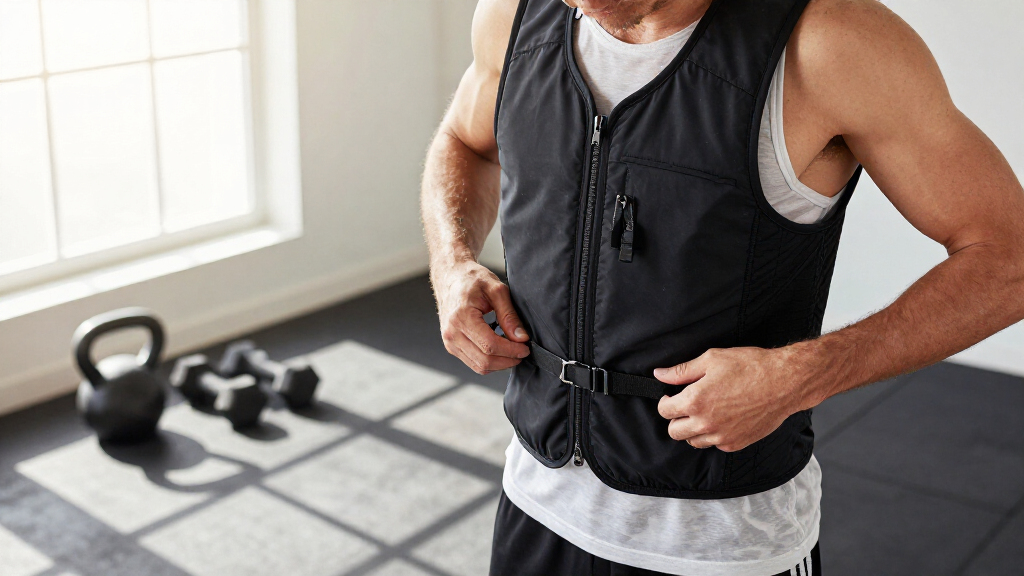
I evaluated these 15 adjustable weight vests based on three primary pillars: adjustability precision, ergonomic fit, and material durability. Adjustability precision was judged by how easily weights could be added or removed without tools, and whether the vest allowed for incremental increases (e.g., 1–2 lb increments) rather than large, jarring jumps. Ergonomic fit focused on how well the vest distributed weight across the shoulders and torso, minimizing bounce during dynamic movements like sprinting or jumping. Material durability assessed the stitching quality, buckle strength, and fabric breathability, ensuring the vest withstands sweat and friction over time.
Ranking logic prioritized versatility for the average home gym user. Products that offered a middle-ground weight range (10–30 lbs) with easy adjustability were ranked higher than extreme low-weight or high-weight models, as these cover the majority of functional fitness needs. I also penalized designs with poor ventilation, as heat buildup during cardio is a common complaint that reduces usability. This approach ensures the top picks are not just heavy, but practical for sustained, varied workout training.
Factors to Consider When Choosing Adjustable Weight Vests For Workout Training
Selecting the wrong weight vest can lead to discomfort, injury, or stalled progress. These factors help you match the equipment to your training style.Weight Range and Incremental Adjustability
Start by identifying your current strength level and future goals. A vest with a narrow weight range (e.g., 5–10 lbs) is fine for beginners focusing on endurance, but it will quickly become too light for strength work. Look for models with removable weight blocks that allow 1–2 lb increments; this enables progressive overload without jumping from 10 to 20 lbs instantly. If you plan to use the vest for weighted pullups or pushups, a range extending to 30–50 lbs provides headroom for advanced training. Avoid vests where weights are permanently sewn in, as they offer no flexibility for deload weeks or different exercise types.
Fit Stability and Bounce Control
Bouncing is the primary annoyance that ruins workouts with weighted vests. The best designs use multiple adjustment points, including side straps, shoulder straps, and a front buckle, to lock the vest against your torso. A single front clasp often leaves gaps at the sides, causing the weights to shift during running or jumping. Check if the vest includes non-slip lining or mesh that grips your shirt. For high-impact activities like sprinting, a snug, compression-like fit is non-negotiable. If the vest feels loose when you jump, it will dig into your shoulders and cause chafing within minutes.
Material Breathability and Comfort
Weighted vests trap heat against your core, which can lead to overheating during cardio sessions. Prioritize vests constructed with breathable mesh panels or perforated neoprene rather than solid nylon or vinyl. Ventilation channels between weight pockets allow air to circulate, keeping your body temperature regulated. Padding on the shoulders is also critical; thin padding on a 20-lb vest will create pressure points, while thick, dense foam distributes load evenly. Consider the inner lining material; moisture-wicking fabrics prevent sweat from soaking into the vest itself, extending its lifespan and hygiene.
Weight Distribution and Center of Gravity
How the weight is distributed affects your biomechanics. Iron sand fills the pockets more densely and lower than steel plates, creating a lower center of gravity that feels more natural during movement. Steel plates can create a high, bulky profile that throws off your balance, especially during overhead movements or handstands. Look for vests where weights are segmented across the entire front and back rather than clustered in large blocks. This segmentation allows for a more anatomical fit that contours to your chest and back, reducing the feeling of being ‘top-heavy’ during squats or lunges.
Durability of Fastening Systems
The buckles and Velcro are the most common failure points. Metal buckles or heavy-duty plastic clasps generally last longer than standard Velcro, which degrades with sweat exposure and lint accumulation. If you choose a vest with Velcro, ensure it is a high-quality, industrial-grade hook-and-loop system with a protective cover to prevent snagging on clothing. Inspect the stitching around weight pockets; double-stitched seams are essential to prevent weights from shifting or falling out during intense movement. A vest that fails mechanically mid-workout is not just an inconvenience; it is a potential injury hazard.
Frequently Asked Questions
How heavy should my weight vest be for running?
For running, start with no more than 5–10% of your body weight to avoid excessive impact on your joints and knees. A 150-lb runner should begin with a 7–15 lb vest. This allows your tendons and bones to adapt to the increased load without risking stress fractures. You can gradually increase the weight by 1–2 lbs every few weeks, but rarely should you exceed 20% of your body weight for sustained cardio. If you feel shin splints or knee pain, immediately reduce the weight or switch to low-impact exercises like walking or cycling with the vest.Are iron sand weights better than steel plates for vests?
Iron sand weights generally offer a smoother, more flexible fit because they conform to the shape of your body better than rigid steel plates. This reduces bulk and allows the vest to hug your torso more closely, minimizing bounce during dynamic movements. Steel plates are often thinner and denser, which can be advantageous for very heavy loads, but they tend to create pressure points and a less natural feel. For most workout training scenarios, especially running and calisthenics, the flexibility and lower center of gravity provided by iron sand make it the superior choice for comfort and biomechanics.Can I use a weight vest for weighted pullups?
Yes, but you must ensure the vest has a secure, non-slip fit to prevent it from sliding down your back when you hang from the bar. Vests with a front buckle and tight side straps work best for this purpose. However, be aware that many vests are not designed to hang freely; the weight distribution may feel awkward compared to a dedicated dip belt. Start with lighter weights to master the form, as the vest changes your center of gravity. If the vest shifts significantly, it can throw off your balance and reduce the effectiveness of the exercise.How do I clean and maintain an adjustable weight vest?
Most vests are not machine washable because water can damage the internal weights or rust metal components. Instead, spot clean the exterior with a mild soap and water solution using a damp cloth. For interior odors, sprinkle baking soda inside the weight pockets, let it sit for a few hours, and then vacuum it out. Always remove the weights before cleaning the fabric. Allow the vest to air dry completely in a well-ventilated area before reinserting weights to prevent mold or mildew growth, which can degrade the fabric and cause skin irritation.Is a heavier vest always better for muscle growth?
No, progressive overload is more important than absolute weight. If a vest is too heavy, you will sacrifice form and range of motion, which reduces muscle activation and increases injury risk. A lighter vest that allows you to perform controlled, full-range reps is more effective for hypertrophy than a heavy vest that forces you to cheat the movement. Increase weight only when you can comfortably perform your target rep range with perfect form. Sometimes, increasing volume (reps or sets) with a moderate weight is a more effective path to growth than simply adding pounds.Conclusion
Choosing the right adjustable weight vest depends entirely on your training intensity and comfort preferences. For the best overall performance, the CAP Adjustable Weighted Vest (4–50 lb) offers unmatched versatility and durability, making it a long-term investment for any fitness level. If you are a beginner looking for a safe entry point, the Sportneer Adjustable Weighted Vest (2–18 lb) provides a low-profile, comfortable start without overwhelming your joints. For those prioritizing outdoor cardio, the ZELUS Weighted Vest with Reflective Stripes combines safety visibility with breathable materials, ideal for evening runners. Athletes seeking premium comfort and a secure fit for high-intensity intervals should consider the Henkelion Weighted Vest, which minimizes bounce effectively. Match the vest’s weight range and fit features to your specific exercises, and you will see consistent progress in strength and endurance.