TL;DR

Get workout gear delivered free with Prime
- Fast, free delivery on millions of items
- Prime Video, Amazon Music and more included
- Member-only deals all year
A Fit&Well writer says he helped his 73-year-old father return to strength training with a routine of goblet squats, single-arm rows and overhead presses. The report describes the exercises and modifications, but provides no measured results or independent evidence of the routine’s effects.
Fit&Well has published a first-person report describing how its writer introduced his 73-year-old father to a short, three-exercise dumbbell routine after he had neglected strength training while caring for his wife, who has Parkinson’s. The plan centers on goblet squats, single-arm rows and overhead presses, with easier variations offered for each movement.
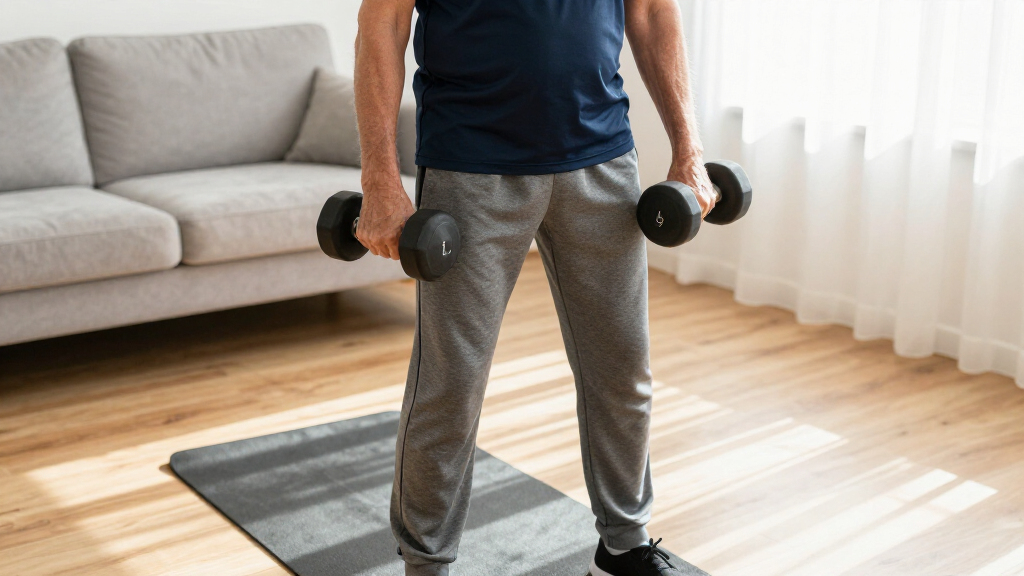
The writer says his father had been active but had recently spent little time on strength work because of caregiving responsibilities. The writer, who describes himself as a personal trainer, says he provided light-to-medium dumbbells and reviewed basic technique, including keeping a weight close to the chest, engaging the core and maintaining an upright position when lifting.
Before adding weights, the pair spent a few weeks practicing bodyweight movements, the report says. The writer then suggested three exercises to cover lower-body, pulling and pushing movements. For each, the article gives a suggested prescription of three sets of eight to 12 repetitions, while presenting alternatives such as bodyweight squats, a supported row and a seated press.
The report explains the exercises in terms of everyday tasks: squats resemble standing up from a chair, rows train a pulling action, and overhead presses relate to reaching and lifting. These are the writer’s explanations of the routine’s intended relevance; the article does not report testing or measured changes in the father’s strength, mobility or health.
A Short Routine for Daily Tasks
The report speaks to a practical challenge for older adults and family caregivers: finding time for strength work when other responsibilities compete for attention. Its three-move format offers a simple structure rather than a long workout plan, and the regressions give readers examples of how movements can be adapted to different levels of confidence or stability.
The exercises target actions used in ordinary life—standing, pulling objects closer and reaching overhead. That connection may help readers understand the writer’s reason for choosing them. But the article is a personal account, not a clinical study or a recommendation tailored to every older adult. It does not establish that this particular routine produces specific outcomes or is appropriate for everyone.
That distinction matters because age, balance, joint limitations, previous injuries and other health factors can affect how someone should exercise. Readers can take the report as an example of a basic routine and its modifications, not as proof of a guaranteed benefit.
Products Worth Considering

Hyperice Normatec 3 Full-Leg Compression Boots, Standard Size

BowFlex Results Series SelectTech 552 Adjustable Dumbbell

Levoit Vital 100S-P Air Purifier
As an affiliate, we earn on qualifying purchases.
How the Writer Built the Plan
The writer says his father had been active before letting strength training slide while caring for his wife, who has Parkinson’s. In response, the writer bought a rack of light-to-medium dumbbells and refreshed his father’s form. The account does not give the weights used or describe a formal assessment of his father’s fitness.
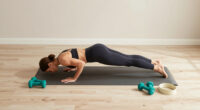
The report says they spent a few weeks on bodyweight practice for squatting, hinging, lunging and pushing before moving to weighted exercises. That sequence is relevant to the plan: it presents technique practice as preparation, rather than suggesting that a beginner should start by lifting heavier weights. The article does not specify how often the routine is performed or how long each session takes.
“He cares for my mother, who has Parkinson’s, so he ends up with little time for himself.”
— Fit&Well writer describing his father
Results and Safety Details Missing
The report does not say whether the father completed the routine regularly, how long he followed it, or whether his strength, mobility or daily function changed. It also does not provide his medical history, any professional assessment, the dumbbell weights used, or details about supervision during the exercises. The routine’s effects and suitability for other people cannot be determined from this account alone.
Exercise can require individual adjustments, particularly for people with balance concerns, pain, chronic conditions or recent injuries. The article offers modifications but does not give individualized medical advice. Anyone unsure about starting or changing a strength program should seek guidance from a qualified health professional or exercise specialist familiar with their circumstances.
No Follow-Up Results Reported
The supplied Fit&Well report describes the routine but does not announce a follow-up, training schedule or plan to publish measured results. For now, readers have the exercise instructions and suggested easier options, but no information about how the father progressed or whether he continued the program.
Anyone considering a similar routine can begin with movements they can perform comfortably and use the listed regressions rather than forcing a weighted version. The next useful evidence from this particular account would be a follow-up describing adherence, progression and any changes in everyday function; none is included in the supplied material.
Key Questions
What are the three exercises in the routine?
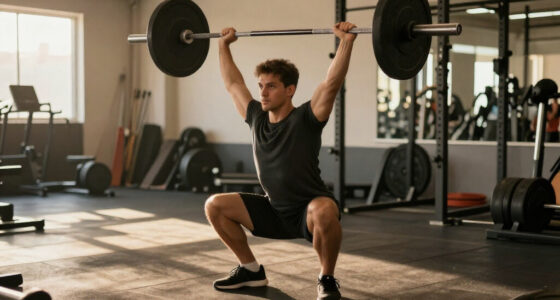
The routine uses a dumbbell goblet squat, a single-arm dumbbell row and a dumbbell overhead press.
How many sets and repetitions does the report suggest?
Fit&Well lists three sets of eight to 12 repetitions for each exercise. The report does not say how frequently the father performed the routine.
What easier versions does the article describe?
It suggests trying a bodyweight or chair-assisted squat, doing the row while kneeling on one knee for added stability, and using a seated overhead press with back support. It also says the press can be done one arm at a time if pressing with both arms is too challenging.
Does the report show that the routine improved the father’s strength?
No measured results are provided. The article describes the writer’s plan and the exercises’ intended everyday relevance, but does not report changes in strength, mobility or health.
Source: rss