
TL;DR

Get workout gear delivered free with Prime
- Fast, free delivery on millions of items
- Prime Video, Amazon Music and more included
- Member-only deals all year
Fit&Well published a five-exercise resistance-band circuit created by certified personal trainer Angela Wilkinson. The routine combines rotational, side-to-side and single-leg movements; the source recommends two rounds, two to three times weekly, and secure band anchoring.
Fit&Well has published a five-move resistance-band workout created by certified personal trainer Angela Wilkinson to train movement across different directions, including rotation, side-to-side steps and single-leg balance. The routine takes an estimated 10 to 15 minutes and uses a mini loop band and a longer resistance band, according to the report.
Wilkinson’s circuit consists of a chest-height woodchop, a mini-band knee drive, a lateral band walk, a standing hip circle and a low-to-high woodchop. Fit&Well recommends performing the exercises in sequence, resting for two minutes, then completing a second round. Its suggested schedule is two to three sessions a week, although the report does not provide study results or a measured outcome for that frequency.
The prescribed repetitions vary by exercise: eight per side for each woodchop and the standing hip circle, 10 per side for knee drives, and eight to 10 steps in each direction for lateral walks. The exercises combine resistance with controlled movement. The woodchops involve turning the torso and hips, while the knee drive and hip circle require balancing on one leg.
For the band exercises, the report advises attaching the long band to a fixed, load-bearing anchor and checking both the band and attachment before starting. It warns against using furniture that could slide or tip. Wilkinson’s form cues include moving slowly, keeping the torso controlled and allowing the feet to pivot during rotational exercises rather than forcing the movement through the arms alone.
Training Beyond Straight-Line Movement
The circuit’s central point is that the workout patterns people choose can leave out movements used in everyday tasks. Reaching sideways, turning while carrying an object and regaining balance after a misstep all involve more than moving forward and backward. Wilkinson says the routine is designed to address that gap through rotation, lateral movement and balance.
That is a practical rationale for varying exercise patterns, not proof that this particular circuit prevents injury or improves performance. Fit&Well’s report offers trainer guidance and exercise instructions, but cites no clinical trial, comparison group or quantified results. Readers should treat the routine as one suggested way to add directional variety to exercise, rather than as a demonstrated solution for a specific health concern.
Products Worth Considering

Garmin Forerunner 55 GPS Running Smartwatch, Black

Therabody JetBoots Prime Wireless Compression Boots (Short, Under 29-Inch Inseam)

Blueair Blue Pure 511i Max Smart Air Purifier
As an affiliate, we earn on qualifying purchases.
The Five Moves and Their Purpose
The first woodchop anchors a band at chest height. With the anchor to one side, the exerciser pulls the band horizontally across the body and returns slowly. Wilkinson describes it as a way to train torso rotation. The second move places a mini band around the feet and asks the exerciser to raise one knee while keeping the standing side stable; she links it to hip-flexor effort and single-leg balance.
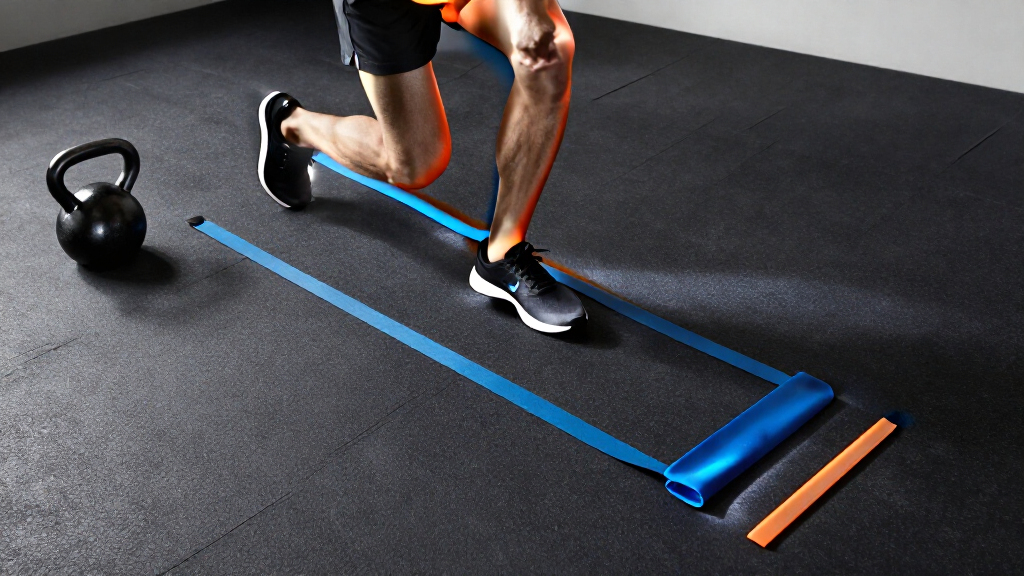
For the lateral walk, the exerciser stands on a long band, holds its ends near waist height and steps side to side while maintaining tension. Wilkinson says the movement works the muscles at the outer hip while also requiring the upper body to stay steady. In the standing hip circle, a band around the ankles or above the knees adds resistance as one leg traces a controlled arc. The final low-to-high woodchop starts with the band anchored near the floor and finishes above the opposite shoulder, with the hips and torso driving the turn.
The instructions call for two sets of each movement, with repetitions performed on both sides where specified. A wall or other support may be used during the hip circle if needed. The report does not set out modifications for people with injuries, restricted mobility or particular training experience.
“Whether you’re reaching sideways, turning to pick something up, or steadying yourself after a stumble, your body must control movement in different directions.”
— Angela Wilkinson, quoted by Fit&Well
Evidence and Individual Fit
The Fit&Well report does not identify a publication date in the supplied material and does not cite research testing this exact five-exercise sequence. Its claims about the muscles involved and the usefulness of movements are attributed to Wilkinson; the article provides no measured evidence that following the circuit will produce a particular level of strength, balance or coordination.
It is also unclear how the routine should be adjusted for different fitness levels or for people with existing pain, injury or mobility limits. The report gives general technique and anchoring advice, but no individualized assessment. Anyone unsure whether the exercises are suitable for them can seek guidance from a qualified fitness professional or health professional.
Safe Setup Before Starting
The report sets out no announced follow-up, evaluation or next milestone. Readers following the routine can start by checking that the resistance bands are intact and the anchor is secure, then use controlled movements and the stated repetitions as a guide. The suggested schedule is two or three times weekly, with two rounds and a two-minute rest between them; the source does not say that this schedule is appropriate for everyone.
During the exercises, the form cues emphasize avoiding momentum, keeping the torso steady on knee drives, and allowing a slight foot pivot during woodchops. If a movement causes pain or feels unstable, stop rather than forcing the repetition. The report offers no specific progression plan, so any increase in resistance or volume would need to be based on individual ability and sound guidance.
Key Questions
What equipment does the circuit require?
It uses a mini loop band and a longer resistance band. The longer band must be anchored to a fixed, load-bearing point that will not move under tension.
How long does the workout take?
Fit&Well estimates 10 to 15 minutes for the circuit. The recommended format is one round of all five moves, a two-minute rest, and a second round.
How often does the report suggest doing it?
The report recommends trying the workout two to three times a week. It does not provide research showing that this schedule is necessary or suitable for every person.
What safety checks are recommended?
Check that the band and its anchor are secure before exercising. Use a strong, fixed attachment point, not furniture that could slide or tip, and keep each movement controlled.
Does the circuit have proven injury-prevention benefits?
The supplied report does not cite research establishing that this specific routine prevents injuries. Wilkinson explains the movements’ intended training roles, but no injury-prevention outcome is confirmed.
Source: rss